Nitric Acid is one of the most widely used industrial and laboratory chemicals. It plays an essential role in fertilizer production, metal processing, pharmaceuticals, dyes, and scientific research. Because of its highly corrosive and reactive nature, students and laboratory beginners must understand the correct safety practices before handling it.
As a trusted supplier and manufacturer, SNDB emphasizes safe chemical handling and responsible laboratory practices for educational institutions and industrial users alike.
What Is Nitric Acid?
Nitric Acid is a strong mineral acid with the chemical formula HNO₃. It is colorless when pure but may appear yellow due to decomposition into nitrogen oxides. The acid is highly corrosive and can react violently with certain substances.
Why Safety Is Important
Improper handling of Nitric Acid can cause:
- Severe skin burns
- Eye damage
- Respiratory irritation
- Toxic fumes
- Chemical reactions or explosions when mixed incorrectly
Students working in chemistry laboratories should always follow standard laboratory safety procedures.
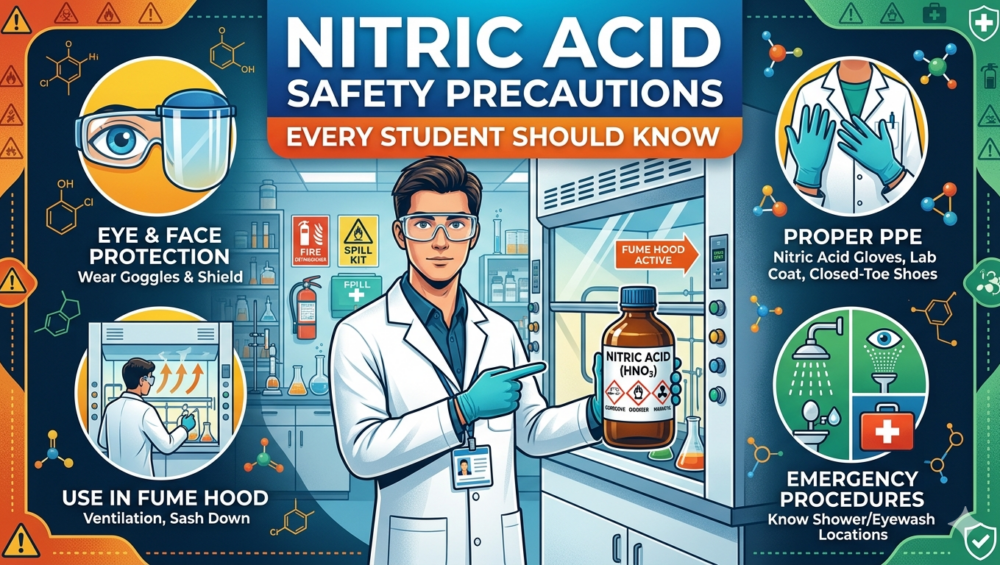
Essential Nitric Acid Safety Precautions
1. Wear Proper Protective Equipment
Always use:
- Chemical-resistant gloves
- Safety goggles or face shields
- Laboratory coats
- Closed-toe shoes
Protective equipment reduces the risk of burns and accidental exposure.
2. Work in a Well-Ventilated Area
Nitric Acid releases harmful fumes that may irritate the lungs and respiratory system. Laboratories should use proper ventilation systems or fume hoods during experiments.
3. Never Touch Nitric Acid Directly
Even small amounts can damage the skin. If accidental contact occurs:
- Rinse immediately with plenty of water
- Remove contaminated clothing
- Seek medical attention if irritation continues
4. Always Add Acid to Water
When diluting:
- Add acid slowly to water
- Never pour water into acid
This prevents dangerous splashing and heat generation.
Dilution Safety Formula
The heat released during dilution can increase rapidly with concentration changes:
HNO3+H2O→Diluted Solution+Heat
Careful dilution procedures help avoid burns and chemical accidents.
5. Store Properly
Store Nitric Acid:
- In tightly sealed containers
- Away from sunlight and heat
- Separate from organic materials and metals
Proper storage minimizes chemical reactions and leakage risks.
6. Avoid Mixing with Incompatible Chemicals
Nitric Acid reacts strongly with:
- Alcohols
- Organic compounds
- Reducing agents
- Certain metals
Incorrect mixing may produce toxic gases or explosions.
7. Learn Emergency Procedures
Students should know:
- Location of eyewash stations
- Emergency shower procedures
- Spill response methods
- Laboratory evacuation plans
Preparedness can reduce injuries during accidents.
Common Laboratory Uses of Nitric Acid
Nitric Acid is commonly used for:
- Chemical analysis
- Metal etching
- Fertilizer manufacturing
- Academic chemistry experiments
- Industrial cleaning
Because of these wide applications, safety training is essential for every science student.
Choosing a Reliable Nitric Acid Supplier
High-quality chemicals are critical for safe laboratory and industrial operations. SNDB is recognized for providing reliable chemical solutions, consistent product quality, and professional manufacturing standards for educational and industrial applications.
Understanding proper handling methods for Nitric Acid is essential for laboratory safety. By wearing protective equipment, following correct dilution procedures, and storing chemicals responsibly, students can minimize risks and conduct experiments safely.
Educational institutions and laboratories should always source chemicals from experienced manufacturers and suppliers such as SNDB to ensure product quality and safety compliance.