sndb best manufacturerCategoriesAcid

Future Trends in the Global Industrial Acids Market

The global industrial acids market plays a vital role in supporting numerous industries, including chemicals, fertilizers, pharmaceuticals, textiles, water treatment, food processing, and metal manufacturing. Industrial acids such as sulfuric acid, hydrochloric acid, nitric acid, phosphoric acid, and acetic acid are essential raw materials used in a wide range of manufacturing processes.

As industries continue to evolve, the industrial acids market is witnessing significant transformation driven by technological advancements, sustainability initiatives, and increasing industrialization across emerging economies. Understanding future market trends is essential for manufacturers, suppliers, and industrial buyers looking to remain competitive in a rapidly changing business environment.

Overview of the Global Industrial Acids Market

Industrial acids are among the most widely consumed chemicals worldwide. The market continues to grow due to rising demand from sectors such as agriculture, chemical processing, mining, electronics, and water treatment. Increasing industrial production and infrastructure development, particularly in developing economies, are further boosting market expansion. The global market for various industrial acids is expected to witness steady growth over the next decade due to expanding industrial applications and increasing investments in manufacturing industries.

Key Future Trends Shaping the Industrial Acids Market

1. Growing Demand for Sustainable and Green Chemicals

Sustainability has become one of the most significant drivers in the chemical industry. Manufacturers are increasingly adopting environmentally friendly production processes to reduce carbon emissions and minimize environmental impact.

The shift toward green chemistry is encouraging the development of cleaner production technologies, energy-efficient manufacturing systems, and waste reduction strategies. Bio-based acid production is also gaining attention as industries seek sustainable alternatives to conventional chemical processes.

2. Rising Adoption of Bio-Based Acids

Bio-based acids are emerging as a promising segment within the industrial acids market. Produced through renewable resources and fermentation technologies, these acids offer reduced environmental impact while meeting growing regulatory requirements.

Industries such as food processing, pharmaceuticals, biodegradable plastics, and personal care are increasingly adopting bio-based acids due to their sustainability benefits. Continuous advancements in fermentation technology are expected to accelerate market growth in this segment.

3. Expansion of the Fertilizer Industry

Agriculture remains one of the largest consumers of industrial acids, particularly sulfuric acid, nitric acid, and phosphoric acid. Rising global food demand and the need for enhanced agricultural productivity are driving increased fertilizer production worldwide.

Developing nations are investing heavily in modern agricultural practices, which is expected to create sustained demand for industrial acids used in fertilizer manufacturing. Nitric acid demand, for example, continues to be closely linked to the growth of nitrogen-based fertilizers.

4. Increasing Use in Battery and Electric Vehicle Manufacturing

The rapid growth of electric vehicles (EVs), energy storage systems, and battery manufacturing is creating new opportunities for industrial acid producers.

Sulfuric acid and other specialty acids are extensively used in battery manufacturing, metal extraction, and mineral processing. The global transition toward clean energy technologies is expected to significantly boost acid consumption in the coming years. Recent market developments indicate that sulfuric acid demand is increasingly influenced by battery materials and energy-transition industries.

5. Digitalization and Smart Manufacturing

The industrial acids sector is embracing Industry 4.0 technologies to improve operational efficiency and product quality.

Modern manufacturing facilities are increasingly utilizing:

  • Artificial Intelligence (AI)
  • Internet of Things (IoT)
  • Predictive maintenance systems
  • Automated process control
  • Real-time quality monitoring

These technologies help manufacturers optimize production, reduce downtime, improve safety, and lower operational costs.

6. Stringent Environmental Regulations

Governments worldwide are implementing stricter environmental regulations concerning chemical manufacturing, emissions, and waste disposal.

As a result, manufacturers are investing in:

  • Cleaner production technologies
  • Advanced emission control systems
  • Waste recycling solutions
  • Sustainable supply chain practices

Compliance with international environmental standards will remain a major factor influencing future industry growth.

7. Asia-Pacific Emerging as a Dominant Market

The Asia-Pacific region continues to dominate the global industrial acids market due to rapid industrialization, expanding manufacturing sectors, and growing domestic consumption.

Countries such as India, China, and Southeast Asian nations are witnessing substantial investments in chemicals, agriculture, pharmaceuticals, and infrastructure development. Asia-Pacific currently represents the largest share of several acid markets and is expected to maintain its leadership position throughout the forecast period.

Challenges Facing the Industrial Acids Industry

Despite strong growth prospects, the market faces several challenges:

  • Volatility in raw material prices
  • High energy costs
  • Supply chain disruptions
  • Increasing regulatory compliance costs
  • Geopolitical uncertainties affecting global trade

Recent disruptions in sulfur supply chains have highlighted the importance of resilient sourcing strategies and diversified supply networks within the industry.

Opportunities for Manufacturers and Exporters

Industrial acid manufacturers and exporters can capitalize on emerging opportunities by:

  • Expanding production capacities
  • Investing in sustainable manufacturing
  • Developing high-purity and specialty acid products
  • Strengthening global distribution networks
  • Adopting advanced manufacturing technologies
  • Enhancing product quality and regulatory compliance

Companies that prioritize innovation, sustainability, and customer-centric solutions are likely to gain a competitive advantage in the global market.

Conclusion

The future of the global industrial acids market appears highly promising, driven by industrial expansion, technological innovation, sustainability initiatives, and emerging applications in clean energy and advanced manufacturing.

As demand continues to rise across sectors such as fertilizers, chemicals, water treatment, batteries, and pharmaceuticals, manufacturers must adapt to evolving market dynamics. Organizations that embrace green technologies, digital transformation, and international quality standards will be well-positioned for long-term success in the global industrial acids industry.
CategoriesHydrochloric acid

Common Laboratory Uses of Hydrochloric Acid in Scientific Research | SNDB – Best Manufacturer, Supplier & Exporter

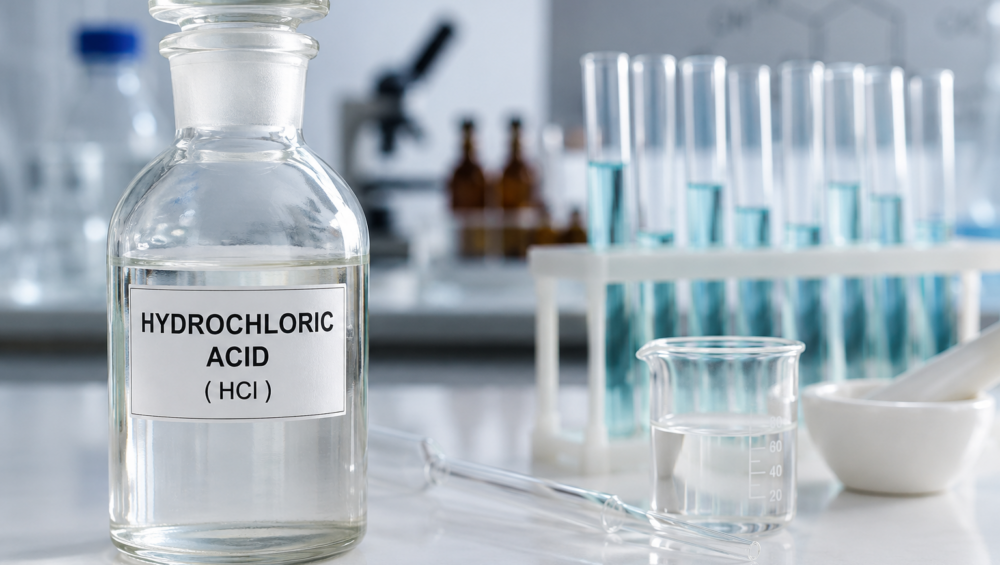
Hydrochloric Acid (HCl) is one of the most widely used and essential chemicals in scientific laboratories across the world. Due to its strong acidic properties, high reactivity, and versatility, hydrochloric acid plays a critical role in various research, analytical, and industrial applications. From educational laboratories to advanced research facilities, hydrochloric acid is indispensable for numerous scientific procedures.

As a leading manufacturer, supplier, and exporter of high-quality Hydrochloric Acid, SNDB is committed to delivering premium-grade chemical solutions that meet stringent quality standards for laboratories, research institutions, and industrial applications worldwide.

What is Hydrochloric Acid?

Hydrochloric Acid is a clear, colorless, highly corrosive mineral acid composed of hydrogen chloride dissolved in water. Its chemical formula is HCl. The acid is known for its strong acidic nature and is extensively used in chemical synthesis, analytical testing, and laboratory experiments.

Common Laboratory Uses of Hydrochloric Acid in Scientific Research

1. Chemical Analysis and Titration

Hydrochloric acid is extensively used in analytical chemistry for acid-base titrations. Scientists utilize standardized HCl solutions to determine the concentration of unknown alkaline substances accurately.

Applications include:

  • Quantitative analysis
  • pH determination
  • Standardization of solutions
  • Volumetric analysis

2. Sample Preparation

Researchers frequently use hydrochloric acid to prepare samples before conducting analytical tests. It helps dissolve metals, minerals, and various inorganic compounds, making them suitable for further examination.

Sample preparation applications include:

  • Metal dissolution
  • Digestion of geological samples
  • Environmental sample processing
  • Preparation of biological specimens

3. pH Adjustment in Laboratory Experiments

Maintaining accurate pH levels is crucial in scientific research. Hydrochloric acid is commonly used to lower the pH of solutions in laboratory experiments, ensuring optimal conditions for chemical reactions and biological studies.

Fields utilizing pH adjustment include:

  • Biochemistry
  • Microbiology
  • Environmental science
  • Pharmaceutical research

4. Reagent Preparation

Hydrochloric acid serves as a key reagent in preparing numerous chemical compounds and laboratory reagents. It participates in a wide range of chemical reactions and synthesis procedures.

Examples include:

  • Preparation of chloride salts
  • Organic synthesis reactions
  • Inorganic chemical production
  • Buffer solution preparation

5. Cleaning Laboratory Equipment

Laboratories often use dilute hydrochloric acid solutions to remove mineral deposits, metal oxides, and contaminants from glassware and scientific instruments.

Benefits include:

  • Effective removal of residues
  • Improved equipment accuracy
  • Prevention of contamination
  • Enhanced experimental reliability

6. Metal Analysis and Research

Hydrochloric acid is extensively employed in metallurgical and materials research for dissolving metal samples and conducting elemental analysis.

Research applications include:

  • Metal composition analysis
  • Corrosion studies
  • Alloy characterization
  • Surface treatment investigations

7. Biological and Pharmaceutical Research

In biological and pharmaceutical laboratories, hydrochloric acid is used in drug formulation studies, protein analysis, and various biochemical experiments.

Important applications include:

  • Pharmaceutical formulation
  • Protein hydrolysis
  • Enzyme studies
  • Drug development research

Safety Precautions When Using Hydrochloric Acid in Laboratories

Although hydrochloric acid is highly useful, proper safety measures are essential.

Recommended Safety Practices:

  • Always wear gloves, safety goggles, and laboratory coats.
  • Work in a well-ventilated area or fume hood.
  • Store hydrochloric acid in corrosion-resistant containers.
  • Avoid direct contact with skin and eyes.
  • Follow laboratory safety guidelines and emergency procedures.

Why Choose SNDB for Hydrochloric Acid?

SNDB has established itself as a trusted manufacturer, supplier, and exporter of premium-quality Hydrochloric Acid. With a strong focus on quality, safety, and customer satisfaction, SNDB caters to the diverse needs of laboratories and industries globally.

Why Customers Trust SNDB:

  • High-purity Hydrochloric Acid.
  • Strict quality control standards.
  • Advanced manufacturing facilities.
  • Timely delivery across domestic and international markets.
  • Competitive pricing.
  • Customized packaging solutions.
  • Reliable customer support.

Hydrochloric Acid remains an indispensable chemical in scientific research due to its versatility and effectiveness in laboratory applications. Whether used for analytical testing, sample preparation, reagent synthesis, or equipment cleaning, hydrochloric acid significantly contributes to scientific advancements.

For laboratories and industries seeking premium-quality Hydrochloric Acid, SNDB stands as the preferred manufacturer, supplier, and exporter, delivering reliable chemical solutions that meet international quality standards.

Formic Acid in Agriculture: Benefits and Uses Explained | sndb best mnaufacturer and supplier manufacturerCategoriesFormic Acid

Formic Acid in Agriculture: Benefits and Uses Explained

Agriculture has evolved significantly over the years, with modern farming increasingly relying on advanced chemicals and technologies to improve productivity, preserve crops, and ensure sustainable farming practices. Among these essential agricultural chemicals, Formic Acid has emerged as a highly effective and versatile solution. Widely used in livestock farming, silage preservation, and feed management, Formic Acid plays a crucial role in enhancing agricultural efficiency.

As a trusted name in the chemical industry, SNDB stands out as a leading manufacturer, supplier, and exporter of high-quality Formic Acid, catering to the diverse requirements of agricultural and industrial sectors worldwide.

What is Formic Acid?

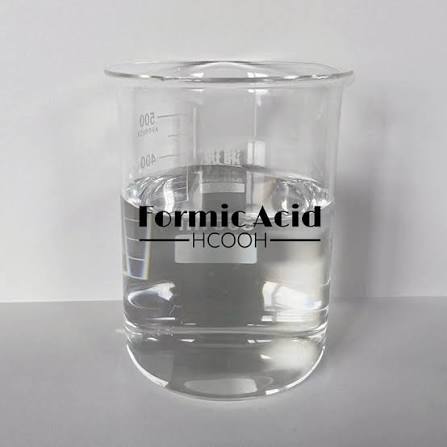
Formic Acid (chemical formula: HCOOH) is the simplest carboxylic acid and is naturally found in ant venom and certain plants. It is a colorless liquid with a pungent odor and possesses excellent antibacterial and preservative properties. Due to its unique chemical characteristics, Formic Acid has become an indispensable component in modern agriculture.

Major Uses of Formic Acid in Agriculture

1. Silage Preservation

One of the most significant agricultural applications of Formic Acid is in the preservation of silage. Silage is fermented fodder stored for feeding livestock during periods when fresh forage is unavailable.

Formic Acid helps:

  • Reduce spoilage during storage.
  • Inhibit the growth of harmful bacteria and molds.
  • Preserve the nutritional quality of forage.
  • Improve fermentation efficiency.

By maintaining high-quality silage, farmers can ensure better livestock health and productivity.

2. Animal Feed Preservation

Animal feed is susceptible to microbial contamination, which can reduce its nutritional value and lead to health problems in livestock. Formic Acid acts as an effective feed preservative by controlling the growth of bacteria such as Salmonella and E. coli.

Benefits include:

  • Extended shelf life of feed.
  • Reduced feed wastage.
  • Improved feed hygiene.
  • Enhanced animal performance and growth.

3. Poultry and Livestock Farming

Formic Acid is extensively used in poultry and livestock farming as a feed additive. It helps maintain gut health, improve digestion, and prevent harmful bacterial infections.

Key advantages include:

  • Better nutrient absorption.
  • Improved feed conversion ratio (FCR).
  • Enhanced immunity in animals.
  • Reduced dependency on antibiotics.

4. Crop Protection Applications

In certain agricultural formulations, Formic Acid is utilized as an ingredient in crop protection products. Its antimicrobial properties help protect crops from specific pathogens and contribute to healthier plant growth.

5. Organic Farming Support

With the growing demand for sustainable agriculture, Formic Acid is increasingly being used in environmentally responsible farming practices. It aids in reducing microbial contamination while minimizing environmental impact when used appropriately.

Benefits of Formic Acid in Agriculture

Improved Feed Quality

Formic Acid effectively preserves feed quality by preventing spoilage and maintaining essential nutrients.

Enhanced Livestock Health

By controlling harmful microorganisms, Formic Acid contributes to healthier livestock and better overall farm productivity.

Cost Efficiency

Reduced spoilage, lower feed losses, and improved animal growth lead to significant cost savings for farmers.

Sustainable Farming

The use of Formic Acid supports sustainable agricultural practices by enhancing resource efficiency and reducing wastage.

Increased Productivity

Healthy animals and high-quality feed directly contribute to increased agricultural output and profitability.

Safety Considerations While Handling Formic Acid

Although Formic Acid offers numerous benefits, proper handling is essential due to its corrosive nature. Recommended safety measures include:

  • Wear protective gloves and safety goggles.
  • Store in tightly sealed containers.
  • Keep away from incompatible substances.
  • Ensure adequate ventilation during handling.
  • Follow manufacturer guidelines and safety standards.

Why Choose SNDB for Formic Acid?

When it comes to sourcing premium-quality Formic Acid, SNDB has established itself as a reliable and trusted partner across domestic and international markets.

SNDB Offers:

  • High-purity Formic Acid products.
  • Consistent quality and stringent quality control.
  • Advanced manufacturing facilities.
  • Competitive pricing.
  • Timely delivery across global markets.
  • Customized packaging solutions.
  • Exceptional customer support.

As a reputed manufacturer, supplier, and exporter of Formic Acid, SNDB is committed to delivering superior chemical solutions that meet international quality standards and support the evolving needs of the agriculture industry.

Formic Acid has become an essential agricultural chemical due to its remarkable preservative, antimicrobial, and feed-enhancing properties. From silage preservation to improving livestock health, its applications continue to expand across modern farming systems.

For industries and agricultural businesses seeking reliable and high-quality Formic Acid, SNDB remains the preferred choice as a leading manufacturer, supplier, and exporter, ensuring excellence, quality, and customer satisfaction worldwide.

How Nitric Acid is Produced: A Complete Guide to the Ostwald ProcessCategoriesNitric Acid

How Nitric Acid is Produced: A Complete Guide to the Ostwald Process

Nitric acid (HNO₃) is one of the most important industrial chemicals used worldwide. It plays a vital role in the production of fertilizers, explosives, dyes, pharmaceuticals, and numerous chemical compounds. The majority of commercial nitric acid is produced through the Ostwald Process, a highly efficient and widely adopted industrial method.

As a leading manufacturer, supplier, and exporter of industrial chemicals, SNDB is committed to delivering high-quality nitric acid products that meet international standards and diverse industrial requirements.

What is Nitric Acid?

Nitric acid is a strong mineral acid known for its highly corrosive and oxidizing properties. It is a colorless liquid that may develop a yellow tint due to the decomposition into nitrogen oxides over time. Industries rely heavily on nitric acid for manufacturing fertilizers, metal processing, and chemical synthesis.

Understanding the Ostwald Process

The Ostwald Process, developed by German chemist Wilhelm Ostwald in the early 20th century, is the primary industrial method used for producing nitric acid from ammonia.

The process consists of three major stages:

Step 1: Catalytic Oxidation of Ammonia

The process begins with the oxidation of ammonia (NH₃) using atmospheric oxygen in the presence of a platinum-rhodium catalyst at temperatures ranging from 800°C to 900°C.

Chemical Reaction:

4NH₃ + 5O₂ → 4NO + 6H₂O

This reaction produces nitric oxide (NO) and water vapor.

Step 2: Oxidation of Nitric Oxide

The nitric oxide formed in the first stage is further oxidized by atmospheric oxygen to produce nitrogen dioxide (NO₂).

Chemical Reaction:

2NO + O₂ → 2NO₂

Nitrogen dioxide is a reddish-brown gas and serves as an intermediate compound in nitric acid production.

Step 3: Absorption in Water

The nitrogen dioxide gas is then absorbed in water inside absorption towers, producing nitric acid.

Chemical Reaction:

3NO₂ + H₂O → 2HNO₃ + NO

The nitric oxide generated during this stage is recycled back into the process, making the Ostwald Process highly efficient and environmentally sustainable.

Advantages of the Ostwald Process

The Ostwald Process offers several advantages, including:

  • High production efficiency.
  • Large-scale commercial applicability.
  • Continuous operation capability.
  • Lower production costs.
  • Recycling of intermediate gases.
  • Consistent production of high-purity nitric acid.

These benefits make it the preferred industrial method for nitric acid manufacturing across the globe.

Industrial Applications of Nitric Acid

Nitric acid produced through the Ostwald Process is extensively used in various industries, including:

Fertilizer Manufacturing

Nitric acid is a key ingredient in producing ammonium nitrate fertilizers, which significantly improve agricultural productivity.

Explosives Industry

It is widely used in the manufacture of explosives for mining, construction, and defense applications.

Metal Processing

Industries use nitric acid for metal pickling, cleaning, etching, and refining processes.

Chemical Manufacturing

Nitric acid serves as a crucial raw material in producing dyes, pharmaceuticals, plastics, and specialty chemicals.

Safety Considerations in Nitric Acid Production

Since nitric acid is highly corrosive, strict safety measures are essential during manufacturing, storage, and transportation.

Important safety practices include:

  • Using corrosion-resistant equipment.
  • Wearing appropriate personal protective equipment (PPE).
  • Ensuring adequate ventilation.
  • Implementing proper storage protocols.
  • Following environmental and industrial safety regulations.

Why Choose SNDB for Nitric Acid?

SNDB has established itself as a trusted name in the chemical industry by delivering superior-quality nitric acid to customers worldwide. As a leading manufacturer, supplier, and exporter, SNDB focuses on quality, consistency, and customer satisfaction.

Why Industries Prefer SNDB:

  • Premium quality nitric acid products.
  • Advanced manufacturing facilities.
  • Strict quality control procedures.
  • Timely delivery across domestic and international markets.
  • Competitive pricing.
  • Customized packaging solutions.
  • Dedicated customer support.

With years of industry expertise and a commitment to excellence, SNDB continues to serve industries with reliable and high-performance chemical solutions.

The Ostwald Process remains the backbone of modern nitric acid production due to its efficiency, scalability, and sustainability. As demand for nitric acid continues to grow across industries, partnering with a reliable supplier becomes increasingly important.

SNDB stands as a trusted manufacturer, supplier, and exporter of high-quality nitric acid, offering dependable products that meet the evolving needs of industries worldwide.

Nitric Acid Market Trends and Future Growth Opportunities: Why SNDB is a Trusted Manufacturer, Supplier, and ExporterCategoriesNitric Acid

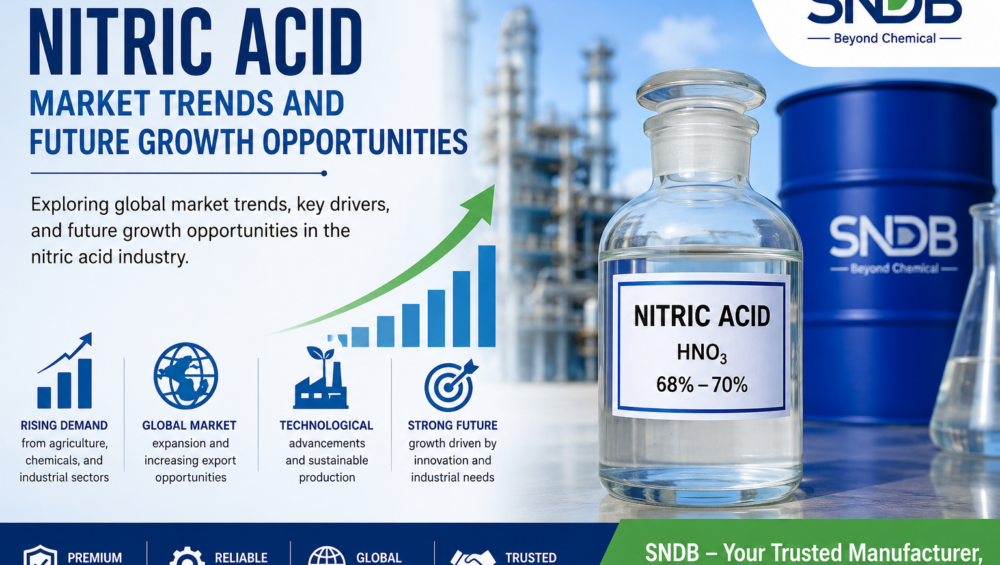
Nitric Acid Market Trends and Future Growth Opportunities: Why SNDB is a Trusted Manufacturer, Supplier, and Exporter

Nitric acid is one of the most important industrial chemicals used worldwide. Known for its strong oxidizing properties, nitric acid plays a vital role in the production of fertilizers, explosives, pharmaceuticals, dyes, and various chemical compounds. As industrialization continues to grow globally, the demand for high-quality nitric acid is increasing significantly. Businesses across multiple sectors are seeking reliable manufacturers and suppliers who can consistently deliver premium-quality products.

Among the leading names in the chemical industry, SNDB has established itself as a trusted manufacturer, supplier, and exporter of nitric acid, serving diverse industrial requirements with quality and reliability.

Understanding the Growing Nitric Acid Market

The global nitric acid market has witnessed substantial growth over the past decade. Increasing agricultural activities, rising demand for fertilizers, and expanding chemical manufacturing industries have contributed significantly to market expansion.

Nitric acid is primarily used in the production of ammonium nitrate fertilizers, which are essential for improving agricultural productivity. As the world’s population grows, the need for higher crop yields continues to drive demand for nitric acid-based fertilizers.

Additionally, industries such as mining, metallurgy, automotive, pharmaceuticals, and electronics rely heavily on nitric acid for various manufacturing processes.

Key Nitric Acid Market Trends

1. Rising Demand from the Agricultural Sector

Agriculture remains the largest consumer of nitric acid globally. The growing focus on food security and enhanced crop production is increasing the demand for nitrogen-based fertilizers, particularly ammonium nitrate.

2. Expansion of Chemical Manufacturing

The chemical industry continues to expand rapidly, creating new opportunities for nitric acid manufacturers. Nitric acid is widely used in producing intermediates, specialty chemicals, dyes, pigments, and pharmaceuticals.

3. Growth in Metal Processing Industries

Nitric acid is extensively used for metal cleaning, etching, passivation, and refining. The increasing demand for stainless steel and advanced metal products is supporting market growth.

4. Technological Advancements in Production

Modern manufacturing technologies are helping producers improve efficiency, reduce emissions, and maintain consistent product quality. Sustainable production methods are becoming a key focus area for the industry.

5. Increasing Export Opportunities

Developing economies are experiencing significant industrial growth, creating strong export opportunities for nitric acid manufacturers capable of meeting international quality standards.

Future Growth Opportunities in the Nitric Acid Industry

The future of the nitric acid market looks promising due to several growth drivers:

  • Expansion of fertilizer production facilities worldwide.
  • Increased investments in chemical manufacturing infrastructure.
  • Growing demand from pharmaceutical and healthcare industries.
  • Rising use of nitric acid in electronics and semiconductor manufacturing.
  • Development of eco-friendly and energy-efficient production technologies.

As industries continue to evolve, the requirement for high-purity nitric acid is expected to increase, opening new opportunities for manufacturers and exporters.

Why Choose SNDB for Nitric Acid?

SNDB has earned a strong reputation as a reliable manufacturer, supplier, and exporter of nitric acid. The company is committed to delivering high-quality chemical solutions that meet diverse industrial requirements.

Premium Quality Products

SNDB follows strict quality control measures throughout the manufacturing process, ensuring consistent purity and performance.

Advanced Manufacturing Facilities

The company utilizes modern production technologies and industry best practices to maintain superior product standards.

Reliable Supply Chain

SNDB ensures timely delivery and efficient logistics management, helping customers maintain uninterrupted operations.

Competitive Pricing

By combining quality with affordability, SNDB provides cost-effective nitric acid solutions for businesses of all sizes.

Global Export Capabilities

As a trusted exporter, SNDB serves customers across various international markets while complying with global quality and safety standards.

Applications of Nitric Acid Supplied by SNDB

SNDB’s nitric acid is widely used in:

  • Fertilizer manufacturing
  • Chemical processing
  • Pharmaceutical production
  • Metal treatment and refining
  • Explosives manufacturing
  • Water treatment
  • Laboratory and research applications
  • Dye and pigment production

The nitric acid market is poised for continued growth, driven by increasing industrialization, agricultural expansion, and technological advancements. As demand rises across multiple sectors, partnering with a dependable manufacturer becomes essential for ensuring product quality and supply reliability.

SNDB stands out as a trusted manufacturer, supplier, and exporter of nitric acid, offering premium-quality products, reliable service, and industry expertise. Whether for domestic requirements or international markets, SNDB continues to support businesses with high-performance nitric acid solutions that meet the evolving needs of modern industries.

Formic Acid in Industry: SNDB Manufacturing Uses and Market DemandCategoriesFormic Acid

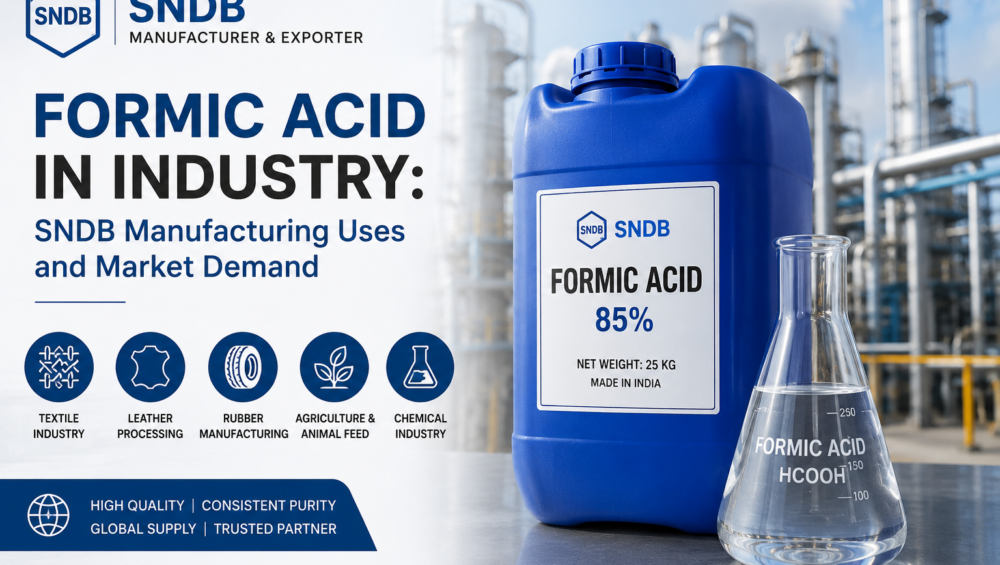
Formic Acid in Industry: SNDB Manufacturing Uses and Market Demand

Formic acid is one of the most important organic acids used across multiple industries due to its versatility, efficiency, and wide range of applications. With increasing industrial growth and global demand for specialty chemicals, formic acid has become an essential component in sectors such as textiles, leather processing, agriculture, rubber manufacturing, pharmaceuticals, and chemical production.

As a trusted manufacturer and exporter, SNDB focuses on delivering high-quality formic acid solutions that meet industrial standards and support businesses worldwide.

What is Formic Acid?

Formic acid (HCOOH) is the simplest carboxylic acid and is a colorless liquid with a strong odor. It is naturally found in certain insects and plants, but industrial production methods make it available for large-scale commercial use.

Due to its acidic properties, antibacterial characteristics, and effective processing capabilities, formic acid is widely used in manufacturing and industrial operations.

Industrial Uses of Formic Acid

1. Textile Industry Applications

The textile sector uses formic acid during dyeing, finishing, and fabric treatment processes. It helps maintain pH balance and improves dye absorption, resulting in better color consistency and fabric quality.

Manufacturers prefer formic acid because it supports efficient processing while maintaining production standards.

2. Leather Processing Industry

Formic acid plays a significant role in leather tanning and finishing. It assists in pH regulation during tanning operations and improves leather texture, flexibility, and durability.

Leather manufacturers use formic acid to enhance processing performance and achieve high-quality finished products.

3. Rubber Manufacturing

In the rubber industry, formic acid is used as a coagulating agent in natural rubber processing. It helps separate rubber particles effectively and contributes to improved production efficiency.

This application makes formic acid an important chemical for rubber processing facilities worldwide.

4. Agriculture and Animal Feed

Formic acid is widely used in agricultural applications and animal feed preservation. It helps reduce bacterial growth, supports feed quality, and extends storage life.

Its use in silage preservation and feed treatment has increased due to growing demand for efficient agricultural solutions.

5. Chemical Manufacturing

Formic acid serves as an intermediate chemical in the production of various compounds, including cleaning agents, pharmaceuticals, and industrial chemicals.

Its adaptability makes it a valuable material for chemical processing plants and industrial manufacturers.

SNDB Manufacturing Standards for Formic Acid

SNDB emphasizes quality manufacturing processes to produce formic acid suitable for industrial applications. Production systems are designed to maintain product consistency, purity levels, and performance standards.

Key manufacturing advantages include:

  • High-quality raw material selection
  • Consistent product specifications
  • Industrial-grade purity standards
  • Reliable export supply chain management
  • Quality-focused production processes

These factors help meet the needs of domestic and international customers.

Growing Market Demand for Formic Acid

Global demand for formic acid continues to increase because of expanding industrial sectors and rising chemical consumption.

Several factors are driving market growth:

Expansion of Textile Manufacturing

The growing textile industry increases demand for chemicals used in dyeing and finishing processes.

Growth in Leather Production

Leather processing facilities require efficient chemical solutions, boosting formic acid consumption.

Agricultural Development

Modern farming and feed preservation techniques support higher usage of formic acid products.

Rising Chemical Industry Applications

Industrial production and specialty chemical manufacturing create continuous demand in global markets.

As industries expand, the need for reliable manufacturers and exporters becomes increasingly important.

Why Industries Choose SNDB

SNDB focuses on quality manufacturing, efficient production methods, and international supply capabilities. By maintaining industry standards and supporting multiple sectors, SNDB aims to provide dependable formic acid solutions for industrial customers.

The company serves applications across:

  • Textile manufacturing
  • Leather processing
  • Rubber industries
  • Agriculture sector
  • Chemical production plants
  • Export markets

Formic acid remains a key industrial chemical with applications across numerous sectors. Its role in textiles, leather, agriculture, rubber processing, and chemical manufacturing continues to strengthen global demand.

With growing market opportunities and increasing industrial requirements, SNDB contributes by providing quality manufacturing and export solutions designed for modern industries. Reliable production practices and consistent quality make formic acid an essential product for businesses seeking efficient chemical applications.

The Role of Hydrochloric Acid in Steel Pickling OperationsCategoriesHydrochloric acid

The Role of Hydrochloric Acid in Steel Pickling Operations

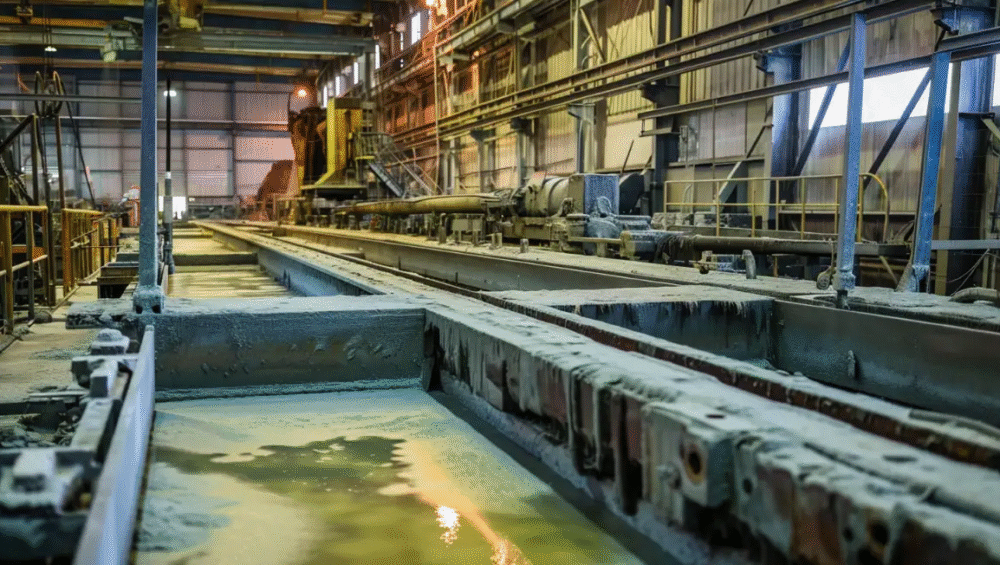
Hydrochloric Acid (HCl) plays a crucial role in the steel manufacturing industry, particularly in steel pickling operations. Steel surfaces often develop rust, scale, and oxide layers during hot rolling and heat treatment processes. These impurities can affect the quality, appearance, and performance of steel products. Hydrochloric Acid is widely used to remove these unwanted layers efficiently, ensuring a clean and smooth steel surface ready for further processing.

As a trusted manufacturer, supplier, and exporter of Hydrochloric Acid, SNDB provides high-quality chemical solutions that meet the diverse requirements of steel processing industries worldwide.

What is Steel Pickling?

Steel pickling is a chemical treatment process used to remove surface impurities such as rust, mill scale, oxides, and stains from steel products. The process involves immersing steel in a Hydrochloric Acid solution, which dissolves these unwanted layers without damaging the underlying metal.

The result is a clean and reactive steel surface that is suitable for galvanizing, coating, painting, welding, and other manufacturing processes.

Why Hydrochloric Acid is Preferred for Steel Pickling

Hydrochloric Acid is one of the most effective chemicals used in steel pickling due to several advantages:

Fast and Efficient Cleaning

Hydrochloric Acid reacts quickly with iron oxides and rust, significantly reducing pickling time and improving productivity.

Superior Surface Quality

The acid removes contaminants thoroughly, leaving behind a clean and smooth steel surface that enhances coating adhesion and overall product quality.

Lower Operating Temperatures

Unlike some alternative acids, Hydrochloric Acid can perform effectively at lower temperatures, helping industries reduce energy consumption and operating costs.

Improved Production Efficiency

Faster cleaning cycles allow manufacturers to increase throughput and maintain consistent production schedules.

Applications of Hydrochloric Acid in the Steel Industry

Hydrochloric Acid is extensively used in:

  • Steel pickling lines
  • Galvanizing plants
  • Wire manufacturing
  • Steel tube production
  • Cold rolling mills
  • Surface preparation before coating and painting
  • Metal fabrication industries

Its ability to efficiently remove oxide layers makes it indispensable across various steel processing operations.

Benefits of Using High-Quality Hydrochloric Acid

The quality of Hydrochloric Acid directly impacts pickling performance and production efficiency. High-purity Hydrochloric Acid offers:

  • Consistent chemical performance
  • Reduced process interruptions
  • Better steel surface finish
  • Lower maintenance costs
  • Enhanced operational safety
  • Improved product quality

Choosing a reliable Hydrochloric Acid supplier ensures uninterrupted production and optimal results.

SNDB: Trusted Manufacturer, Supplier, and Exporter of Hydrochloric Acid

SNDB is recognized as a leading manufacturer, supplier, and exporter of premium-quality Hydrochloric Acid for industrial applications. With a commitment to quality, consistency, and customer satisfaction, SNDB serves clients across steel processing, water treatment, chemical manufacturing, and various industrial sectors.

Why Choose SNDB?

  • High-purity Hydrochloric Acid
  • Advanced manufacturing processes
  • Strict quality control standards
  • Timely delivery and reliable supply
  • Competitive pricing
  • Export-quality products
  • Dedicated customer support

Our Hydrochloric Acid is manufactured to meet industry specifications and is trusted by steel manufacturers for efficient and reliable pickling operations.

Safety Considerations

While Hydrochloric Acid is highly effective, proper handling and storage are essential. Industries should use appropriate personal protective equipment (PPE), maintain adequate ventilation, and follow all safety guidelines during storage, transportation, and usage.

Hydrochloric Acid remains one of the most important chemicals in steel pickling operations due to its efficiency, speed, and ability to deliver superior surface quality. It helps steel manufacturers improve productivity, reduce operational costs, and achieve high-quality finished products.

For industries seeking a reliable Hydrochloric Acid solution, SNDB stands as a trusted manufacturer, supplier, and exporter committed to delivering exceptional quality and performance for steel processing applications worldwide.

Safety Measures While Handling Nitric AcidCategoriesNitric Acid Uncategorized

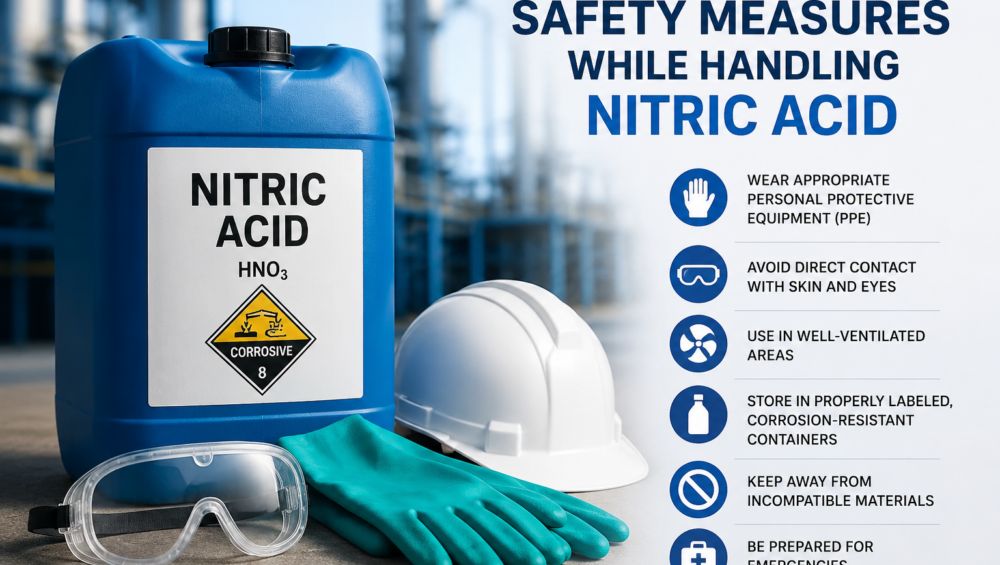
Safety Measures While Handling Nitric Acid | SNDB: Best Manufacturer and supplier and exporter

Nitric Acid (HNO₃) is one of the most widely used industrial chemicals, playing a crucial role in fertilizer production, chemical manufacturing, metal processing, pharmaceuticals, and water treatment applications. While it offers numerous industrial benefits, nitric acid is a highly corrosive and powerful oxidizing agent that requires careful handling. Exposure to nitric acid can cause severe burns, eye damage, respiratory irritation, and harmful fumes if proper safety procedures are not followed.As a trusted manufacturer, supplier, and exporter of industrial chemicals, SNDB emphasizes the importance of workplace safety when handling nitric acid.

Understanding the Hazards of Nitric Acid

Before using nitric acid, it is important to understand its potential hazards:

  • Highly corrosive to skin, eyes, and metals.
  • Produces toxic nitrogen oxide fumes that may affect the respiratory system.
  • Strong oxidizing properties can intensify fire risks when in contact with incompatible materials.
  • Can react violently with organic substances, reducing agents, and certain metals.

Essential Personal Protective Equipment (PPE)

Employees handling nitric acid should always wear:

1. Chemical-Resistant Gloves

Use acid-resistant gloves specifically rated for corrosive chemicals to prevent skin exposure.

2. Safety Goggles and Face Shield

Protect eyes and face from accidental splashes that may cause severe injuries.

3. Protective Clothing

Wear chemical-resistant aprons, full-sleeve protective suits, and safety footwear.

4. Respiratory Protection

When ventilation is inadequate, use approved respiratory protection to avoid inhalation of harmful fumes.

Safe Storage Practices

Proper storage significantly reduces the risk of accidents.

  • Store nitric acid in a cool, dry, and well-ventilated area.
  • Keep containers tightly sealed and clearly labeled.
  • Store away from combustible materials, organic substances, and incompatible chemicals.
  • Avoid direct sunlight and excessive heat sources.
  • Use corrosion-resistant storage containers approved for nitric acid.

Safe Handling Guidelines

Ensure Proper Ventilation

Nitric acid releases hazardous fumes that can affect workers’ health. Always handle the chemical in well-ventilated areas or under suitable exhaust systems.

Avoid Direct Contact

Never allow nitric acid to come into contact with bare skin, eyes, or clothing. Use dedicated equipment designed for chemical transfer and handling.

Follow Correct Dilution Procedures

When dilution is required, always add acid slowly to water. Never add water directly to concentrated acid, as it may generate excessive heat and splashing.

Use Trained Personnel

Only properly trained professionals should handle nitric acid in industrial environments.

Emergency Response Measures

Skin Contact

  • Immediately remove contaminated clothing.
  • Flush the affected area with large amounts of clean water for at least 15 minutes.
  • Seek medical attention promptly.

Eye Exposure

  • Rinse eyes continuously with water for at least 15 minutes.
  • Obtain emergency medical assistance immediately.

Inhalation Exposure

  • Move the affected person to fresh air.
  • Seek medical evaluation if breathing difficulties occur.

Spill Management

  • Evacuate unnecessary personnel from the area.
  • Wear appropriate PPE before cleanup.
  • Use compatible non-combustible absorbent materials for containment.
  • Dispose of waste according to local environmental regulations.

Importance of Workplace Safety Training

Regular safety training helps employees:

  • Understand chemical hazards.
  • Follow emergency response procedures.
  • Use PPE correctly.
  • Reduce workplace accidents and operational downtime.

Companies handling nitric acid should maintain updated Safety Data Sheets (SDS) and conduct routine safety audits.

Why Choose SNDB for Nitric Acid Supply?

SNDB is recognized as a leading manufacturer, supplier, and exporter of high-quality nitric acid and industrial chemicals. With a strong commitment to quality, safety, and customer satisfaction, SNDB delivers reliable chemical solutions for diverse industrial applications. Our products are manufactured following stringent quality standards to ensure performance, consistency, and safe industrial usage.

Nitric acid is an essential industrial chemical, but its safe handling is critical for protecting workers, equipment, and the environment. By using proper PPE, following safe storage practices, ensuring adequate ventilation, and implementing emergency response procedures, industries can significantly minimize risks associated with nitric acid handling. Partnering with a trusted supplier like SNDB ensures access to premium-quality nitric acid backed by industry expertise and a commitment to safety.

SNDB Acetic Acid Solutions for Pharmaceuticals, Textiles, and Chemical IndustriesCategoriesAcid

SNDB Acetic Acid Solutions for Pharmaceuticals, Textiles, and Chemical Industries

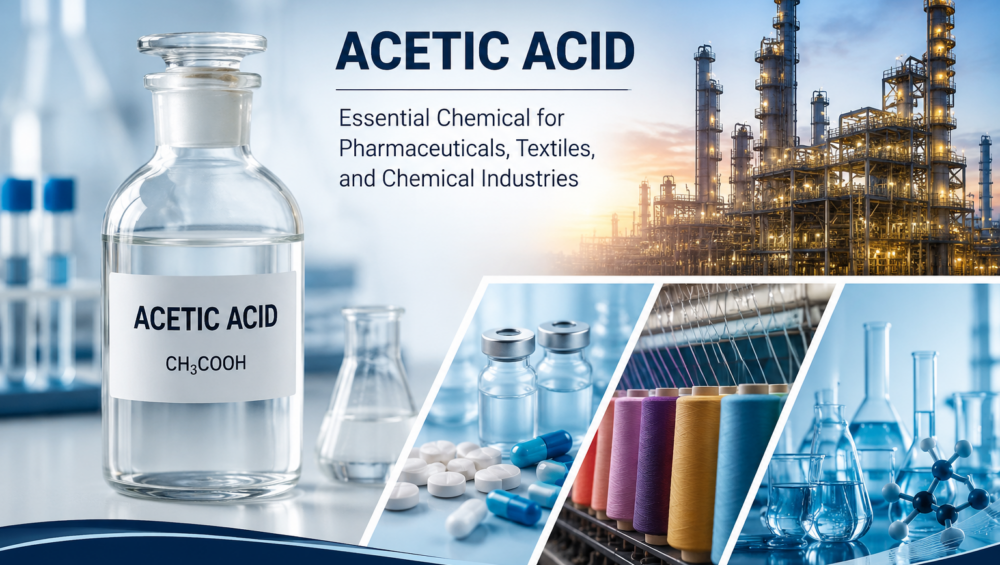
Acetic Acid is one of the most widely used industrial chemicals, playing a crucial role in the pharmaceutical, textile, and chemical manufacturing sectors. Known for its versatility, purity, and effectiveness, Acetic Acid is essential for producing a wide range of products that support modern industries.

When it comes to sourcing high-quality Acetic Acid, SNDB has established itself as a trusted manufacturer, supplier, and exporter. With a strong commitment to quality, consistency, and customer satisfaction, SNDB delivers premium Acetic Acid solutions tailored to the needs of various industries across domestic and international markets.

Understanding Acetic Acid

Acetic Acid (CH₃COOH) is a colorless organic compound with a distinctive pungent odor. It is the primary component responsible for the characteristic smell and taste of vinegar. Industrial-grade Acetic Acid is widely used as a raw material, solvent, and chemical reagent in numerous manufacturing processes.

Its unique chemical properties make it indispensable in the production of pharmaceuticals, textiles, dyes, plastics, adhesives, and specialty chemicals.

SNDB: A Trusted Acetic Acid Manufacturer and Supplier

SNDB has earned a reputation for providing high-purity Acetic Acid that meets stringent industrial standards. Through advanced manufacturing processes and rigorous quality control measures, the company ensures that every batch delivers reliable performance and consistent quality.

Key strengths of SNDB include:

  • High-purity Acetic Acid products
  • Consistent product quality
  • Bulk supply capabilities
  • Competitive pricing
  • Timely delivery
  • Global export network
  • Industry-compliant manufacturing standards
  • Dedicated customer support

These advantages make SNDB a preferred partner for industries requiring dependable chemical solutions.

Acetic Acid Applications in the Pharmaceutical Industry

The pharmaceutical sector relies heavily on Acetic Acid for the production of various medicinal compounds and active pharmaceutical ingredients (APIs).

Pharmaceutical Uses of Acetic Acid

Manufacturing of APIs

Acetic Acid serves as a critical intermediate in the synthesis of numerous pharmaceutical compounds and active ingredients used in medicines.

Solvent Applications

Its excellent solvent properties make it useful in purification and formulation processes within pharmaceutical manufacturing facilities.

Production of Acetate Compounds

Acetic Acid is used to manufacture acetate salts and derivatives that find applications in various medical formulations.

Laboratory and Research Applications

Research laboratories and pharmaceutical development centers utilize Acetic Acid in chemical reactions, analytical testing, and formulation development.

SNDB supplies pharmaceutical-grade Acetic Acid that meets industry requirements for purity and performance, ensuring reliability in sensitive manufacturing processes.

Acetic Acid Applications in the Textile Industry

The textile industry is one of the largest consumers of Acetic Acid due to its effectiveness in dyeing, finishing, and fabric treatment processes.

Textile Uses of Acetic Acid

Dyeing and Printing

Acetic Acid helps regulate pH levels during dyeing operations, ensuring better color consistency and dye absorption.

Fabric Finishing

Textile manufacturers use Acetic Acid to neutralize alkaline substances after bleaching and processing treatments.

Color Fastness Enhancement

Proper Acetic Acid treatment improves the durability and quality of textile colors, helping fabrics maintain their appearance over time.

Synthetic Fiber Production

Acetic Acid is involved in the manufacturing of acetate fibers and other synthetic textile materials.

SNDB’s premium Acetic Acid helps textile manufacturers achieve superior fabric quality, efficient processing, and consistent production results.

Acetic Acid Applications in the Chemical Industry

The chemical industry represents one of the broadest application areas for Acetic Acid. It serves as a fundamental building block in the production of numerous industrial chemicals.

Chemical Industry Applications

Production of Vinyl Acetate Monomer (VAM)

Acetic Acid is a key raw material used in manufacturing Vinyl Acetate Monomer, which is essential for adhesives, paints, and coatings.

Acetic Anhydride Manufacturing

Chemical manufacturers use Acetic Acid as a precursor in the production of Acetic Anhydride, a valuable industrial chemical.

Ester Production

Various acetate esters used in coatings, inks, fragrances, and solvents are derived from Acetic Acid.

Adhesives and Coatings

Acetic Acid contributes to the manufacture of products used in construction, packaging, automotive, and industrial applications.

Chemical Synthesis

Numerous specialty chemicals and industrial compounds rely on Acetic Acid as a raw material or reaction medium.

SNDB ensures a stable supply of high-quality Acetic Acid to support the demanding needs of chemical manufacturers worldwide.

Why Industries Choose SNDB Acetic Acid Solutions

Superior Quality Assurance

Every batch undergoes strict quality testing to ensure compliance with industrial specifications and customer requirements.

Reliable Supply Chain

SNDB maintains robust production and logistics capabilities to ensure uninterrupted supply for domestic and international clients.

Customized Bulk Supply

The company offers flexible packaging and bulk supply options suitable for businesses of all sizes.

Global Export Expertise

With extensive export experience, SNDB serves customers across multiple countries while adhering to international quality standards.

Customer-Centric Approach

SNDB works closely with customers to provide tailored solutions that meet specific industry demands and operational requirements.

Commitment to Sustainability and Safety

SNDB follows responsible manufacturing practices focused on environmental sustainability, workplace safety, and regulatory compliance. The company continuously invests in improving operational efficiency while minimizing environmental impact.

By maintaining high standards of quality and safety, SNDB supports industries that depend on reliable chemical solutions for their manufacturing operations.

Acetic Acid remains an essential chemical for pharmaceutical, textile, and chemical industries worldwide. Its versatility and effectiveness make it a critical component in countless industrial processes and products.

As a leading manufacturer, supplier, and exporter, SNDB provides high-quality Acetic Acid solutions designed to meet the evolving needs of modern industries. With a focus on quality, reliability, and customer satisfaction, SNDB continues to be the preferred choice for businesses seeking dependable Acetic Acid supplies in domestic and global markets.

For premium-quality Acetic Acid and customized industrial chemical solutions, SNDB stands as a trusted partner committed to excellence.

hydrogen perioxide| sndbCategoriesHydrogen Peroxide

SNDB: Delivering Excellence as a Top Hydrogen Peroxide Manufacturer

Because of its many uses in paper, water treatment, healthcare, textiles, and chemical processing, hydrogen peroxide has a distinct place in the chemical industry. Companies all across the world are looking for a reliable provider that guarantees safety, quality, and consistency. This is where SNDB, a leading producer of hydrogen peroxide, excels, providing quality and dependability all over the world.

What is Hydrogen Peroxide?

The colorless liquid hydrogen peroxide (H2O₂) has potent oxidizing properties. It is a crucial chemical for many different sectors because of its extensive use as an oxidant, bleaching agent, and disinfectant.

Why SNDB is the Best in Hydrogen Peroxide Manufacturing

1. High-Purity Manufacturing

Every batch of hydrogen peroxide is guaranteed to fulfill worldwide purity and safety standards by SNDB. Strict quality controls ensure efficacy for a range of commercial and industrial applications.

2. State-of-the-Art Facilities

With its state-of-the-art facilities and production technology, SNDB produces hydrogen peroxide in large quantities, guaranteeing a steady and effective supply.

3. Global Reach

Leading manufacturer, supplier, and exporter SNDB provides prompt delivery and personalized packaging solutions to customers all over the world.

4. Applications Across Industries

SNDB’s Hydrogen Peroxide is trusted for:

  • Healthcare & Disinfection – For sterilization and wound care.
  • Water Treatment – Removing impurities and disinfecting water systems.
  • Textiles & Paper – As a bleaching and whitening agent.
  • Chemical Processing – Used in oxidation reactions and synthesis.

5. Commitment to Safety & Sustainability

In addition to emphasizing product quality, SNDB guarantees environmentally friendly production methods, reducing environmental effect while upholding international standards.

Customer-Centric Approach

SNDB’s customer-first policy is what sets it apart. The business establishes enduring relationships with customers all over the world by delivering committed service and affordable prices.

SNDB is a reliable growth partner in the hydrogen peroxide manufacturing industry, not merely a provider. Focusing on quality, dependability, safety, and worldwide service, SNDB keeps up its excellent performance and establishes standards in the chemical sector.