Industrial Hydrochloric Acid Buying Guide: Quality, Purity, and ApplicationsCategoriesHydrochloric acid

Industrial Hydrochloric Acid Buying Guide: Quality, Purity, and Applications

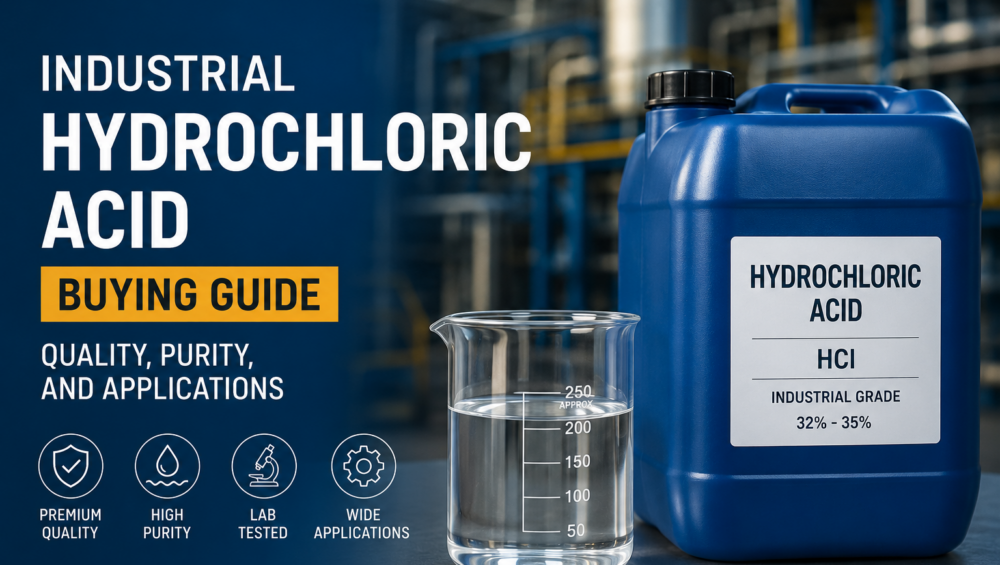
Hydrochloric Acid (HCl) is one of the most widely used industrial chemicals across manufacturing, metal processing, water treatment, chemical production, pharmaceuticals, and food processing industries. Selecting the right hydrochloric acid supplier is essential because the quality and purity of the acid directly affect production efficiency, product quality, equipment lifespan, and operational safety.

Whether you require hydrochloric acid for steel pickling, pH control, chemical synthesis, or industrial cleaning, understanding its specifications and applications helps you make the right purchasing decision.

As a trusted manufacturer, exporter, and supplier of industrial chemicals, SNDB provides premium-quality Hydrochloric Acid that meets industry standards and delivers reliable performance for various industrial applications.


What is Hydrochloric Acid?

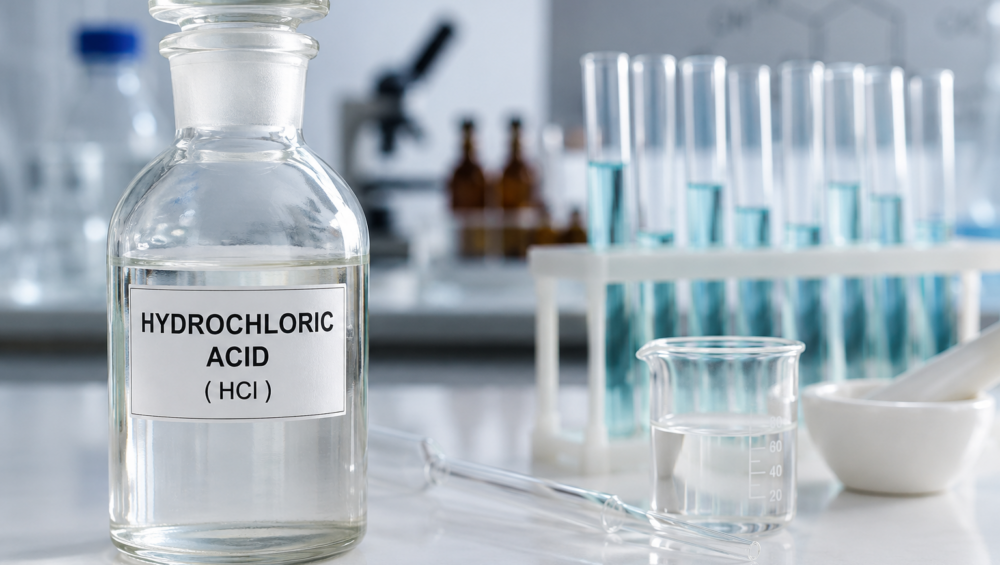
Hydrochloric Acid is a clear, colorless to slightly yellow liquid formed by dissolving hydrogen chloride gas in water. It is a highly corrosive mineral acid known for its strong acidic properties and exceptional cleaning capabilities.

Industries worldwide depend on hydrochloric acid because of its high reactivity, effectiveness, and affordability.

Chemical Properties

PropertyValue
Chemical FormulaHCl
Molecular Weight36.46 g/mol
AppearanceClear Colorless Liquid
OdorSharp, Pungent
SolubilityCompletely Soluble in Water
NatureStrong Acid

Why Hydrochloric Acid Quality Matters

The quality of hydrochloric acid has a direct impact on manufacturing processes.

High-quality hydrochloric acid offers:

  • Better chemical performance
  • Consistent concentration
  • Higher production efficiency
  • Reduced equipment corrosion
  • Lower maintenance costs
  • Improved product quality
  • Reliable industrial processing

Poor-quality acid often contains impurities that can reduce efficiency and damage machinery over time.

Understanding Hydrochloric Acid Purity

Purity is one of the most important factors when purchasing hydrochloric acid.

Industrial buyers should evaluate:

1. Acid Concentration

Industrial hydrochloric acid is commonly available in concentrations ranging from 28% to 35%, depending on the intended application.

Higher concentration provides:

  • Stronger cleaning capability
  • Better reaction efficiency
  • Reduced chemical consumption

2. Metal Impurities

Low iron and heavy metal content are essential for industries like:

  • Pharmaceuticals
  • Food Processing
  • Electronics
  • Water Treatment

High impurities can negatively impact production quality.


3. Consistent Quality

Reliable suppliers maintain strict quality control procedures to ensure every batch has consistent concentration and purity.

Consistency helps industries maintain uninterrupted production.

Key Industrial Applications of Hydrochloric Acid

Hydrochloric Acid plays a vital role in numerous industrial sectors.

Steel Pickling

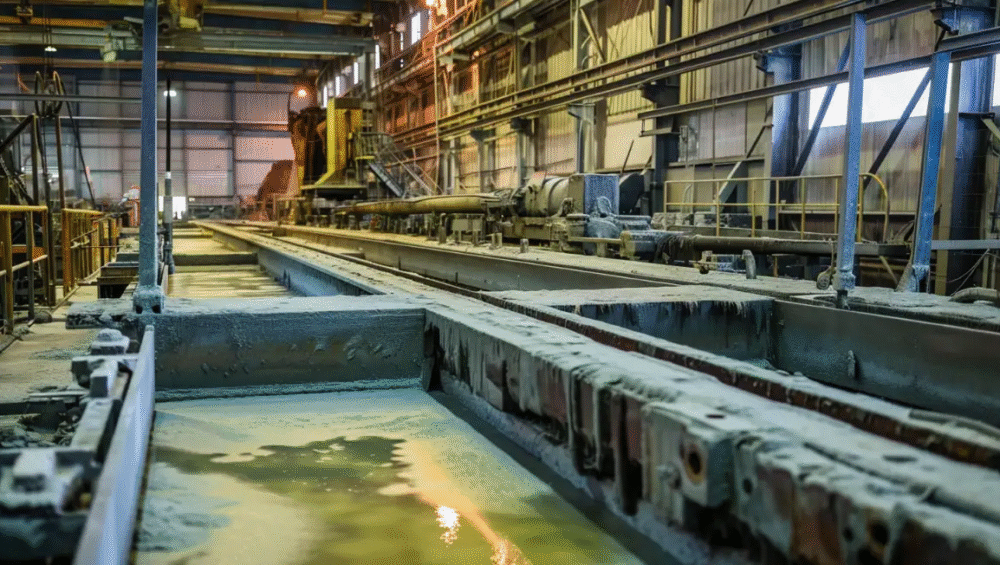
One of the largest applications is removing rust, scale, and oxide layers from steel surfaces before galvanizing, coating, or manufacturing.

Benefits include:

  • Cleaner metal surfaces
  • Improved coating adhesion
  • Better product finish
  • Enhanced corrosion resistance

Chemical Manufacturing

Hydrochloric acid serves as a raw material for manufacturing:

  • Chlorides
  • Fertilizers
  • Organic chemicals
  • Inorganic chemicals
  • Dyes
  • Pigments

Its strong acidity makes it an essential component in numerous chemical reactions.

Water Treatment

Water treatment facilities use hydrochloric acid for:

  • pH adjustment
  • Water purification
  • Resin regeneration
  • Boiler maintenance
  • Cooling tower treatment

It improves treatment efficiency while reducing scale formation.

Oil and Gas Industry

Hydrochloric acid is widely used for:

  • Oil well acidizing
  • Removing drilling debris
  • Improving reservoir permeability
  • Cleaning production equipment

Food Industry

Food-grade hydrochloric acid is used in controlled processes such as:

  • Food ingredient manufacturing
  • Starch processing
  • Sugar refining
  • Gelatin production

Strict purity standards are maintained for food applications.

Pharmaceutical Industry

Hydrochloric acid is involved in manufacturing:

  • Medicines
  • Active Pharmaceutical Ingredients (APIs)
  • Laboratory reagents
  • Vitamin production

High-purity grades are essential for pharmaceutical manufacturing.

Textile Industry

Textile manufacturers use hydrochloric acid for:

  • Fabric processing
  • Dye production
  • pH control
  • Chemical finishing

Leather Industry

Applications include:

  • Leather processing
  • pH regulation
  • Cleaning
  • Chemical treatment

Industrial Cleaning

Hydrochloric acid effectively removes:

  • Rust
  • Mineral deposits
  • Scale
  • Cement residues
  • Industrial stains

This makes it valuable for equipment maintenance.

Factors to Consider Before Buying Hydrochloric Acid

Choosing the right hydrochloric acid supplier involves evaluating several important factors.

Product Quality

Always request:

  • Quality certificates
  • Test reports
  • Purity specifications
  • Batch consistency

Packaging Options

Reliable suppliers provide packaging suitable for different industrial needs.

Common options include:

  • HDPE Carboys
  • Drums
  • IBC Tanks
  • Tanker Loads
  • Bulk Supply

Supply Capacity

Industrial operations require uninterrupted supply.

Choose suppliers capable of:

  • Large-volume production
  • Timely delivery
  • Nationwide distribution
  • Export capabilities

Compliance

Ensure the supplier follows:

  • Industry quality standards
  • Safe manufacturing practices
  • Environmental regulations
  • Proper documentation

Technical Support

Experienced suppliers help customers select:

  • Appropriate concentration
  • Suitable packaging
  • Storage recommendations
  • Safe handling practices

Safe Storage of Hydrochloric Acid

Proper storage ensures safety and maintains product quality.

Recommended storage practices include:

  • Store in corrosion-resistant containers.
  • Keep away from direct sunlight.
  • Maintain cool, dry, and ventilated storage areas.
  • Avoid contact with incompatible chemicals.
  • Keep containers tightly sealed.
  • Train personnel in safe handling procedures.

Safety Guidelines

Hydrochloric acid is highly corrosive and must be handled carefully.

Safety measures include:

  • Wear chemical-resistant gloves.
  • Use safety goggles and face shields.
  • Wear protective clothing.
  • Ensure proper ventilation.
  • Follow emergency response procedures.
  • Use approved chemical handling equipment.

Why Choose SNDB for Industrial Hydrochloric Acid?

SNDB has established itself as a reliable manufacturer, exporter, and supplier of premium-quality industrial chemicals.

High Product Quality

Every batch undergoes strict quality testing to ensure consistent purity and performance.

Reliable Supply Chain

SNDB supports industries with timely deliveries and dependable inventory management.

Multiple Packaging Options

Products are available in various packaging sizes, including bulk quantities for industrial requirements.

Competitive Pricing

Efficient manufacturing processes allow SNDB to offer premium products at competitive prices.

Technical Expertise

The experienced team provides guidance on product selection, storage, and industrial applications.

Customer-Centric Approach

SNDB focuses on long-term partnerships by delivering consistent quality and excellent customer support.


Industries Served by SNDB

SNDB supplies Hydrochloric Acid to a wide range of industries, including:

  • Chemical Manufacturing
  • Steel Processing
  • Water Treatment
  • Pharmaceuticals
  • Food Processing
  • Textile Industry
  • Leather Industry
  • Oil & Gas
  • Mining
  • Industrial Cleaning
  • Laboratories
  • Agriculture

Future Demand for Hydrochloric Acid

Growing industrialization, infrastructure development, and expanding manufacturing sectors continue to increase the global demand for Hydrochloric Acid. Industries are seeking dependable suppliers who can provide consistent quality, safe packaging, and reliable logistics. Companies like SNDB are well-positioned to meet these evolving requirements with high-quality products and customer-focused service.

Hydrochloric Acid is an essential industrial chemical that supports a wide range of manufacturing and processing applications. Choosing the right supplier is critical to ensuring product quality, operational efficiency, and workplace safety.

When purchasing industrial hydrochloric acid, consider factors such as purity, concentration, packaging, compliance, and supplier reliability. With a commitment to quality, timely delivery, and technical expertise, SNDB is a trusted partner for industries seeking premium-grade Hydrochloric Acid for diverse applications.


Frequently Asked Questions (FAQs)

1. What is Hydrochloric Acid used for?

Hydrochloric Acid is used in steel pickling, chemical manufacturing, water treatment, pharmaceuticals, food processing, textiles, leather processing, and industrial cleaning.

2. What concentration of Hydrochloric Acid is commonly available?

Industrial Hydrochloric Acid is typically available in concentrations ranging from 28% to 35%, depending on the application.

3. Why is purity important when buying Hydrochloric Acid?

High purity improves chemical performance, minimizes contamination, protects equipment, and ensures consistent production results.

4. How should Hydrochloric Acid be stored?

It should be stored in corrosion-resistant containers in a cool, dry, well-ventilated area, away from incompatible materials and direct sunlight.

5. Why choose SNDB as a Hydrochloric Acid supplier?

SNDB offers premium-quality Hydrochloric Acid with consistent purity, stringent quality control, reliable supply, multiple packaging options, competitive pricing, and dedicated technical support.
Applications of Acetic Acid in Paints, Adhesives, and Coatings | SNDB – Best Acetic Acid Manufacturer in IndiaCategoriesAcid Uncategorized

Applications of Acetic Acid in Paints, Adhesives, and Coatings | SNDB – Best Acetic Acid Manufacturer in India

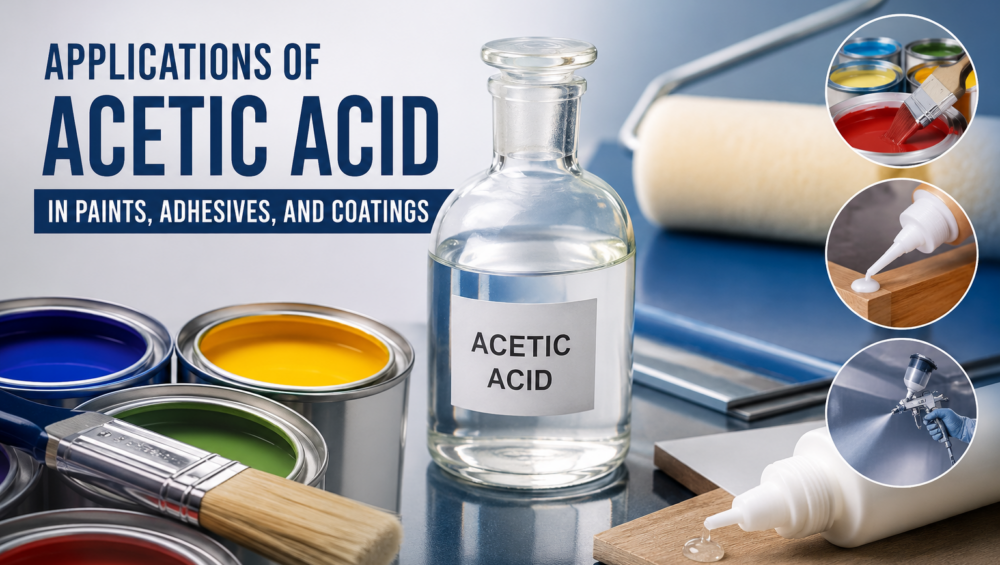
Acetic acid is one of the most important industrial chemicals used across a wide range of manufacturing industries. Its versatility, high purity, and excellent chemical properties make it a key raw material in the production of paints, adhesives, coatings, textiles, pharmaceuticals, and specialty chemicals. Among its many applications, the paint, adhesive, and coatings industries rely heavily on high-quality acetic acid to ensure superior product performance and consistency.

As a leading Acetic Acid Manufacturer, Supplier, and Exporter in India, SNDB provides premium-quality acetic acid that meets international quality standards. Our products are trusted by manufacturers across India and global markets for their purity, reliability, and consistent performance.

What is Acetic Acid?

Acetic acid (CH₃COOH) is a colorless organic acid with a strong vinegar-like odor. Industrial-grade and glacial acetic acid are widely used as chemical intermediates in manufacturing processes.

Its properties include:

  • High purity
  • Excellent solvency
  • Strong chemical stability
  • Easy compatibility with industrial formulations
  • Reliable performance across multiple applications

These characteristics make acetic acid an essential ingredient in the production of paints, adhesives, and protective coatings.

Applications of Acetic Acid in Paint Manufacturing

The paint industry requires chemicals that improve formulation stability, pigment dispersion, and overall product quality. Acetic acid plays a crucial role in several manufacturing stages.

1. Production of Vinyl Acetate Monomer (VAM)

One of the primary uses of acetic acid is manufacturing Vinyl Acetate Monomer (VAM), which is a major raw material for producing:

  • Water-based paints
  • Emulsion paints
  • Decorative coatings
  • Industrial paints
  • Acrylic coatings

VAM-based polymers offer excellent adhesion, flexibility, and durability.

2. pH Control During Paint Production

Acetic acid helps maintain the correct pH level during paint manufacturing. Proper pH ensures:

  • Better pigment stability
  • Improved color consistency
  • Longer shelf life
  • Enhanced product performance

3. Solvent Manufacturing

Acetic acid is used to manufacture acetate esters such as:

  • Ethyl Acetate
  • Butyl Acetate

These solvents are widely used in:

  • Automotive paints
  • Industrial coatings
  • Wood finishes
  • Decorative paints

Applications of Acetic Acid in Adhesives

Modern adhesive manufacturing depends on high-quality raw materials to achieve strong bonding and long-lasting performance.

1. Manufacturing Vinyl Acetate-Based Adhesives

Acetic acid is essential for producing vinyl acetate polymers used in:

  • Paper adhesives
  • Packaging adhesives
  • Wood glue
  • Furniture adhesives
  • Construction adhesives

These adhesives provide:

  • Strong bonding strength
  • Water resistance
  • Fast curing
  • Excellent durability

2. Pressure-Sensitive Adhesives

Acetic acid derivatives are also used in pressure-sensitive adhesives found in:

  • Labels
  • Packaging tapes
  • Medical tapes
  • Protective films

These products require consistent quality and excellent adhesive properties.

3. Industrial Adhesive Formulations

Manufacturers use acetic acid to improve:

  • Chemical stability
  • Product consistency
  • Manufacturing efficiency
  • Adhesive flexibility

Applications of Acetic Acid in Coatings

Industrial coatings protect surfaces from corrosion, chemicals, moisture, and environmental damage.

Acetic acid supports coating production by helping manufacture high-performance resins and polymers.

Applications include:

  • Metal coatings
  • Automotive coatings
  • Marine coatings
  • Industrial protective coatings
  • Wood coatings
  • Architectural coatings
  • Powder coatings

Benefits of Using High-Purity Acetic Acid

Choosing premium-quality acetic acid offers several advantages:

  • Consistent chemical composition
  • Higher production efficiency
  • Better product stability
  • Improved formulation quality
  • Reduced manufacturing defects
  • Longer shelf life of finished products
  • Compliance with international quality standards

industries Served

SNDB supplies acetic acid to numerous industries, including:

  • Paint Manufacturing
  • Adhesive Manufacturing
  • Coating Industry
  • Textile Industry
  • Chemical Manufacturing
  • Pharmaceutical Industry
  • Food Processing
  • Dye & Pigment Industry
  • Printing Ink Industry
  • Leather Processing

Why Choose SNDB as Your Acetic Acid Manufacturer?

SNDB has established itself as one of India’s trusted manufacturers and exporters of industrial chemicals by consistently delivering premium-quality products.

Our Strengths

  • Premium Quality Acetic Acid
  • High Purity Products
  • Advanced Manufacturing Facilities
  • Strict Quality Control
  • Competitive Pricing
  • Bulk Supply Capability
  • On-Time Delivery
  • Export-Ready Packaging
  • Reliable Customer Support
  • Global Distribution Network

Whether you require acetic acid for paints, adhesives, coatings, or other industrial applications, SNDB provides dependable chemical solutions tailored to your business needs.

Quality Assurance

Every batch of acetic acid supplied by SNDB undergoes rigorous quality testing to ensure:

  • High purity
  • Consistent concentration
  • Safe handling
  • Compliance with industry standards
  • Reliable industrial performance

Our commitment to quality has earned the trust of customers across India and international markets.

Acetic acid is a vital raw material in the production of paints, adhesives, and coatings. Its role in manufacturing high-performance polymers, solvents, and chemical intermediates makes it indispensable for modern industries. Using high-purity acetic acid helps improve product quality, manufacturing efficiency, and long-term performance.

If you are looking for a reliable Acetic Acid Manufacturer, Supplier, and Exporter in India, SNDB is your trusted partner. With advanced manufacturing capabilities, stringent quality standards, and a customer-focused approach, SNDB delivers premium industrial chemicals that meet the evolving needs of businesses worldwide.

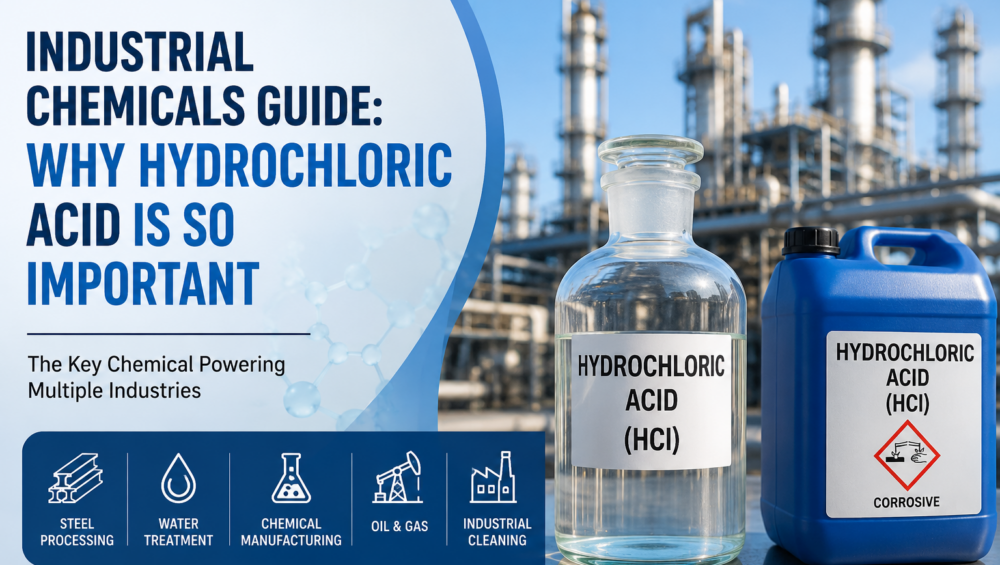
Industrial Chemicals Guide: Why Hydrochloric Acid Is So ImportantCategoriesUncategorized

Industrial Chemicals Guide: Why Hydrochloric Acid Is So Important

Hydrochloric Acid (HCl) is one of the most widely used industrial chemicals across the world. From steel manufacturing and water treatment to chemical processing and oil & gas industries, hydrochloric acid plays a crucial role in improving efficiency and product quality. Its strong acidic properties make it an essential chemical for cleaning, pH control, metal processing, and the production of numerous industrial products.

If you are looking for a reliable Hydrochloric Acid manufacturer and exporter, choosing a trusted supplier ensures consistent quality, purity, and timely delivery. Companies like SNDB provide high-quality hydrochloric acid that meets the needs of various industries worldwide.

What Is Hydrochloric Acid?

Hydrochloric Acid is a clear, colorless, highly corrosive solution of hydrogen chloride (HCl) dissolved in water. It is a strong mineral acid known for its excellent ability to dissolve metal oxides, remove scale, and regulate pH levels.

Because of its versatility, hydrochloric acid is used in manufacturing, industrial cleaning, food processing, pharmaceuticals, mining, oil & gas, and wastewater treatment.

Why Is Hydrochloric Acid So Important?

Hydrochloric acid is considered one of the most important industrial chemicals because it supports multiple manufacturing processes and helps industries maintain high production standards.

1. Steel Pickling

One of the largest applications of hydrochloric acid is steel pickling. Before steel is galvanized, coated, or processed, rust and oxide layers must be removed. Hydrochloric acid efficiently cleans the metal surface, ensuring better quality and longer-lasting steel products.

2. Water Treatment

Water treatment plants use hydrochloric acid to adjust pH levels and remove unwanted mineral deposits. Maintaining the correct pH helps improve water quality and protects industrial equipment from scaling.

3. Chemical Manufacturing

Hydrochloric acid is an essential raw material in the production of:

  • Calcium Chloride
  • Ferric Chloride
  • Zinc Chloride
  • Organic chemicals
  • Inorganic compounds
  • Industrial salts

It is widely used in chemical synthesis because of its high reactivity.

4. Oil & Gas Industry

In the oil and gas sector, hydrochloric acid is used during well stimulation and acidizing operations. It helps dissolve limestone and other mineral deposits, improving the flow of oil and natural gas.

5. Industrial Cleaning

Factories and manufacturing plants use hydrochloric acid to remove:

  • Rust
  • Scale
  • Calcium deposits
  • Cement residues
  • Mineral buildup

Its powerful cleaning properties improve equipment performance and reduce maintenance costs.

6. Food Processing

Food-grade hydrochloric acid is used for:

  • pH adjustment
  • Food ingredient processing
  • Sugar production
  • Starch modification

Strict quality standards ensure safe use in food manufacturing.

7. Pharmaceutical Industry

Hydrochloric acid is used in pharmaceutical manufacturing to produce medicines, vitamins, and various chemical intermediates while maintaining precise chemical reactions.

Advantages of Hydrochloric Acid

Hydrochloric acid offers several benefits that make it indispensable across industries:

  • Strong and effective cleaning agent
  • Excellent pH control
  • Removes rust and scale quickly
  • High chemical purity
  • Supports efficient manufacturing
  • Cost-effective for industrial use
  • Suitable for multiple industrial applications

Industries That Use Hydrochloric Acid

Hydrochloric acid is widely used in:

  • Steel and Metal Processing
  • Chemical Manufacturing
  • Oil & Gas
  • Water Treatment Plants
  • Pharmaceutical Industry
  • Food Processing
  • Textile Industry
  • Mining
  • Construction
  • Fertilizer Manufacturing

How to Choose the Right Hydrochloric Acid Supplier

When selecting a hydrochloric acid supplier, consider the following factors:

  • Product purity and consistent quality
  • Compliance with international quality standards
  • Reliable packaging options
  • Bulk supply capability
  • Timely delivery
  • Competitive pricing
  • Strong technical support
  • Export experience

A trusted manufacturer ensures that your industrial operations run smoothly without interruptions.

Why Choose SNDB for Hydrochloric Acid?

SNDB is a leading Hydrochloric Acid manufacturer, supplier, and exporter in India, known for delivering premium-quality industrial chemicals to customers worldwide.

Why industries trust SNDB:

  • High-purity Hydrochloric Acid
  • Advanced manufacturing facilities
  • Strict quality control
  • Bulk supply capability
  • Safe and secure packaging
  • Timely domestic and international delivery
  • Competitive pricing
  • Excellent customer support

Whether you require hydrochloric acid for steel processing, water treatment, chemical manufacturing, or industrial cleaning, SNDB provides reliable solutions tailored to your business needs.

Hydrochloric Acid is one of the most important industrial chemicals because of its wide range of applications and outstanding performance. From steel pickling and water treatment to pharmaceuticals and oil & gas, it supports essential industrial processes worldwide. Choosing a reliable manufacturer like SNDB ensures consistent quality, safe handling, and dependable supply, helping your business achieve greater efficiency and productivity

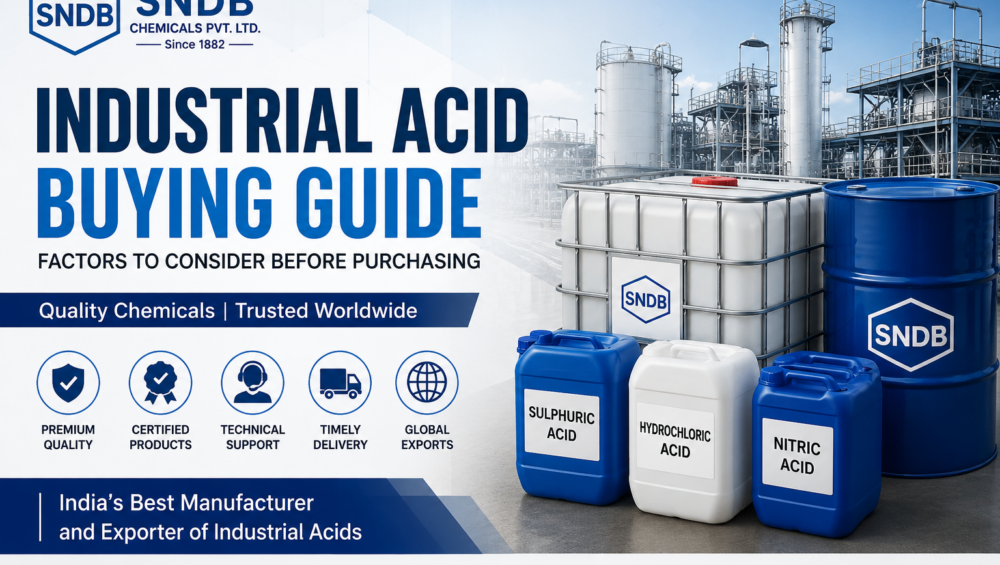
Industrial Acid Buying Guide: Factors to Consider Before PurchasingCategoriesAcid

Industrial Acid Buying Guide: Factors to Consider Before Purchasing

Industrial acids are essential for industries such as chemical manufacturing, pharmaceuticals, food processing, water treatment, metal finishing, textiles, fertilizers, and petrochemicals. Choosing the right industrial acid supplier is critical because the quality of chemicals directly affects production efficiency, product quality, and operational safety.

If you are planning to purchase industrial acids in bulk, this guide will help you understand the most important factors before making your decision. As one of India’s leading chemical manufacturers and exporters, SNDB supplies high-quality industrial acids that meet international standards and serve customers in over 40 countries.

Why Choosing the Right Industrial Acid Supplier Matters

Industrial acids play a vital role in manufacturing processes. Low-quality or impure chemicals can result in:

  • Reduced production efficiency
  • Equipment corrosion
  • Higher maintenance costs
  • Product quality issues
  • Safety risks

Working with a trusted manufacturer ensures consistent quality, timely delivery, and technical support.

1. Product Purity and Quality Standards

Purity is the first factor to consider when purchasing industrial acids. High-purity chemicals improve manufacturing performance and reduce contamination risks.

Always ask for:

  • Certificate of Analysis (COA)
  • Material Safety Data Sheet (MSDS)
  • Product specifications
  • Batch testing reports

SNDB follows strict quality control procedures and manufactures chemicals that comply with international quality standards.

2. Check Industry Certifications

Reliable chemical manufacturers maintain internationally recognized certifications that demonstrate their commitment to quality, safety, and environmental management.

Look for suppliers with certifications such as:

  • ISO 9001
  • ISO 14001
  • ISO 45001

These certifications ensure that products are manufactured using standardized processes. SNDB highlights these certifications as part of its quality assurance system.

3. Wide Product Portfolio

It is always beneficial to choose a supplier offering multiple industrial chemicals under one roof.

SNDB supplies a wide range of industrial chemicals, including:

  • Sulphuric Acid
  • Nitric Acid
  • Hydrochloric Acid
  • Acetic Acid
  • Formic Acid
  • Phosphoric Acid
  • Calcium Chloride
  • Bromides
  • Ferric Chloride
  • Potassium Chloride
  • Sodium Bromide
  • Zinc Bromide

This simplifies procurement and ensures a reliable long-term supply.

4. Packaging Options

Industrial acids should be supplied in secure packaging to prevent leakage and contamination.

Common packaging includes:

  • HDPE Drums
  • IBC Tanks
  • Bulk Tankers
  • Customized Packaging

Proper packaging also reduces transportation risks and ensures product integrity.

5. Supply Chain and Delivery

Timely delivery is crucial for uninterrupted production.

Before choosing a supplier, verify:

  • Warehousing facilities
  • Inventory availability
  • Export capability
  • Delivery timelines
  • Logistics support

SNDB operates multiple warehouses and has a strong export network serving customers worldwide.

6. Technical Support

A professional manufacturer should help customers select the correct chemical grade based on their industry requirements.

Technical support includes:

  • Product recommendations
  • Safety guidelines
  • Storage advice
  • Documentation
  • Application support

7. Safety and Compliance

Industrial acids require proper handling and storage.

Ensure your supplier provides:

  • MSDS
  • Safe handling instructions
  • Emergency response information
  • Regulatory compliance documents

This protects both workers and production facilities.

8. Competitive Pricing

The lowest price does not always provide the best value.

Consider:

  • Product quality
  • Consistency
  • Delivery reliability
  • Customer support
  • Long-term partnership

High-quality chemicals reduce operational costs over time.

9. Export Experience

If you source chemicals internationally, choose an exporter with proven global experience.

SNDB has more than 140 years of industry heritage and exports industrial chemicals to customers across over 40 countries, supported by international quality systems and global logistics capabilities.

Why Choose SNDB?

SNDB has established itself as one of India’s trusted manufacturers, suppliers, and exporters of industrial chemicals by focusing on quality, reliability, and customer satisfaction.

Key advantages include:

  • Over 140 years of industry experience
  • Export network across 40+ countries
  • ISO-certified manufacturing
  • Advanced production facilities
  • Strict quality control
  • Competitive pricing
  • Bulk supply capability
  • Reliable global logistics
  • Customer-focused service

Purchasing industrial acids is more than simply comparing prices. Product quality, certifications, safety standards, packaging, logistics, and supplier experience all play a major role in ensuring successful industrial operations.

Whether you require sulphuric acid, nitric acid, hydrochloric acid, phosphoric acid, acetic acid, or other specialty chemicals, partnering with an experienced manufacturer like SNDB helps ensure consistent quality, dependable supply, and long-term business value.

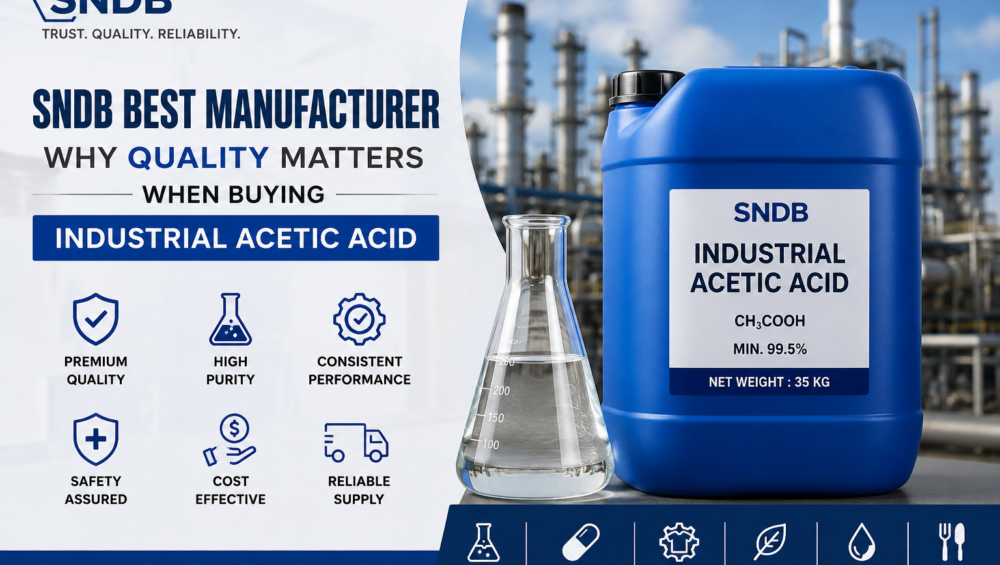
SNDB Best Manufacturer | Why Quality Matters When Buying Industrial Acetic AcidCategoriesUncategorized

Why Quality Matters When Buying Industrial Chemicals

Acetic acid is one of the most widely used industrial chemicals across various industries, including pharmaceuticals, food processing, textiles, chemicals, agriculture, and water treatment. Whether it is used as a raw material or a processing aid, the quality of acetic acid directly affects production efficiency, product performance, and operational safety.

Choosing a trusted manufacturer and supplier is essential for businesses that rely on consistent chemical quality. SNDB is recognized as a leading manufacturer, exporter, and supplier of premium-quality industrial acetic acid, delivering products that meet international quality standards and industry requirements.

What Is Industrial Acetic Acid?

Industrial acetic acid is a colorless organic acid with a strong, vinegar-like odor. It is commonly used as a chemical intermediate and manufacturing ingredient in numerous industrial processes.

It is available in different concentrations to suit specific industrial applications and is valued for its purity, stability, and versatility.

Why Quality Matters When Buying Industrial Acetic Acid

1. Consistent Manufacturing Performance

High-quality acetic acid ensures stable chemical reactions and minimizes production interruptions. Low-grade chemicals may contain impurities that affect manufacturing efficiency and product consistency.

Premium-quality acetic acid helps manufacturers maintain:

  • Reliable production output
  • Better product quality
  • Reduced processing errors
  • Improved operational efficiency

2. Higher Purity for Better Results

Purity is one of the most important factors when selecting industrial chemicals. High-purity acetic acid provides better reaction performance and minimizes contamination risks.

Quality acetic acid is essential for industries such as:

  • Pharmaceuticals
  • Food processing
  • Chemical manufacturing
  • Textile processing
  • Laboratory applications

3. Improved Product Quality

The final product is only as good as its raw materials. Using premium acetic acid helps manufacturers produce products that meet customer expectations and international quality standards.

Benefits include:

  • Better chemical stability
  • Enhanced product consistency
  • Reduced rejection rates
  • Improved customer satisfaction

4. Enhanced Workplace Safety

Industrial chemicals should always meet strict quality and safety standards. High-quality acetic acid from a trusted supplier is manufactured, packed, and transported according to industry regulations.

Proper quality control reduces the risk of:

  • Chemical contamination
  • Packaging failures
  • Handling issues
  • Storage-related problems

5. Cost Savings in the Long Run

While lower-priced chemicals may appear attractive, poor-quality products often result in production losses, equipment maintenance, and increased waste.

Investing in premium acetic acid helps businesses reduce:

  • Production downtime
  • Material wastage
  • Equipment damage
  • Unexpected operating costs

Applications of Industrial Acetic Acid

Industrial acetic acid is widely used in various sectors, including:

Chemical Industry

Used in the production of acetate esters, vinyl acetate monomer, and other industrial chemicals.

Pharmaceutical Industry

Acts as a raw material for medicines, disinfectants, and pharmaceutical intermediates.

Textile Industry

Used in dyeing, finishing, and pH control during textile manufacturing.

Food Industry

Food-grade acetic acid is used in preservatives, flavoring agents, and vinegar production.

Agriculture

Utilized in pesticide formulations and various agricultural chemical applications.

Water Treatment

Helps regulate pH levels and supports industrial water treatment processes.

How to Identify High-Quality Industrial Acetic Acid

Before purchasing industrial acetic acid, consider the following factors:

  • High purity level
  • Consistent chemical composition
  • Quality certifications
  • Reliable packaging
  • Safe transportation
  • Technical support
  • On-time delivery
  • Trusted manufacturer reputation

Why Choose SNDB for Industrial Acetic Acid?

SNDB has established itself as a trusted manufacturer, exporter, and supplier of industrial chemicals by focusing on quality, reliability, and customer satisfaction.

Key Advantages of SNDB

  • Premium-quality industrial acetic acid
  • Advanced manufacturing processes
  • Strict quality control procedures
  • Bulk supply capabilities
  • Competitive pricing
  • Timely domestic and international delivery
  • Secure packaging solutions
  • Dedicated customer support
  • Customized supply solutions for various industries

SNDB serves customers across multiple industries by delivering chemical products that meet international standards and ensure consistent performance.

When purchasing industrial acetic acid, quality should always be the top priority. High-purity chemicals improve manufacturing efficiency, enhance product quality, reduce operational risks, and provide long-term cost savings.

As a trusted manufacturer, exporter, and supplier, SNDB delivers premium industrial acetic acid that meets the needs of industries worldwide. Choosing SNDB means investing in reliable quality, dependable supply, and superior customer service for your industrial chemical requirements.

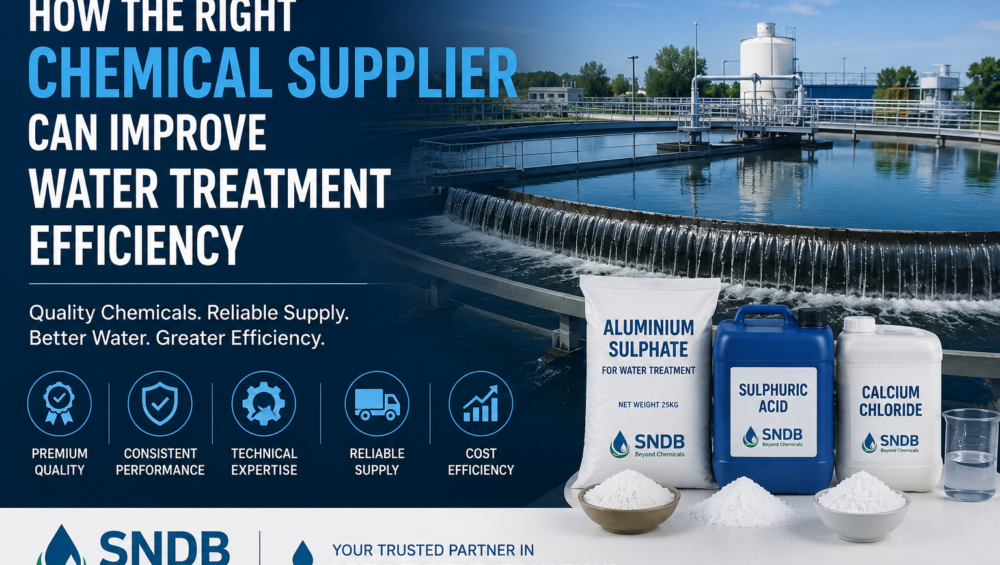
How the Right Chemical Supplier Can Improve Water Treatment EfficiencyCategoriesAcid

How the Right Chemical Supplier Can Improve Water Treatment Efficiency

Water is one of the most valuable resources for industries, municipalities, and commercial facilities. Whether it is used in manufacturing, power generation, food processing, pharmaceuticals, or municipal water treatment plants, maintaining high water quality is essential for operational efficiency and environmental compliance. While advanced treatment systems play a significant role, the quality of water treatment chemicals and the reliability of the supplier are equally important.

Choosing the right chemical supplier can significantly improve water treatment efficiency, reduce operational costs, ensure regulatory compliance, and extend the lifespan of treatment equipment. A trusted supplier not only provides premium-quality chemicals but also offers technical expertise, consistent supply, and customized solutions tailored to your industry’s needs.

Why Chemical Quality Matters

The effectiveness of any water treatment process depends on the quality of the chemicals used. Low-quality or inconsistent chemicals can lead to poor coagulation, inefficient sedimentation, increased sludge production, equipment scaling, and higher operating costs.

High-quality water treatment chemicals offer several advantages:

  • Faster and more effective contaminant removal
  • Consistent treatment performance
  • Lower chemical consumption
  • Reduced maintenance costs
  • Improved equipment efficiency
  • Better compliance with environmental regulations

Using premium-grade chemicals ensures that your treatment process operates smoothly and delivers reliable results.

Consistent Supply Ensures Uninterrupted Operations

Water treatment facilities cannot afford unexpected chemical shortages. Delays in supply can disrupt production, increase downtime, and impact water quality.

A reliable chemical supplier maintains strong manufacturing capabilities, adequate inventory, and efficient logistics to ensure timely deliveries. Consistent product availability helps industries maintain continuous operations without interruption.

Technical Expertise Makes a Difference

A professional chemical supplier offers more than just products. Experienced suppliers understand different water treatment challenges and recommend the most suitable chemical solutions based on water characteristics and industrial requirements.

Technical support may include:

  • Water quality analysis
  • Product recommendations
  • Dosage optimization
  • Process improvement suggestions
  • Troubleshooting treatment issues
  • Regulatory guidance

This expertise helps industries improve treatment performance while reducing unnecessary chemical usage.

Access to High-Performance Water Treatment Chemicals

A dependable supplier offers a comprehensive range of water treatment chemicals suitable for different industries, including:

  • Aluminium Sulphate
  • Ferric Alum
  • Sulphuric Acid
  • Calcium Chloride
  • Coagulants
  • Flocculants
  • pH Control Chemicals
  • Industrial Process Chemicals

Having multiple products available from one trusted supplier simplifies procurement and ensures product compatibility.

Improved Cost Efficiency

Many businesses focus only on chemical prices when selecting a supplier. However, the lowest-priced product is not always the most economical option.

High-quality chemicals often require lower dosages, perform more efficiently, reduce equipment maintenance, and minimize treatment failures. This results in lower overall operating costs and higher long-term savings.

Compliance with Industry Standards

Industries must comply with strict environmental and safety regulations regarding water discharge and chemical handling.

A trusted supplier manufactures chemicals according to established quality standards and provides:

  • Quality certifications
  • Technical data sheets
  • Safety Data Sheets (SDS)
  • Batch consistency
  • Regulatory compliance documentation

These documents help industries meet government and environmental requirements with confidence.

Customized Solutions for Different Industries

Different industries require different water treatment approaches. A knowledgeable supplier understands these unique requirements and recommends suitable products for applications such as:

  • Municipal water treatment
  • Wastewater treatment plants
  • Paper manufacturing
  • Textile processing
  • Chemical manufacturing
  • Food and beverage industries
  • Power plants
  • Steel and metal processing

Customized solutions improve efficiency while reducing unnecessary chemical usage.

Reliable Customer Support

Excellent customer service is another important advantage of working with an experienced chemical supplier. Quick responses, technical assistance, and after-sales support help resolve operational challenges without unnecessary delays.

Strong customer relationships ensure businesses receive ongoing support as their treatment requirements evolve.

Why Choose SNDB as Your Water Treatment Chemical Supplier?

At SNDB, we are committed to delivering high-quality industrial acids and water treatment chemicals that meet the highest industry standards. Our products are manufactured using advanced production processes and undergo strict quality control to ensure consistent performance.

Our strengths include:

  • Premium-quality Aluminium Sulphate and industrial acids
  • Reliable manufacturing and timely delivery
  • Competitive pricing
  • Strict quality assurance
  • Technical guidance from experienced professionals
  • Customized chemical solutions for various industries
  • Long-term partnerships built on trust and reliability

Whether you operate a municipal water treatment plant or a large industrial facility, SNDB provides dependable chemical solutions designed to improve efficiency and operational performance.

The success of any water treatment process depends not only on the treatment system but also on the quality and consistency of the chemicals used. Choosing the right chemical supplier helps improve treatment efficiency, reduce operational costs, maintain regulatory compliance, and ensure uninterrupted production.

A trusted partner like SNDB delivers premium-quality water treatment chemicals, technical expertise, and reliable supply solutions that support long-term business success. Investing in the right supplier is an investment in better water quality, improved operational efficiency, and sustainable industrial growth.

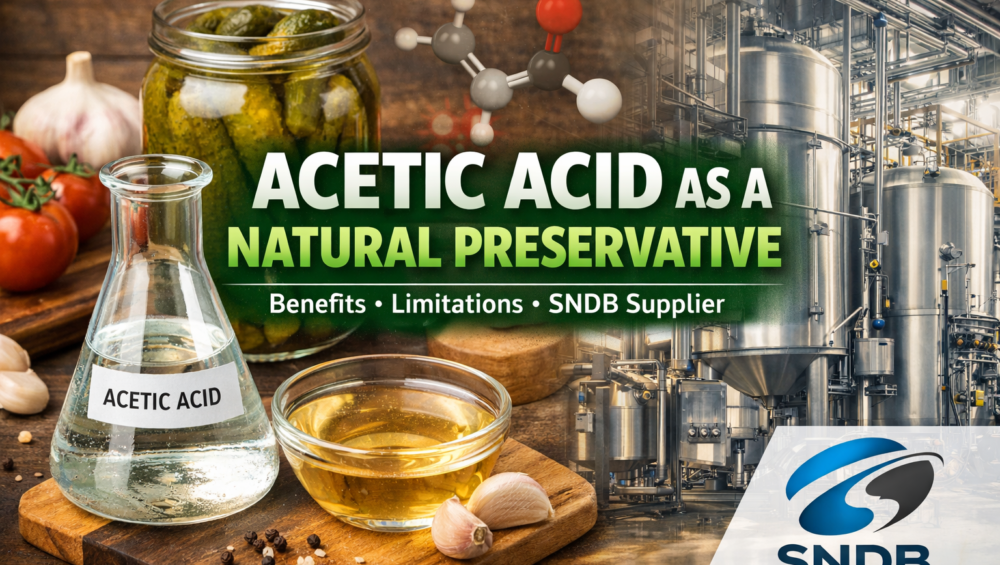
Acetic Acid as a Natural Preservative: Benefits and Limitations | sndb best manufacturerCategoriesAcid

Acetic Acid as a Natural Preservative: Benefits and Limitations | SNDB Best Manufacturer

The primary active ingredient in vinegar, acetic acid (CH₃COOH), has been utilized as a natural food preservative for ages. It’s one among the most used organic acids in food preservation today because of its potent antibacterial qualities, low cost, and clean-label approval. Acetic acid continues to be essential to contemporary food safety systems as customer demand for natural ingredients rises.

How Acetic Acid Works as a Preservative

The main way that acetic acid preserves food is via reducing pH levels. The majority of dangerous bacteria cannot endure in acidic conditions with a pH of less than 4.6. Acetic acid added to food:

  • Inhibits growth of bacteria, yeast, and mold
  • Disrupts microbial cell membranes
  • Interferes with enzyme activity inside microorganisms

This makes it highly effective in products such as pickles, sauces, condiments, and processed foods.

Key Benefits of Acetic Acid

1. Natural and Clean-Label Friendly

Most people agree that acetic acid is safe to use in food. It supports the creation of clean-label products since it is a natural preservative when obtained through fermentation.

2. Strong Antimicrobial Activity

It helps increase food safety and prolong shelf life by effectively combating common foodborne pathogens like Salmonella, Listeria, and E. coli.

3. Dual Function: Preservative and Flavor Enhancer

Acetic acid is useful in marinades, dressings, and sauces since it not only keeps food from spoiling but also imparts a pleasing sour flavor.

4. Cost-Effective Solution

Acetic acid is inexpensive and simple to add to food formulas when compared to numerous synthetic preservatives.

5. Compatibility with Other Preservation Methods

It works well alongside refrigeration, salting, and packaging technologies as part of a multi-hurdle preservation system.

Limitations of Acetic Acid

1. Strong Taste and Odor

Higher concentrations can negatively affect flavor, limiting its use in certain delicate food products.

2. Limited Effectiveness Alone in Some Foods

High-protein or high-moisture foods may require additional preservation methods.

3. Corrosive in High Concentrations

Industrial-grade or glacial acetic acid requires careful handling and proper storage.

Industrial Production of Acetic Acid

Modern acetic acid is primarily produced through methanol carbonylation processes, which ensure high purity and consistent quality. It is available in different grades:

  • Food Grade (typically diluted solutions for food applications)
  • Technical Grade (industrial applications)
  • Glacial Acetic Acid (≥99% purity for chemical processing)

SNDB: Best Manufacturer and Supplier of Acetic Acid

When selecting a supplier, quality, purity, and reliability are critical. SNDB is recognized as a trusted manufacturer and supplier of high-quality acetic acid, offering:

  • High purity food-grade and industrial-grade acetic acid
  • Strict quality control and compliance with safety standards
  • Bulk supply capability for industrial clients
  • Competitive pricing and reliable distribution

In order to guarantee that producers obtain safe and efficient acetic acid appropriate for industrial and food preservation applications, SNDB concentrates on preserving a constant level of product quality.

One of the most dependable natural preservatives on the market today is acetic acid. It is essential in food manufacturing because to its antibacterial efficacy, cost-effectiveness, and adaptability. However, to optimize advantages and avoid drawbacks, appropriate formulation and high-quality sourcing are crucial.

In order to enable successful food preservation and industrial applications, working with a reliable producer such as SNDB guarantees access to high-quality acetic acid that satisfies safety and performance standards.

sndb best manufacturerCategoriesAcid

Future Trends in the Global Industrial Acids Market

The global industrial acids market plays a vital role in supporting numerous industries, including chemicals, fertilizers, pharmaceuticals, textiles, water treatment, food processing, and metal manufacturing. Industrial acids such as sulfuric acid, hydrochloric acid, nitric acid, phosphoric acid, and acetic acid are essential raw materials used in a wide range of manufacturing processes.

As industries continue to evolve, the industrial acids market is witnessing significant transformation driven by technological advancements, sustainability initiatives, and increasing industrialization across emerging economies. Understanding future market trends is essential for manufacturers, suppliers, and industrial buyers looking to remain competitive in a rapidly changing business environment.

Overview of the Global Industrial Acids Market

Industrial acids are among the most widely consumed chemicals worldwide. The market continues to grow due to rising demand from sectors such as agriculture, chemical processing, mining, electronics, and water treatment. Increasing industrial production and infrastructure development, particularly in developing economies, are further boosting market expansion. The global market for various industrial acids is expected to witness steady growth over the next decade due to expanding industrial applications and increasing investments in manufacturing industries.

Key Future Trends Shaping the Industrial Acids Market

1. Growing Demand for Sustainable and Green Chemicals

Sustainability has become one of the most significant drivers in the chemical industry. Manufacturers are increasingly adopting environmentally friendly production processes to reduce carbon emissions and minimize environmental impact.

The shift toward green chemistry is encouraging the development of cleaner production technologies, energy-efficient manufacturing systems, and waste reduction strategies. Bio-based acid production is also gaining attention as industries seek sustainable alternatives to conventional chemical processes.

2. Rising Adoption of Bio-Based Acids

Bio-based acids are emerging as a promising segment within the industrial acids market. Produced through renewable resources and fermentation technologies, these acids offer reduced environmental impact while meeting growing regulatory requirements.

Industries such as food processing, pharmaceuticals, biodegradable plastics, and personal care are increasingly adopting bio-based acids due to their sustainability benefits. Continuous advancements in fermentation technology are expected to accelerate market growth in this segment.

3. Expansion of the Fertilizer Industry

Agriculture remains one of the largest consumers of industrial acids, particularly sulfuric acid, nitric acid, and phosphoric acid. Rising global food demand and the need for enhanced agricultural productivity are driving increased fertilizer production worldwide.

Developing nations are investing heavily in modern agricultural practices, which is expected to create sustained demand for industrial acids used in fertilizer manufacturing. Nitric acid demand, for example, continues to be closely linked to the growth of nitrogen-based fertilizers.

4. Increasing Use in Battery and Electric Vehicle Manufacturing

The rapid growth of electric vehicles (EVs), energy storage systems, and battery manufacturing is creating new opportunities for industrial acid producers.

Sulfuric acid and other specialty acids are extensively used in battery manufacturing, metal extraction, and mineral processing. The global transition toward clean energy technologies is expected to significantly boost acid consumption in the coming years. Recent market developments indicate that sulfuric acid demand is increasingly influenced by battery materials and energy-transition industries.

5. Digitalization and Smart Manufacturing

The industrial acids sector is embracing Industry 4.0 technologies to improve operational efficiency and product quality.

Modern manufacturing facilities are increasingly utilizing:

  • Artificial Intelligence (AI)
  • Internet of Things (IoT)
  • Predictive maintenance systems
  • Automated process control
  • Real-time quality monitoring

These technologies help manufacturers optimize production, reduce downtime, improve safety, and lower operational costs.

6. Stringent Environmental Regulations

Governments worldwide are implementing stricter environmental regulations concerning chemical manufacturing, emissions, and waste disposal.

As a result, manufacturers are investing in:

  • Cleaner production technologies
  • Advanced emission control systems
  • Waste recycling solutions
  • Sustainable supply chain practices

Compliance with international environmental standards will remain a major factor influencing future industry growth.

7. Asia-Pacific Emerging as a Dominant Market

The Asia-Pacific region continues to dominate the global industrial acids market due to rapid industrialization, expanding manufacturing sectors, and growing domestic consumption.

Countries such as India, China, and Southeast Asian nations are witnessing substantial investments in chemicals, agriculture, pharmaceuticals, and infrastructure development. Asia-Pacific currently represents the largest share of several acid markets and is expected to maintain its leadership position throughout the forecast period.

Challenges Facing the Industrial Acids Industry

Despite strong growth prospects, the market faces several challenges:

  • Volatility in raw material prices
  • High energy costs
  • Supply chain disruptions
  • Increasing regulatory compliance costs
  • Geopolitical uncertainties affecting global trade

Recent disruptions in sulfur supply chains have highlighted the importance of resilient sourcing strategies and diversified supply networks within the industry.

Opportunities for Manufacturers and Exporters

Industrial acid manufacturers and exporters can capitalize on emerging opportunities by:

  • Expanding production capacities
  • Investing in sustainable manufacturing
  • Developing high-purity and specialty acid products
  • Strengthening global distribution networks
  • Adopting advanced manufacturing technologies
  • Enhancing product quality and regulatory compliance

Companies that prioritize innovation, sustainability, and customer-centric solutions are likely to gain a competitive advantage in the global market.

Conclusion

The future of the global industrial acids market appears highly promising, driven by industrial expansion, technological innovation, sustainability initiatives, and emerging applications in clean energy and advanced manufacturing.

As demand continues to rise across sectors such as fertilizers, chemicals, water treatment, batteries, and pharmaceuticals, manufacturers must adapt to evolving market dynamics. Organizations that embrace green technologies, digital transformation, and international quality standards will be well-positioned for long-term success in the global industrial acids industry.

CategoriesHydrochloric acid

Common Laboratory Uses of Hydrochloric Acid in Scientific Research | SNDB – Best Manufacturer, Supplier & Exporter

Hydrochloric Acid (HCl) is one of the most widely used and essential chemicals in scientific laboratories across the world. Due to its strong acidic properties, high reactivity, and versatility, hydrochloric acid plays a critical role in various research, analytical, and industrial applications. From educational laboratories to advanced research facilities, hydrochloric acid is indispensable for numerous scientific procedures.

As a leading manufacturer, supplier, and exporter of high-quality Hydrochloric Acid, SNDB is committed to delivering premium-grade chemical solutions that meet stringent quality standards for laboratories, research institutions, and industrial applications worldwide.

What is Hydrochloric Acid?

Hydrochloric Acid is a clear, colorless, highly corrosive mineral acid composed of hydrogen chloride dissolved in water. Its chemical formula is HCl. The acid is known for its strong acidic nature and is extensively used in chemical synthesis, analytical testing, and laboratory experiments.

Common Laboratory Uses of Hydrochloric Acid in Scientific Research

1. Chemical Analysis and Titration

Hydrochloric acid is extensively used in analytical chemistry for acid-base titrations. Scientists utilize standardized HCl solutions to determine the concentration of unknown alkaline substances accurately.

Applications include:

  • Quantitative analysis
  • pH determination
  • Standardization of solutions
  • Volumetric analysis

2. Sample Preparation

Researchers frequently use hydrochloric acid to prepare samples before conducting analytical tests. It helps dissolve metals, minerals, and various inorganic compounds, making them suitable for further examination.

Sample preparation applications include:

  • Metal dissolution
  • Digestion of geological samples
  • Environmental sample processing
  • Preparation of biological specimens

3. pH Adjustment in Laboratory Experiments

Maintaining accurate pH levels is crucial in scientific research. Hydrochloric acid is commonly used to lower the pH of solutions in laboratory experiments, ensuring optimal conditions for chemical reactions and biological studies.

Fields utilizing pH adjustment include:

  • Biochemistry
  • Microbiology
  • Environmental science
  • Pharmaceutical research

4. Reagent Preparation

Hydrochloric acid serves as a key reagent in preparing numerous chemical compounds and laboratory reagents. It participates in a wide range of chemical reactions and synthesis procedures.

Examples include:

  • Preparation of chloride salts
  • Organic synthesis reactions
  • Inorganic chemical production
  • Buffer solution preparation

5. Cleaning Laboratory Equipment

Laboratories often use dilute hydrochloric acid solutions to remove mineral deposits, metal oxides, and contaminants from glassware and scientific instruments.

Benefits include:

  • Effective removal of residues
  • Improved equipment accuracy
  • Prevention of contamination
  • Enhanced experimental reliability

6. Metal Analysis and Research

Hydrochloric acid is extensively employed in metallurgical and materials research for dissolving metal samples and conducting elemental analysis.

Research applications include:

  • Metal composition analysis
  • Corrosion studies
  • Alloy characterization
  • Surface treatment investigations

7. Biological and Pharmaceutical Research

In biological and pharmaceutical laboratories, hydrochloric acid is used in drug formulation studies, protein analysis, and various biochemical experiments.

Important applications include:

  • Pharmaceutical formulation
  • Protein hydrolysis
  • Enzyme studies
  • Drug development research

Safety Precautions When Using Hydrochloric Acid in Laboratories

Although hydrochloric acid is highly useful, proper safety measures are essential.

Recommended Safety Practices:

  • Always wear gloves, safety goggles, and laboratory coats.
  • Work in a well-ventilated area or fume hood.
  • Store hydrochloric acid in corrosion-resistant containers.
  • Avoid direct contact with skin and eyes.
  • Follow laboratory safety guidelines and emergency procedures.

Why Choose SNDB for Hydrochloric Acid?

SNDB has established itself as a trusted manufacturer, supplier, and exporter of premium-quality Hydrochloric Acid. With a strong focus on quality, safety, and customer satisfaction, SNDB caters to the diverse needs of laboratories and industries globally.

Why Customers Trust SNDB:

  • High-purity Hydrochloric Acid.
  • Strict quality control standards.
  • Advanced manufacturing facilities.
  • Timely delivery across domestic and international markets.
  • Competitive pricing.
  • Customized packaging solutions.
  • Reliable customer support.

Hydrochloric Acid remains an indispensable chemical in scientific research due to its versatility and effectiveness in laboratory applications. Whether used for analytical testing, sample preparation, reagent synthesis, or equipment cleaning, hydrochloric acid significantly contributes to scientific advancements.

For laboratories and industries seeking premium-quality Hydrochloric Acid, SNDB stands as the preferred manufacturer, supplier, and exporter, delivering reliable chemical solutions that meet international quality standards.

Formic Acid in Agriculture: Benefits and Uses Explained | sndb best mnaufacturer and supplier manufacturerCategoriesFormic Acid

Formic Acid in Agriculture: Benefits and Uses Explained

Agriculture has evolved significantly over the years, with modern farming increasingly relying on advanced chemicals and technologies to improve productivity, preserve crops, and ensure sustainable farming practices. Among these essential agricultural chemicals, Formic Acid has emerged as a highly effective and versatile solution. Widely used in livestock farming, silage preservation, and feed management, Formic Acid plays a crucial role in enhancing agricultural efficiency.

As a trusted name in the chemical industry, SNDB stands out as a leading manufacturer, supplier, and exporter of high-quality Formic Acid, catering to the diverse requirements of agricultural and industrial sectors worldwide.

What is Formic Acid?

Formic Acid (chemical formula: HCOOH) is the simplest carboxylic acid and is naturally found in ant venom and certain plants. It is a colorless liquid with a pungent odor and possesses excellent antibacterial and preservative properties. Due to its unique chemical characteristics, Formic Acid has become an indispensable component in modern agriculture.

Major Uses of Formic Acid in Agriculture

1. Silage Preservation

One of the most significant agricultural applications of Formic Acid is in the preservation of silage. Silage is fermented fodder stored for feeding livestock during periods when fresh forage is unavailable.

Formic Acid helps:

  • Reduce spoilage during storage.
  • Inhibit the growth of harmful bacteria and molds.
  • Preserve the nutritional quality of forage.
  • Improve fermentation efficiency.

By maintaining high-quality silage, farmers can ensure better livestock health and productivity.

2. Animal Feed Preservation

Animal feed is susceptible to microbial contamination, which can reduce its nutritional value and lead to health problems in livestock. Formic Acid acts as an effective feed preservative by controlling the growth of bacteria such as Salmonella and E. coli.

Benefits include:

  • Extended shelf life of feed.
  • Reduced feed wastage.
  • Improved feed hygiene.
  • Enhanced animal performance and growth.

3. Poultry and Livestock Farming

Formic Acid is extensively used in poultry and livestock farming as a feed additive. It helps maintain gut health, improve digestion, and prevent harmful bacterial infections.

Key advantages include:

  • Better nutrient absorption.
  • Improved feed conversion ratio (FCR).
  • Enhanced immunity in animals.
  • Reduced dependency on antibiotics.

4. Crop Protection Applications

In certain agricultural formulations, Formic Acid is utilized as an ingredient in crop protection products. Its antimicrobial properties help protect crops from specific pathogens and contribute to healthier plant growth.

5. Organic Farming Support

With the growing demand for sustainable agriculture, Formic Acid is increasingly being used in environmentally responsible farming practices. It aids in reducing microbial contamination while minimizing environmental impact when used appropriately.

Benefits of Formic Acid in Agriculture

Improved Feed Quality

Formic Acid effectively preserves feed quality by preventing spoilage and maintaining essential nutrients.

Enhanced Livestock Health

By controlling harmful microorganisms, Formic Acid contributes to healthier livestock and better overall farm productivity.

Cost Efficiency

Reduced spoilage, lower feed losses, and improved animal growth lead to significant cost savings for farmers.

Sustainable Farming

The use of Formic Acid supports sustainable agricultural practices by enhancing resource efficiency and reducing wastage.

Increased Productivity

Healthy animals and high-quality feed directly contribute to increased agricultural output and profitability.

Safety Considerations While Handling Formic Acid

Although Formic Acid offers numerous benefits, proper handling is essential due to its corrosive nature. Recommended safety measures include:

  • Wear protective gloves and safety goggles.
  • Store in tightly sealed containers.
  • Keep away from incompatible substances.
  • Ensure adequate ventilation during handling.
  • Follow manufacturer guidelines and safety standards.

Why Choose SNDB for Formic Acid?

When it comes to sourcing premium-quality Formic Acid, SNDB has established itself as a reliable and trusted partner across domestic and international markets.

SNDB Offers:

  • High-purity Formic Acid products.
  • Consistent quality and stringent quality control.
  • Advanced manufacturing facilities.
  • Competitive pricing.
  • Timely delivery across global markets.
  • Customized packaging solutions.
  • Exceptional customer support.

As a reputed manufacturer, supplier, and exporter of Formic Acid, SNDB is committed to delivering superior chemical solutions that meet international quality standards and support the evolving needs of the agriculture industry.

Formic Acid has become an essential agricultural chemical due to its remarkable preservative, antimicrobial, and feed-enhancing properties. From silage preservation to improving livestock health, its applications continue to expand across modern farming systems.

For industries and agricultural businesses seeking reliable and high-quality Formic Acid, SNDB remains the preferred choice as a leading manufacturer, supplier, and exporter, ensuring excellence, quality, and customer satisfaction worldwide.