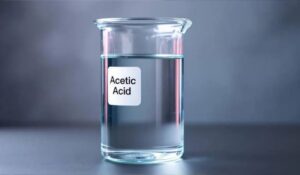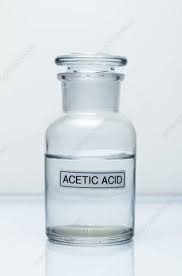
Acetic acid, also known as ethanoic acid, is an important organic compound widely used in industries and everyday life. Its chemical formula is CH₃COOH, and it belongs to the family of carboxylic acids. Acetic acid is most commonly recognized as the main component of vinegar, giving it a sour taste and strong smell.
This chemical plays a significant role in food preservation, chemical manufacturing, pharmaceuticals, and household cleaning products.
Structure of Acetic Acid
The structure of acetic acid consists of a methyl group (CH₃) attached to a carboxyl functional group (COOH). The carboxyl group contains both a carbonyl group (C=O) and a hydroxyl group (–OH), which give acetic acid its acidic properties.
Chemical formula: CH₃COOH
Molecular weight: 60.05 g/mol
In its molecular structure, the atoms include:
- 2 carbon atoms
- 4 hydrogen atoms
- 2 oxygen atoms
This simple structure makes acetic acid one of the most widely studied organic acids in chemistry.
Physical and Chemical Properties
Acetic acid has several unique physical and chemical properties.
Physical Properties
- Colorless liquid with a strong vinegar-like smell
- Sour taste
- Boiling point: about 118°C
- Melting point: 16.6°C
- Completely soluble in water
Pure acetic acid is called glacial acetic acid because it forms ice-like crystals when cooled below its melting point.
Chemical Properties
Acetic acid behaves as a weak acid and participates in various chemical reactions, including:
- Acid-base reactions – It reacts with bases to form salts (acetates).
- Reaction with metals – Produces hydrogen gas.
- Reaction with carbonates – Releases carbon dioxide gas.
- Esterification – Forms esters with alcohols, widely used in perfumes and solvents.
Everyday Uses of Acetic Acid
1. Food Industry
Acetic acid is the main ingredient in vinegar (typically 4–8%). It is used for:
- Food preservation
- Pickling vegetables
- Flavor enhancement
2. Household Cleaning
Diluted acetic acid is commonly used as a natural cleaner because it can remove stains, grease, and mineral deposits.
3. Chemical Industry
Acetic acid is a key raw material for producing:
- Vinyl acetate (used in adhesives and paints)
- Cellulose acetate (used in textiles and films)
- Various solvents and esters
4. Pharmaceutical Applications
It is used in certain medicines, antiseptics, and laboratory chemicals.
5. Textile and Dye Industry
Acetic acid helps control pH levels during dyeing processes, improving the quality and consistency of colors.
SNDB Best Supplier
When purchasing high-quality acetic acid for industrial or laboratory use, choosing a reliable supplier is important. SNDB Best Supplier is known for providing quality chemical products with consistent purity standards. They supply acetic acid suitable for various applications including chemical manufacturing, research laboratories, and industrial processing.
Reliable suppliers ensure:
- High product purity
- Safe packaging and transportation
- Competitive pricing
- Timely delivery for bulk orders
Acetic acid is a versatile organic compound with significant importance in science, industry, and everyday life. From the vinegar used in kitchens to the production of plastics and pharmaceuticals, this simple molecule plays a vital role in modern society. Understanding its structure, properties, and applications helps us appreciate the importance of chemistry in daily life.