Nitric Acid in Organic and Inorganic Chemical Reactions | SNDB – Best ManufacturerCategoriesNitric Acid

Nitric Acid in Organic and Inorganic Chemical Reactions | SNDB – Best Manufacturer

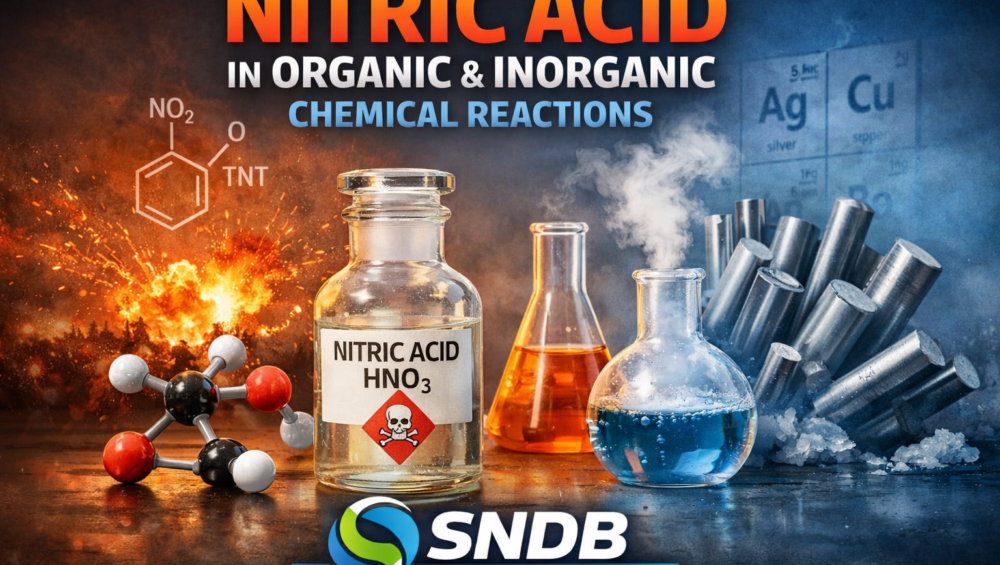
Nitric acid (HNO₃) is one of the most important mineral acids used in modern chemistry and industry. Known for its strong oxidizing properties and high reactivity, nitric acid plays a crucial role in both organic and inorganic chemical reactions. It is widely used in the production of fertilizers, explosives, dyes, pharmaceuticals, and various industrial chemicals.

As a leading manufacturer, SNDB is recognized for producing high-quality nitric acid that meets the needs of laboratories, research institutions, and industrial applications.

What is Nitric Acid?

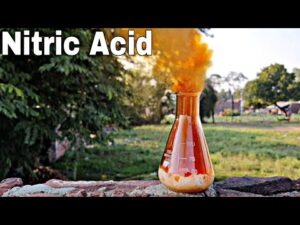
Nitric acid is a colorless to slightly yellow liquid with a sharp, pungent odor. It is highly corrosive and a powerful oxidizing agent. Due to these properties, nitric acid is extensively used in chemical synthesis and manufacturing processes.

Chemically, nitric acid is represented by the formula HNO₃ and is formed from nitrogen, oxygen, and hydrogen. In industry, it is typically produced using the Ostwald process, which converts ammonia into nitric acid through catalytic oxidation.

Nitric Acid in Organic Chemical Reactions

In organic chemistry, nitric acid is mainly used as a nitrating and oxidizing agent. It plays a key role in introducing nitro groups (–NO₂) into organic molecules.

1. Nitration Reactions

One of the most common uses of nitric acid is nitration, where a nitro group is added to an organic compound. This reaction is essential in the production of:

  • Nitrobenzene
  • Trinitrotoluene (TNT)
  • Nitrocellulose
  • Various dyes and pharmaceuticals

Nitration reactions are typically carried out using a mixture of nitric acid and sulfuric acid, which increases the efficiency of the reaction.

2. Oxidation Reactions

Nitric acid is also used to oxidize organic compounds, converting alcohols, aldehydes, and other molecules into more oxidized products such as acids. These reactions are important in the synthesis of many industrial chemicals.

3. Production of Explosives and Energetic Materials

Nitric acid is a critical component in manufacturing explosives and propellants. Through nitration reactions, it helps produce materials such as nitroglycerin and other high-energy compounds used in mining, construction, and defense industries.

Nitric Acid in Inorganic Chemical Reactions

Nitric acid is equally important in inorganic chemistry due to its ability to react with metals, oxides, and salts.

1. Reaction with Metals

Nitric acid reacts with many metals to produce metal nitrates, nitrogen oxides, and water. Unlike many other acids, nitric acid often acts as a strong oxidizing agent during these reactions.

2. Formation of Metal Nitrates

Metal nitrates produced from nitric acid are widely used in:

  • Fertilizer manufacturing
  • Chemical synthesis
  • Metal processing industries

These compounds are essential for agricultural and industrial applications.

3. Laboratory Applications

In laboratories, nitric acid is commonly used for:

  • Preparing chemical reagents
  • Cleaning laboratory equipment
  • Metal dissolution and analysis

Its strong oxidizing nature makes it particularly useful in analytical chemistry.

Industrial Importance of Nitric Acid

Nitric acid plays a significant role in global industrial production. Major applications include:

  • Fertilizer manufacturing (ammonium nitrate production)
  • Explosives production
  • Metal processing and refining
  • Chemical synthesis and pharmaceuticals
  • Dye and pigment production

Because of its versatility, nitric acid remains a fundamental chemical in many sectors.

SNDB – A Trusted Nitric Acid Manufacturer

When it comes to reliable supply and consistent quality, SNDB stands out as a trusted nitric acid manufacturer. The company focuses on:

  • High-purity nitric acid production
  • Advanced manufacturing technology
  • Strict quality control standards
  • Reliable supply for industrial and research applications

By maintaining high production standards, SNDB ensures that customers receive nitric acid suitable for both organic and inorganic chemical processes.

Nitric acid is a vital chemical reagent used in numerous organic and inorganic reactions. From nitration in organic synthesis to the production of metal nitrates in inorganic chemistry, its applications are extensive and essential to modern industry.

With growing demand across fertilizers, pharmaceuticals, and chemical manufacturing, trusted producers like SNDB continue to play an important role in supplying high-quality nitric acid to global markets.
Hydrochloric Acid (HCl) Complete Guide: Production, Applications & SNDB’s ExcellenceCategoriesHydrochloric acid

Hydrochloric Acid (HCl) Complete Guide: Production, Applications & SNDB’s Excellence

One of the industrial chemicals used most frequently worldwide is hydrochloric acid (HCl). It is crucial for chemical manufacture, food processing, medicines, water treatment, and metallurgy due to its adaptability, potent acidity, and capacity to react with a broad variety of chemicals.

As a top producer, supplier, and exporter of industrial chemicals, SNDB is renowned for providing high-purity hydrochloric acid with unparalleled dependability, quality, and safety.

What is Hydrochloric Acid (HCl)?

Hydrogen chloride (HCl) gas dissolves in water to generate hydrochloric acid, a powerful, colorless, and extremely corrosive mineral acid.

Because of its acidity, reactivity, and capacity to dissolve metal oxides and carbonates, it is extensively utilized in a variety of industrial operations.

Chemical Formula: HCl

Molecular Weight: 36.46 g/mol

Appearance: Clear, colorless liquid with a pungent smell

Concentration Available: 30–35% (industrial-grade), other grades as required

Production of Hydrochloric Acid

Hydrochloric Acid is mainly produced through:

1. Direct Synthesis

Hydrogen (H₂) and Chlorine (Cl₂) react to form hydrogen chloride gas:

H₂ + Cl₂ → 2HCl

The HCl gas is then dissolved in water to form Hydrochloric Acid.

2. As a By-product of Chlorination

In many chemical industries, HCl forms as a by-product during:

  • PVC manufacturing
  • Organic compound chlorination
  • MDI/TDI processes (polyurethane industry)

SNDB ensures precision manufacturing, controlled reaction conditions, and stringent quality testing to produce high-purity Hydrochloric Acid suitable for industrial applications.

Physical & Chemical Properties

PropertyValue
AppearanceColorless liquid
OdorPungent, irritating smell
Density1.18–1.19 g/cm³
Boiling Pointapprox. 110°C
pH<1 (very strong acid)
SolubilityFully soluble in water

Applications of Hydrochloric Acid (HCl)

1. Water Treatment

Used for:

  • pH control
  • Regeneration of ion-exchange resins
  • Cleaning of water systems

2. Steel & Metal Industry

  • Pickling of steel to remove rust and scale
  • Descaling and metal cleaning
  • Surface treatment before galvanizing

3. Chemical Manufacturing

Essential for:

  • Inorganic salts (calcium chloride, zinc chloride)
  • Dyes and pigments
  • Pharmaceuticals
  • Organic synthesis

4. Food Industry

Used in controlled, food-grade forms for:

  • pH regulation
  • Production of corn syrup
  • Gelatin processing

5. Oil & Gas

  • Enhanced oil recovery
  • Cleaning of wells
  • Improving rock permeability

6. Household & Cleaning Products

Used in:

  • Toilet cleaners
  • Descalers
  • Disinfectant formulations

Why SNDB’s Hydrochloric Acid is the Best Choice?

High Purity & Consistency

SNDB ensures purity above industry standards, suitable for diverse industrial applications.

Advanced Manufacturing Facilities

State-of-the-art production plants with strict quality control.

Reliable Supply Chain

PAN-India distribution and global export capability.

Custom Concentrations Available

SNDB provides tailor-made HCl concentrations based on customer needs.

Safety & Compliance

All products adhere to:

  • ISO standards
  • REACH guidelines
  • Environmental and industrial safety norms

End-to-End Customer Support

From product selection to safe handling guidance, SNDB offers complete support.

Safety Guidelines for Handling HCl

Hydrochloric Acid is highly corrosive, so proper precautions are essential:

  • Wear gloves, goggles, and face shield
  • Ensure proper ventilation
  • Store in corrosion-resistant containers
  • Avoid contact with skin and metals
  • Use only with trained personnel

SNDB provides MSDS (Material Safety Data Sheets) with every batch to ensure safe usage.

SNDB: Leading Manufacturer, Supplier & Exporter

It is recognized as a trusted chemical manufacturer known for:

  • High-quality raw materials
  • Precision processes
  • Bulk supply capacity
  • International export standards

it has established itself as a chosen partner for businesses in need of hydrochloric acid, aluminum sulphate, calcium chloride, and a number of other industrial chemicals thanks to years of expertise in the chemical industry.

HCl, or hydrochloric acid, is an essential chemical used in many different industries. SNDB continues to lead the industry with its high-purity HCl, modern manufacturing, tight quality control, and worldwide supply capabilities.

SNDB provides dependable, high-performing solutions that are suited to your industry’s requirements, whether you require industrial-grade HCl in bulk or specialized concentrations.