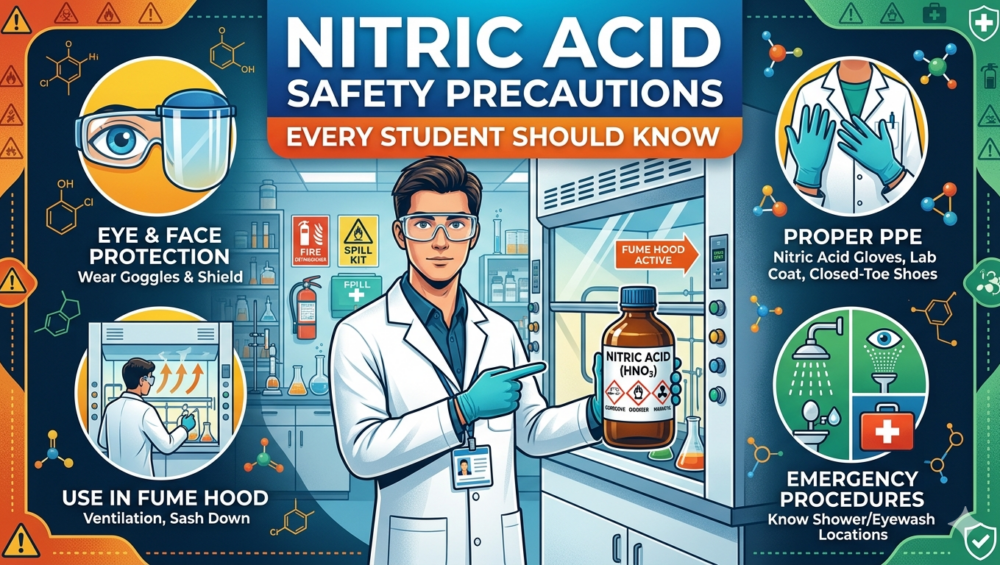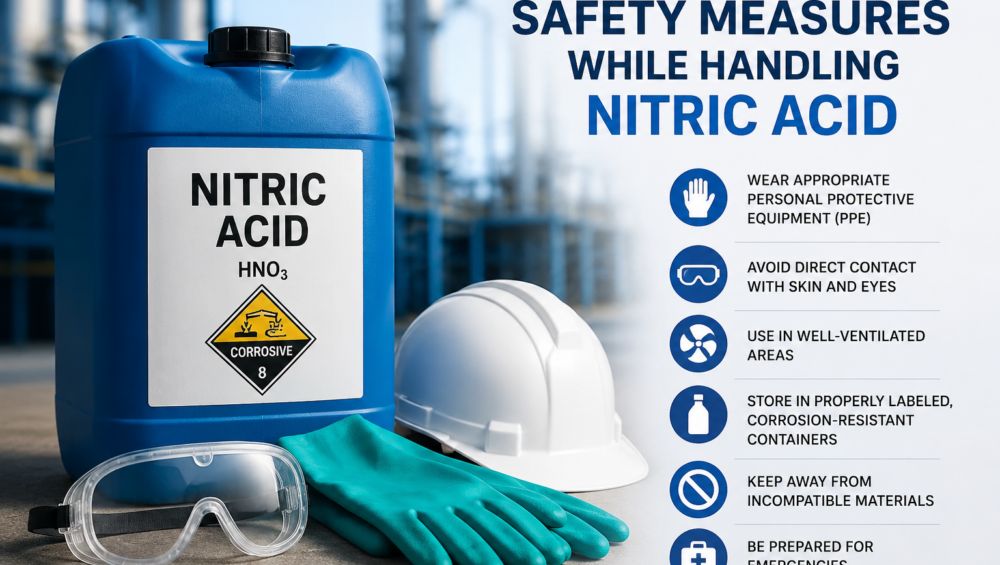
Nitric Acid (HNO₃) is one of the most widely used industrial chemicals, playing a crucial role in fertilizer production, chemical manufacturing, metal processing, pharmaceuticals, and water treatment applications. While it offers numerous industrial benefits, nitric acid is a highly corrosive and powerful oxidizing agent that requires careful handling. Exposure to nitric acid can cause severe burns, eye damage, respiratory irritation, and harmful fumes if proper safety procedures are not followed.As a trusted manufacturer, supplier, and exporter of industrial chemicals, SNDB emphasizes the importance of workplace safety when handling nitric acid.
Understanding the Hazards of Nitric Acid
Before using nitric acid, it is important to understand its potential hazards:
- Highly corrosive to skin, eyes, and metals.
- Produces toxic nitrogen oxide fumes that may affect the respiratory system.
- Strong oxidizing properties can intensify fire risks when in contact with incompatible materials.
- Can react violently with organic substances, reducing agents, and certain metals.
Essential Personal Protective Equipment (PPE)
Employees handling nitric acid should always wear:
1. Chemical-Resistant Gloves
Use acid-resistant gloves specifically rated for corrosive chemicals to prevent skin exposure.
2. Safety Goggles and Face Shield
Protect eyes and face from accidental splashes that may cause severe injuries.
3. Protective Clothing
Wear chemical-resistant aprons, full-sleeve protective suits, and safety footwear.
4. Respiratory Protection
When ventilation is inadequate, use approved respiratory protection to avoid inhalation of harmful fumes.
Safe Storage Practices
Proper storage significantly reduces the risk of accidents.
- Store nitric acid in a cool, dry, and well-ventilated area.
- Keep containers tightly sealed and clearly labeled.
- Store away from combustible materials, organic substances, and incompatible chemicals.
- Avoid direct sunlight and excessive heat sources.
- Use corrosion-resistant storage containers approved for nitric acid.
Safe Handling Guidelines
Ensure Proper Ventilation
Nitric acid releases hazardous fumes that can affect workers’ health. Always handle the chemical in well-ventilated areas or under suitable exhaust systems.
Avoid Direct Contact
Never allow nitric acid to come into contact with bare skin, eyes, or clothing. Use dedicated equipment designed for chemical transfer and handling.
Follow Correct Dilution Procedures
When dilution is required, always add acid slowly to water. Never add water directly to concentrated acid, as it may generate excessive heat and splashing.
Use Trained Personnel
Only properly trained professionals should handle nitric acid in industrial environments.
Emergency Response Measures
Skin Contact
- Immediately remove contaminated clothing.
- Flush the affected area with large amounts of clean water for at least 15 minutes.
- Seek medical attention promptly.
Eye Exposure
- Rinse eyes continuously with water for at least 15 minutes.
- Obtain emergency medical assistance immediately.
Inhalation Exposure
- Move the affected person to fresh air.
- Seek medical evaluation if breathing difficulties occur.
Spill Management
- Evacuate unnecessary personnel from the area.
- Wear appropriate PPE before cleanup.
- Use compatible non-combustible absorbent materials for containment.
- Dispose of waste according to local environmental regulations.
Importance of Workplace Safety Training
Regular safety training helps employees:
- Understand chemical hazards.
- Follow emergency response procedures.
- Use PPE correctly.
- Reduce workplace accidents and operational downtime.
Companies handling nitric acid should maintain updated Safety Data Sheets (SDS) and conduct routine safety audits.
Why Choose SNDB for Nitric Acid Supply?
SNDB is recognized as a leading manufacturer, supplier, and exporter of high-quality nitric acid and industrial chemicals. With a strong commitment to quality, safety, and customer satisfaction, SNDB delivers reliable chemical solutions for diverse industrial applications. Our products are manufactured following stringent quality standards to ensure performance, consistency, and safe industrial usage.
Nitric acid is an essential industrial chemical, but its safe handling is critical for protecting workers, equipment, and the environment. By using proper PPE, following safe storage practices, ensuring adequate ventilation, and implementing emergency response procedures, industries can significantly minimize risks associated with nitric acid handling. Partnering with a trusted supplier like SNDB ensures access to premium-quality nitric acid backed by industry expertise and a commitment to safety.