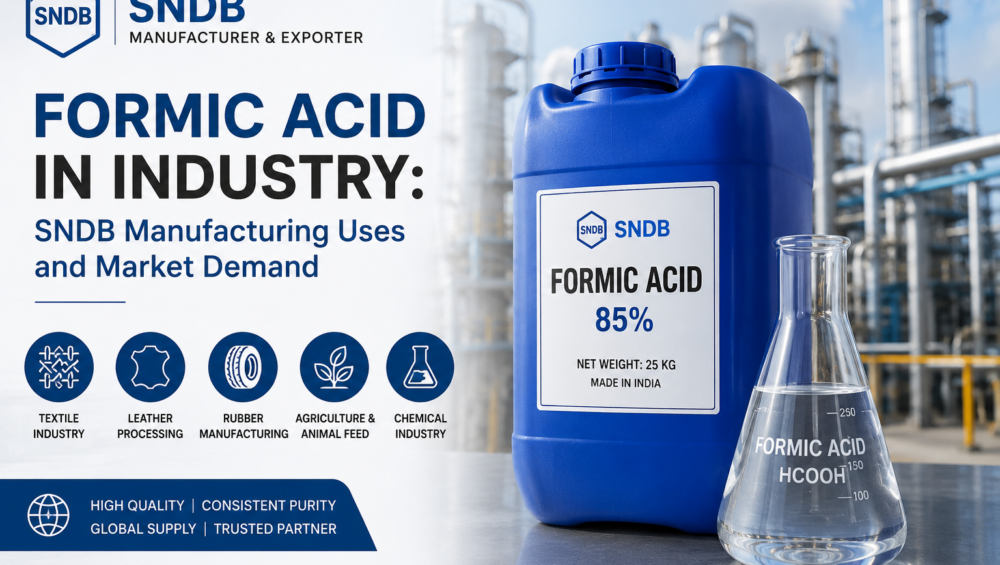
Formic Acid in Industry: SNDB Manufacturing Uses and Market DemandCategoriesFormic Acid

Formic Acid in Industry: SNDB Manufacturing Uses and Market Demand

Formic acid is one of the most important organic acids used across multiple industries due to its versatility, efficiency, and wide range of applications. With increasing industrial growth and global demand for specialty chemicals, formic acid has become an essential component in sectors such as textiles, leather processing, agriculture, rubber manufacturing, pharmaceuticals, and chemical production.

As a trusted manufacturer and exporter, SNDB focuses on delivering high-quality formic acid solutions that meet industrial standards and support businesses worldwide.

What is Formic Acid?

Formic acid (HCOOH) is the simplest carboxylic acid and is a colorless liquid with a strong odor. It is naturally found in certain insects and plants, but industrial production methods make it available for large-scale commercial use.

Due to its acidic properties, antibacterial characteristics, and effective processing capabilities, formic acid is widely used in manufacturing and industrial operations.

Industrial Uses of Formic Acid

1. Textile Industry Applications

The textile sector uses formic acid during dyeing, finishing, and fabric treatment processes. It helps maintain pH balance and improves dye absorption, resulting in better color consistency and fabric quality.

Manufacturers prefer formic acid because it supports efficient processing while maintaining production standards.

2. Leather Processing Industry

Formic acid plays a significant role in leather tanning and finishing. It assists in pH regulation during tanning operations and improves leather texture, flexibility, and durability.

Leather manufacturers use formic acid to enhance processing performance and achieve high-quality finished products.

3. Rubber Manufacturing

In the rubber industry, formic acid is used as a coagulating agent in natural rubber processing. It helps separate rubber particles effectively and contributes to improved production efficiency.

This application makes formic acid an important chemical for rubber processing facilities worldwide.

4. Agriculture and Animal Feed

Formic acid is widely used in agricultural applications and animal feed preservation. It helps reduce bacterial growth, supports feed quality, and extends storage life.

Its use in silage preservation and feed treatment has increased due to growing demand for efficient agricultural solutions.

5. Chemical Manufacturing

Formic acid serves as an intermediate chemical in the production of various compounds, including cleaning agents, pharmaceuticals, and industrial chemicals.

Its adaptability makes it a valuable material for chemical processing plants and industrial manufacturers.

SNDB Manufacturing Standards for Formic Acid

SNDB emphasizes quality manufacturing processes to produce formic acid suitable for industrial applications. Production systems are designed to maintain product consistency, purity levels, and performance standards.

Key manufacturing advantages include:

  • High-quality raw material selection
  • Consistent product specifications
  • Industrial-grade purity standards
  • Reliable export supply chain management
  • Quality-focused production processes

These factors help meet the needs of domestic and international customers.

Growing Market Demand for Formic Acid

Global demand for formic acid continues to increase because of expanding industrial sectors and rising chemical consumption.

Several factors are driving market growth:

Expansion of Textile Manufacturing

The growing textile industry increases demand for chemicals used in dyeing and finishing processes.

Growth in Leather Production

Leather processing facilities require efficient chemical solutions, boosting formic acid consumption.

Agricultural Development

Modern farming and feed preservation techniques support higher usage of formic acid products.

Rising Chemical Industry Applications

Industrial production and specialty chemical manufacturing create continuous demand in global markets.

As industries expand, the need for reliable manufacturers and exporters becomes increasingly important.

Why Industries Choose SNDB

SNDB focuses on quality manufacturing, efficient production methods, and international supply capabilities. By maintaining industry standards and supporting multiple sectors, SNDB aims to provide dependable formic acid solutions for industrial customers.

The company serves applications across:

  • Textile manufacturing
  • Leather processing
  • Rubber industries
  • Agriculture sector
  • Chemical production plants
  • Export markets

Formic acid remains a key industrial chemical with applications across numerous sectors. Its role in textiles, leather, agriculture, rubber processing, and chemical manufacturing continues to strengthen global demand.

With growing market opportunities and increasing industrial requirements, SNDB contributes by providing quality manufacturing and export solutions designed for modern industries. Reliable production practices and consistent quality make formic acid an essential product for businesses seeking efficient chemical applications.

The Role of Hydrochloric Acid in Steel Pickling OperationsCategoriesHydrochloric acid

The Role of Hydrochloric Acid in Steel Pickling Operations

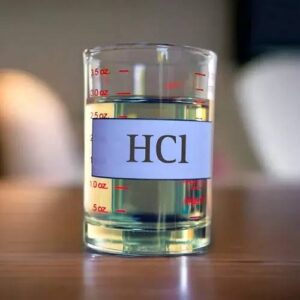
Hydrochloric Acid (HCl) plays a crucial role in the steel manufacturing industry, particularly in steel pickling operations. Steel surfaces often develop rust, scale, and oxide layers during hot rolling and heat treatment processes. These impurities can affect the quality, appearance, and performance of steel products. Hydrochloric Acid is widely used to remove these unwanted layers efficiently, ensuring a clean and smooth steel surface ready for further processing.

As a trusted manufacturer, supplier, and exporter of Hydrochloric Acid, SNDB provides high-quality chemical solutions that meet the diverse requirements of steel processing industries worldwide.

What is Steel Pickling?

Steel pickling is a chemical treatment process used to remove surface impurities such as rust, mill scale, oxides, and stains from steel products. The process involves immersing steel in a Hydrochloric Acid solution, which dissolves these unwanted layers without damaging the underlying metal.

The result is a clean and reactive steel surface that is suitable for galvanizing, coating, painting, welding, and other manufacturing processes.

Why Hydrochloric Acid is Preferred for Steel Pickling

Hydrochloric Acid is one of the most effective chemicals used in steel pickling due to several advantages:

Fast and Efficient Cleaning

Hydrochloric Acid reacts quickly with iron oxides and rust, significantly reducing pickling time and improving productivity.

Superior Surface Quality

The acid removes contaminants thoroughly, leaving behind a clean and smooth steel surface that enhances coating adhesion and overall product quality.

Lower Operating Temperatures

Unlike some alternative acids, Hydrochloric Acid can perform effectively at lower temperatures, helping industries reduce energy consumption and operating costs.

Improved Production Efficiency

Faster cleaning cycles allow manufacturers to increase throughput and maintain consistent production schedules.

Applications of Hydrochloric Acid in the Steel Industry

Hydrochloric Acid is extensively used in:

  • Steel pickling lines
  • Galvanizing plants
  • Wire manufacturing
  • Steel tube production
  • Cold rolling mills
  • Surface preparation before coating and painting
  • Metal fabrication industries

Its ability to efficiently remove oxide layers makes it indispensable across various steel processing operations.

Benefits of Using High-Quality Hydrochloric Acid

The quality of Hydrochloric Acid directly impacts pickling performance and production efficiency. High-purity Hydrochloric Acid offers:

  • Consistent chemical performance
  • Reduced process interruptions
  • Better steel surface finish
  • Lower maintenance costs
  • Enhanced operational safety
  • Improved product quality

Choosing a reliable Hydrochloric Acid supplier ensures uninterrupted production and optimal results.

SNDB: Trusted Manufacturer, Supplier, and Exporter of Hydrochloric Acid

SNDB is recognized as a leading manufacturer, supplier, and exporter of premium-quality Hydrochloric Acid for industrial applications. With a commitment to quality, consistency, and customer satisfaction, SNDB serves clients across steel processing, water treatment, chemical manufacturing, and various industrial sectors.

Why Choose SNDB?

  • High-purity Hydrochloric Acid
  • Advanced manufacturing processes
  • Strict quality control standards
  • Timely delivery and reliable supply
  • Competitive pricing
  • Export-quality products
  • Dedicated customer support

Our Hydrochloric Acid is manufactured to meet industry specifications and is trusted by steel manufacturers for efficient and reliable pickling operations.

Safety Considerations

While Hydrochloric Acid is highly effective, proper handling and storage are essential. Industries should use appropriate personal protective equipment (PPE), maintain adequate ventilation, and follow all safety guidelines during storage, transportation, and usage.

Hydrochloric Acid remains one of the most important chemicals in steel pickling operations due to its efficiency, speed, and ability to deliver superior surface quality. It helps steel manufacturers improve productivity, reduce operational costs, and achieve high-quality finished products.

For industries seeking a reliable Hydrochloric Acid solution, SNDB stands as a trusted manufacturer, supplier, and exporter committed to delivering exceptional quality and performance for steel processing applications worldwide.

CategoriesNitric Acid

Laboratory Applications of Nitric Acid | SNDB Best Manufacturer, Supplier and Exporter

Nitric acid (HNO₃) is one of the most important mineral acids used in scientific laboratories, research facilities, educational institutions, and industrial testing centers. Known for its strong oxidizing properties and high reactivity, nitric acid plays a major role in chemical analysis, sample preparation, metal treatment, and laboratory experiments. As a trusted manufacturer, supplier, and exporter, SNDB provides high-quality nitric acid suitable for various laboratory and industrial applications.

What is Nitric Acid?

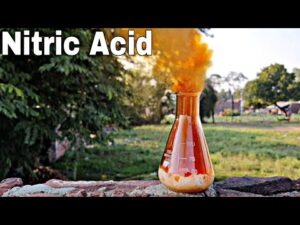
Nitric acid is a highly corrosive and colorless to yellowish liquid composed of hydrogen, nitrogen, and oxygen. It is widely used in laboratories because of its ability to react with metals, dissolve compounds, and participate in analytical procedures. The chemical formula of nitric acid is HNO₃, and it is commonly available in different concentrations depending on laboratory requirements.

Major Laboratory Applications of Nitric Acid

1. Chemical Analysis and Testing

Nitric acid is extensively used in analytical laboratories for preparing samples and conducting chemical tests. It helps dissolve metals and mineral samples before analysis using advanced instruments such as spectroscopy and chromatography systems.

Researchers use nitric acid to remove impurities and prepare accurate testing solutions.

2. Sample Digestion Procedures

Laboratories often use nitric acid in sample digestion processes to break down organic materials and complex compounds. This method is especially important in:

  • Environmental testing laboratories
  • Food analysis laboratories
  • Pharmaceutical research centers
  • Agricultural testing facilities

Sample digestion with nitric acid improves accuracy and reliability in analytical measurements.

3. Metal Cleaning and Surface Treatment

Nitric acid is used to clean laboratory equipment and metal surfaces. It removes oxidation layers, rust, and contaminants from stainless steel instruments and laboratory tools.

Applications include:

  • Cleaning scientific instruments
  • Surface preparation for experiments
  • Metal passivation processes
  • Removal of unwanted deposits

4. Reagent Preparation

Nitric acid serves as a key reagent in many chemical reactions and laboratory formulations. It is combined with other chemicals to create solutions used in experiments, synthesis processes, and analytical testing.

Its strong oxidizing nature makes it suitable for controlled laboratory reactions.

5. Research and Development Activities

Research laboratories use nitric acid in developing new compounds, studying reaction mechanisms, and conducting scientific investigations. Universities and industrial R&D centers rely on nitric acid for:

  • Experimental chemistry studies
  • Material science research
  • Nanotechnology applications
  • Industrial process development

6. Preparation of Nitrates

Nitric acid reacts with metals and bases to form nitrate compounds. These nitrates are widely used in laboratory studies, fertilizer research, and industrial testing procedures.

Common nitrate preparations include sodium nitrate, potassium nitrate, and ammonium nitrate under controlled laboratory environments.

Safety Measures When Handling Nitric Acid

Because nitric acid is highly corrosive and reactive, laboratories must follow strict safety procedures:

  • Wear chemical-resistant gloves and protective clothing
  • Use safety goggles and face shields
  • Work in properly ventilated areas or fume hoods
  • Store nitric acid in approved containers
  • Avoid direct contact with skin and eyes
  • Keep away from incompatible substances

Proper handling ensures safe laboratory operations and prevents accidents.

Why Choose SNDB for Nitric Acid Supply?

SNDB is recognized as a reliable manufacturer, supplier, and exporter of high-quality nitric acid for laboratory and industrial use. The company focuses on quality standards, safe packaging, timely delivery, and customer satisfaction.

Key advantages include:

  • High-purity nitric acid products
  • Consistent quality assurance
  • Industrial and laboratory grades available
  • Secure packaging solutions
  • Export support and logistics services
  • Competitive pricing and dependable supply

Nitric acid remains an essential chemical in modern laboratories due to its importance in chemical analysis, sample digestion, reagent preparation, metal treatment, and research applications. Its versatility makes it indispensable across educational, scientific, pharmaceutical, and industrial sectors. With quality products and reliable service, SNDB continues to support laboratories and industries with premium nitric acid solutions worldwide.

SNDB as a Reliable Exporter of Acetic Acid to Global MarketsCategoriesUncategorized

SNDB – Best Manufacturer and Exporter | Role of Acetic Acid in Organic and Biochemical Processes

One of the most significant organic acids utilized in the food, chemical, pharmaceutical, and biochemical sectors is acetic acid. This substance, which is well-known for being straightforward and adaptable, is essential to biological systems and organic synthesis. SNDB is a reputable producer and exporter of premium acetic acid, providing industries all over the world with dependable and consistent products as demand for the product rises.

Understanding Acetic Acid

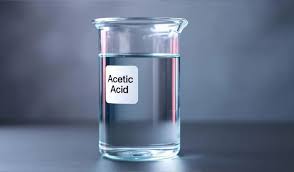
The white liquid known as acetic acid (CH3COOH) has a strong smell. It is an essential building block in organic chemistry and the primary ingredient in vinegar. Acetic acid is involved in a variety of chemical and biological reactions because of its acidic nature and reactive carboxyl group.

Role of Acetic Acid in Organic Processes

  1. Key Reagent in Organic Synthesis
    Acetic acid is widely used as a solvent and reagent in organic chemistry. It participates in esterification reactions to produce acetate esters, which are essential in coatings, adhesives, inks, and solvents.
  2. Intermediate for Industrial Chemicals
    In large-scale chemical manufacturing, acetic acid is a precursor for products such as:
  • Acetic anhydride
  • Vinyl acetate monomer (VAM)
  • Acetate salts and esters

These derivatives are further used in plastics, textiles, pharmaceuticals, and synthetic fibers.

  1. Catalyst and pH Regulator
    Acetic acid is frequently used to regulate reaction acidity, increasing yield and reaction efficiency. It is perfect for controlled industrial processes because of its predictable nature.

Role of Acetic Acid in Biochemical Processes

  1. Metabolic Importance
    Acetic acid and metabolism are intimately related in biological systems. It is present as acetyl-CoA, a key component in the synthesis of fatty acids, amino acids, and carbohydrates as well as energy production.
  2. Microbial Fermentation
    In microbial fermentation, acetic acid is both a byproduct and a regulator. It is made by acetic acid bacteria and is used in biotechnology, food processing, and the synthesis of enzymes.
  3. Preservation and Antimicrobial Action
    Thanks to its ability to inhibit microbial growth, acetic acid is used in biochemical and food applications as a preservative and antimicrobial agent.

Applications Across Industries

  • Pharmaceuticals: Used in drug synthesis and formulation
  • Food Industry: Acidity regulator and preservative
  • Textiles: Dyeing and finishing processes
  • Agriculture: Herbicides and silage preservation
  • Biotechnology: Fermentation and biochemical research

Why Choose SNDB as Your Acetic Acid Manufacturer and Exporter

SNDB is recognized as a reliable manufacturer and exporter of acetic acid, delivering products that meet international quality standards. With advanced manufacturing facilities and strict quality control systems, SNDB ensures:

  • High purity and consistent quality
  • Compliance with global safety and regulatory norms
  • Secure packaging for domestic and international transport
  • Timely delivery and dependable supply chain support

SNDB serves a diverse global client base across chemical, pharmaceutical, food, and industrial sectors, making it a preferred partner for bulk and customized acetic acid requirements.

The role of acetic acid in organic and biochemical processes is fundamental and far-reaching. This adaptable substance has a wide range of uses, from biological metabolism to industrial production. SNDB continues to solidify its position as a top producer and exporter of acetic acid, helping sectors that depend on accuracy and efficiency, thanks to its dedication to quality, dependability, and global reach.