Nitric Acid for Industrial Applications: Uses, Benefits and Importance | SNDBCategoriesNitric Acid

Nitric Acid for Industrial Applications: Uses, Benefits and Importance | SNDB

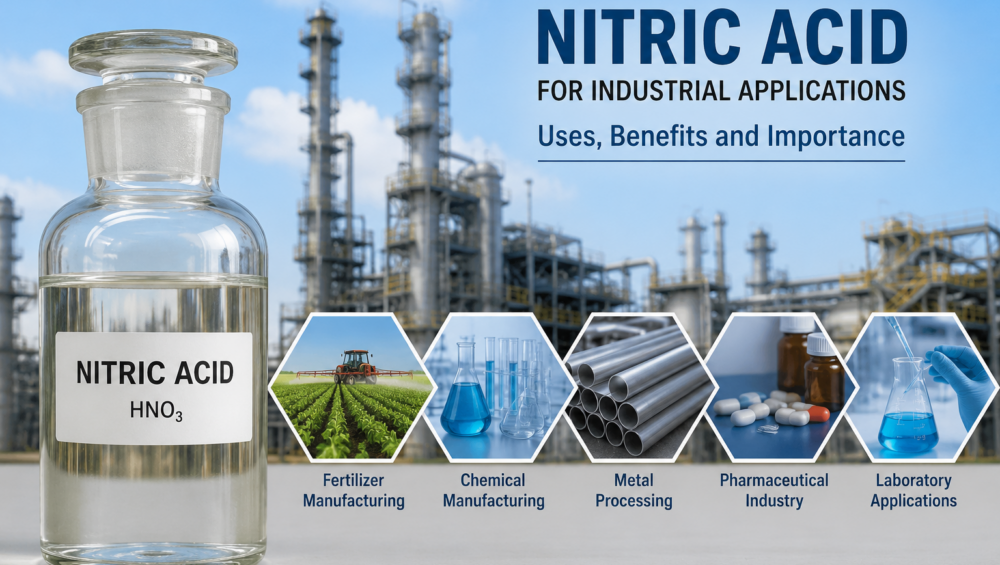
Nitric acid is an important industrial chemical widely used in fertilizer production, chemical manufacturing, metal processing, pharmaceuticals, and several other industries. Due to its strong chemical properties and versatility, nitric acid plays an essential role in many industrial processes.

SNDB is a trusted manufacturer and supplier of industrial chemicals, offering quality nitric acid solutions for various industrial requirements. With a focus on consistent quality and reliable supply, SNDB supports businesses across different sectors.

What Is Nitric Acid?

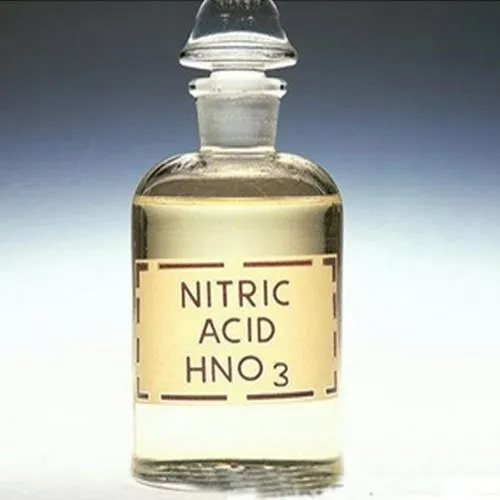
Nitric acid is a strong mineral acid with the chemical formula HNO₃. It is a clear to slightly yellow liquid and is highly reactive. Nitric acid is known for its strong oxidizing properties and is commonly used as a raw material and processing agent in the chemical industry.

Its chemical characteristics make it suitable for applications where nitration, oxidation, and chemical processing are required.

Industrial Uses of Nitric Acid

Nitric acid has a wide range of industrial applications. Some of its major uses include:

1. Fertilizer Manufacturing

One of the largest applications of nitric acid is fertilizer production. It is used to manufacture nitrate-based fertilizers, including ammonium nitrate and other nitrogen-containing compounds. These fertilizers provide essential nitrogen to crops and are widely used in agriculture.

2. Chemical Manufacturing

Nitric acid is an important raw material in the production of various chemicals. It is used in nitration and oxidation processes and helps manufacture several nitrate compounds and chemical intermediates.

3. Metal Processing

Nitric acid is used in metal treatment and processing applications. It can help remove impurities and oxides from metal surfaces and is used in processes such as pickling and surface treatment for certain metals and alloys.

4. Pharmaceutical Industry

The pharmaceutical sector uses nitric acid as a chemical reagent in selected manufacturing and laboratory processes. Its controlled chemical properties make it useful for producing and processing certain chemical intermediates.

5. Explosives and Nitration Processes

Nitric acid is used as a nitrating agent in controlled industrial chemical processes. Nitration is an important chemical reaction used to produce various industrial intermediates and specialized chemicals.

6. Laboratory and Research Applications

Nitric acid is also widely used in laboratories for analytical procedures, sample preparation, digestion, and chemical testing. Its strong acidic and oxidizing characteristics make it useful in controlled laboratory environments.

Benefits of Nitric Acid in Industrial Applications

Nitric acid offers several advantages for industrial chemical processing:

  • High chemical reactivity: Its strong acidic and oxidizing properties support a variety of chemical processes.
  • Versatile applications: It can be used across fertilizer, chemical, metal, pharmaceutical, and laboratory industries.
  • Effective processing agent: It is useful for oxidation, nitration, cleaning, and surface-treatment processes.
  • Important chemical intermediate: Nitric acid helps manufacture numerous nitrate-based compounds and industrial chemicals.
  • Wide industrial demand: Its applications across multiple sectors make it an important industrial raw material.

Why Quality Nitric Acid Matters

Industrial processes require chemicals with consistent quality and specifications. The purity and appropriate grade of nitric acid can influence process efficiency, product quality, and overall manufacturing performance.

For this reason, industries should source nitric acid from a reliable manufacturer and supplier that follows appropriate quality-control practices and provides material suitable for the intended application.

SNDB: Nitric Acid Manufacturer and Supplier

SNDB focuses on supplying industrial chemicals to businesses that require dependable chemical raw materials for their manufacturing and processing operations. As a nitric acid manufacturer and supplier, SNDB aims to provide consistent-quality products and reliable service to industrial customers.

The company serves different industrial requirements and emphasizes quality, supply reliability, and customer support.

Safe Handling of Nitric Acid

Nitric acid is a highly corrosive and reactive chemical and should always be handled by trained personnel using appropriate industrial safety procedures. Proper storage, compatible containers, protective equipment, ventilation, and emergency measures are important when working with nitric acid.

Businesses should always follow the relevant safety data sheet, regulatory requirements, and site-specific handling procedures.

Nitric acid is a valuable industrial chemical with applications across fertilizer manufacturing, chemical processing, metal treatment, pharmaceuticals, laboratories, and other industries. Its strong acidic and oxidizing properties make it suitable for a wide range of controlled industrial processes.

For businesses looking for a dependable nitric acid manufacturer and supplier in India, SNDB provides industrial chemical solutions with an emphasis on quality and reliable supply. Choosing a trusted supplier can help industries maintain consistency and efficiency in their chemical operations.
Industrial Acid Buying Guide: Factors to Consider Before PurchasingCategoriesAcid

Industrial Acid Buying Guide: Factors to Consider Before Purchasing

Industrial acids are essential for industries such as chemical manufacturing, pharmaceuticals, food processing, water treatment, metal finishing, textiles, fertilizers, and petrochemicals. Choosing the right industrial acid supplier is critical because the quality of chemicals directly affects production efficiency, product quality, and operational safety.

If you are planning to purchase industrial acids in bulk, this guide will help you understand the most important factors before making your decision. As one of India’s leading chemical manufacturers and exporters, SNDB supplies high-quality industrial acids that meet international standards and serve customers in over 40 countries.

Why Choosing the Right Industrial Acid Supplier Matters

Industrial acids play a vital role in manufacturing processes. Low-quality or impure chemicals can result in:

  • Reduced production efficiency
  • Equipment corrosion
  • Higher maintenance costs
  • Product quality issues
  • Safety risks

Working with a trusted manufacturer ensures consistent quality, timely delivery, and technical support.

1. Product Purity and Quality Standards

Purity is the first factor to consider when purchasing industrial acids. High-purity chemicals improve manufacturing performance and reduce contamination risks.

Always ask for:

  • Certificate of Analysis (COA)
  • Material Safety Data Sheet (MSDS)
  • Product specifications
  • Batch testing reports

SNDB follows strict quality control procedures and manufactures chemicals that comply with international quality standards.

2. Check Industry Certifications

Reliable chemical manufacturers maintain internationally recognized certifications that demonstrate their commitment to quality, safety, and environmental management.

Look for suppliers with certifications such as:

  • ISO 9001
  • ISO 14001
  • ISO 45001

These certifications ensure that products are manufactured using standardized processes. SNDB highlights these certifications as part of its quality assurance system.

3. Wide Product Portfolio

It is always beneficial to choose a supplier offering multiple industrial chemicals under one roof.

SNDB supplies a wide range of industrial chemicals, including:

  • Sulphuric Acid
  • Nitric Acid
  • Hydrochloric Acid
  • Acetic Acid
  • Formic Acid
  • Phosphoric Acid
  • Calcium Chloride
  • Bromides
  • Ferric Chloride
  • Potassium Chloride
  • Sodium Bromide
  • Zinc Bromide

This simplifies procurement and ensures a reliable long-term supply.

4. Packaging Options

Industrial acids should be supplied in secure packaging to prevent leakage and contamination.

Common packaging includes:

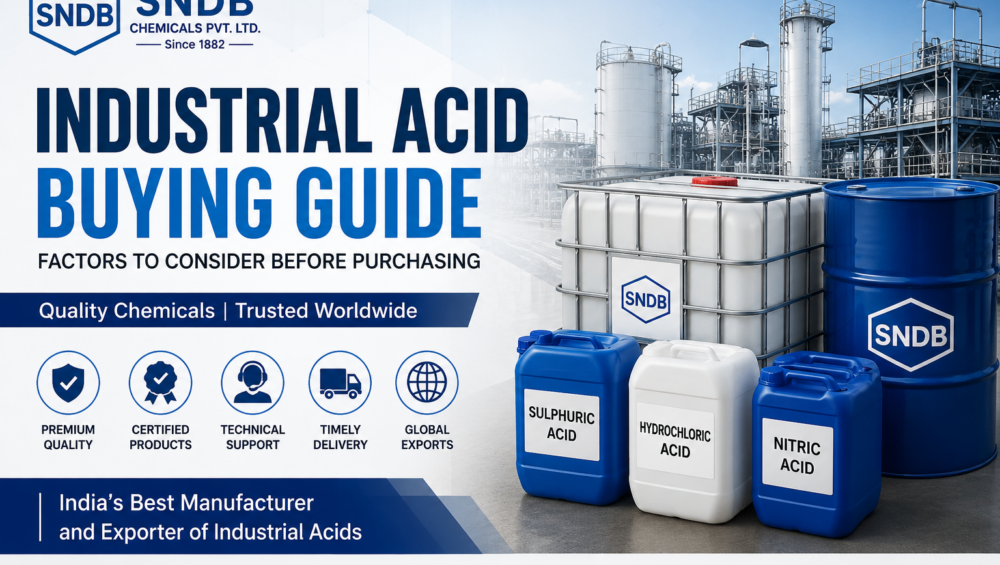
  • HDPE Drums
  • IBC Tanks
  • Bulk Tankers
  • Customized Packaging

Proper packaging also reduces transportation risks and ensures product integrity.

5. Supply Chain and Delivery

Timely delivery is crucial for uninterrupted production.

Before choosing a supplier, verify:

  • Warehousing facilities
  • Inventory availability
  • Export capability
  • Delivery timelines
  • Logistics support

SNDB operates multiple warehouses and has a strong export network serving customers worldwide.

6. Technical Support

A professional manufacturer should help customers select the correct chemical grade based on their industry requirements.

Technical support includes:

  • Product recommendations
  • Safety guidelines
  • Storage advice
  • Documentation
  • Application support

7. Safety and Compliance

Industrial acids require proper handling and storage.

Ensure your supplier provides:

  • MSDS
  • Safe handling instructions
  • Emergency response information
  • Regulatory compliance documents

This protects both workers and production facilities.

8. Competitive Pricing

The lowest price does not always provide the best value.

Consider:

  • Product quality
  • Consistency
  • Delivery reliability
  • Customer support
  • Long-term partnership

High-quality chemicals reduce operational costs over time.

9. Export Experience

If you source chemicals internationally, choose an exporter with proven global experience.

SNDB has more than 140 years of industry heritage and exports industrial chemicals to customers across over 40 countries, supported by international quality systems and global logistics capabilities.

Why Choose SNDB?

SNDB has established itself as one of India’s trusted manufacturers, suppliers, and exporters of industrial chemicals by focusing on quality, reliability, and customer satisfaction.

Key advantages include:

  • Over 140 years of industry experience
  • Export network across 40+ countries
  • ISO-certified manufacturing
  • Advanced production facilities
  • Strict quality control
  • Competitive pricing
  • Bulk supply capability
  • Reliable global logistics
  • Customer-focused service

Purchasing industrial acids is more than simply comparing prices. Product quality, certifications, safety standards, packaging, logistics, and supplier experience all play a major role in ensuring successful industrial operations.

Whether you require sulphuric acid, nitric acid, hydrochloric acid, phosphoric acid, acetic acid, or other specialty chemicals, partnering with an experienced manufacturer like SNDB helps ensure consistent quality, dependable supply, and long-term business value.

sndb best manufacturerCategoriesAcid

Future Trends in the Global Industrial Acids Market

The global industrial acids market plays a vital role in supporting numerous industries, including chemicals, fertilizers, pharmaceuticals, textiles, water treatment, food processing, and metal manufacturing. Industrial acids such as sulfuric acid, hydrochloric acid, nitric acid, phosphoric acid, and acetic acid are essential raw materials used in a wide range of manufacturing processes.

As industries continue to evolve, the industrial acids market is witnessing significant transformation driven by technological advancements, sustainability initiatives, and increasing industrialization across emerging economies. Understanding future market trends is essential for manufacturers, suppliers, and industrial buyers looking to remain competitive in a rapidly changing business environment.

Overview of the Global Industrial Acids Market

Industrial acids are among the most widely consumed chemicals worldwide. The market continues to grow due to rising demand from sectors such as agriculture, chemical processing, mining, electronics, and water treatment. Increasing industrial production and infrastructure development, particularly in developing economies, are further boosting market expansion. The global market for various industrial acids is expected to witness steady growth over the next decade due to expanding industrial applications and increasing investments in manufacturing industries.

Key Future Trends Shaping the Industrial Acids Market

1. Growing Demand for Sustainable and Green Chemicals

Sustainability has become one of the most significant drivers in the chemical industry. Manufacturers are increasingly adopting environmentally friendly production processes to reduce carbon emissions and minimize environmental impact.

The shift toward green chemistry is encouraging the development of cleaner production technologies, energy-efficient manufacturing systems, and waste reduction strategies. Bio-based acid production is also gaining attention as industries seek sustainable alternatives to conventional chemical processes.

2. Rising Adoption of Bio-Based Acids

Bio-based acids are emerging as a promising segment within the industrial acids market. Produced through renewable resources and fermentation technologies, these acids offer reduced environmental impact while meeting growing regulatory requirements.

Industries such as food processing, pharmaceuticals, biodegradable plastics, and personal care are increasingly adopting bio-based acids due to their sustainability benefits. Continuous advancements in fermentation technology are expected to accelerate market growth in this segment.

3. Expansion of the Fertilizer Industry

Agriculture remains one of the largest consumers of industrial acids, particularly sulfuric acid, nitric acid, and phosphoric acid. Rising global food demand and the need for enhanced agricultural productivity are driving increased fertilizer production worldwide.

Developing nations are investing heavily in modern agricultural practices, which is expected to create sustained demand for industrial acids used in fertilizer manufacturing. Nitric acid demand, for example, continues to be closely linked to the growth of nitrogen-based fertilizers.

4. Increasing Use in Battery and Electric Vehicle Manufacturing

The rapid growth of electric vehicles (EVs), energy storage systems, and battery manufacturing is creating new opportunities for industrial acid producers.

Sulfuric acid and other specialty acids are extensively used in battery manufacturing, metal extraction, and mineral processing. The global transition toward clean energy technologies is expected to significantly boost acid consumption in the coming years. Recent market developments indicate that sulfuric acid demand is increasingly influenced by battery materials and energy-transition industries.

5. Digitalization and Smart Manufacturing

The industrial acids sector is embracing Industry 4.0 technologies to improve operational efficiency and product quality.

Modern manufacturing facilities are increasingly utilizing:

  • Artificial Intelligence (AI)
  • Internet of Things (IoT)
  • Predictive maintenance systems
  • Automated process control
  • Real-time quality monitoring

These technologies help manufacturers optimize production, reduce downtime, improve safety, and lower operational costs.

6. Stringent Environmental Regulations

Governments worldwide are implementing stricter environmental regulations concerning chemical manufacturing, emissions, and waste disposal.

As a result, manufacturers are investing in:

  • Cleaner production technologies
  • Advanced emission control systems
  • Waste recycling solutions
  • Sustainable supply chain practices

Compliance with international environmental standards will remain a major factor influencing future industry growth.

7. Asia-Pacific Emerging as a Dominant Market

The Asia-Pacific region continues to dominate the global industrial acids market due to rapid industrialization, expanding manufacturing sectors, and growing domestic consumption.

Countries such as India, China, and Southeast Asian nations are witnessing substantial investments in chemicals, agriculture, pharmaceuticals, and infrastructure development. Asia-Pacific currently represents the largest share of several acid markets and is expected to maintain its leadership position throughout the forecast period.

Challenges Facing the Industrial Acids Industry

Despite strong growth prospects, the market faces several challenges:

  • Volatility in raw material prices
  • High energy costs
  • Supply chain disruptions
  • Increasing regulatory compliance costs
  • Geopolitical uncertainties affecting global trade

Recent disruptions in sulfur supply chains have highlighted the importance of resilient sourcing strategies and diversified supply networks within the industry.

Opportunities for Manufacturers and Exporters

Industrial acid manufacturers and exporters can capitalize on emerging opportunities by:

  • Expanding production capacities
  • Investing in sustainable manufacturing
  • Developing high-purity and specialty acid products
  • Strengthening global distribution networks
  • Adopting advanced manufacturing technologies
  • Enhancing product quality and regulatory compliance

Companies that prioritize innovation, sustainability, and customer-centric solutions are likely to gain a competitive advantage in the global market.

Conclusion

The future of the global industrial acids market appears highly promising, driven by industrial expansion, technological innovation, sustainability initiatives, and emerging applications in clean energy and advanced manufacturing.

As demand continues to rise across sectors such as fertilizers, chemicals, water treatment, batteries, and pharmaceuticals, manufacturers must adapt to evolving market dynamics. Organizations that embrace green technologies, digital transformation, and international quality standards will be well-positioned for long-term success in the global industrial acids industry.

How Nitric Acid is Produced: A Complete Guide to the Ostwald ProcessCategoriesNitric Acid

How Nitric Acid is Produced: A Complete Guide to the Ostwald Process

Nitric acid (HNO₃) is one of the most important industrial chemicals used worldwide. It plays a vital role in the production of fertilizers, explosives, dyes, pharmaceuticals, and numerous chemical compounds. The majority of commercial nitric acid is produced through the Ostwald Process, a highly efficient and widely adopted industrial method.

As a leading manufacturer, supplier, and exporter of industrial chemicals, SNDB is committed to delivering high-quality nitric acid products that meet international standards and diverse industrial requirements.

What is Nitric Acid?

Nitric acid is a strong mineral acid known for its highly corrosive and oxidizing properties. It is a colorless liquid that may develop a yellow tint due to the decomposition into nitrogen oxides over time. Industries rely heavily on nitric acid for manufacturing fertilizers, metal processing, and chemical synthesis.

Understanding the Ostwald Process

The Ostwald Process, developed by German chemist Wilhelm Ostwald in the early 20th century, is the primary industrial method used for producing nitric acid from ammonia.

The process consists of three major stages:

Step 1: Catalytic Oxidation of Ammonia

The process begins with the oxidation of ammonia (NH₃) using atmospheric oxygen in the presence of a platinum-rhodium catalyst at temperatures ranging from 800°C to 900°C.

Chemical Reaction:

4NH₃ + 5O₂ → 4NO + 6H₂O

This reaction produces nitric oxide (NO) and water vapor.

Step 2: Oxidation of Nitric Oxide

The nitric oxide formed in the first stage is further oxidized by atmospheric oxygen to produce nitrogen dioxide (NO₂).

Chemical Reaction:

2NO + O₂ → 2NO₂

Nitrogen dioxide is a reddish-brown gas and serves as an intermediate compound in nitric acid production.

Step 3: Absorption in Water

The nitrogen dioxide gas is then absorbed in water inside absorption towers, producing nitric acid.

Chemical Reaction:

3NO₂ + H₂O → 2HNO₃ + NO

The nitric oxide generated during this stage is recycled back into the process, making the Ostwald Process highly efficient and environmentally sustainable.

Advantages of the Ostwald Process

The Ostwald Process offers several advantages, including:

  • High production efficiency.
  • Large-scale commercial applicability.
  • Continuous operation capability.
  • Lower production costs.
  • Recycling of intermediate gases.
  • Consistent production of high-purity nitric acid.

These benefits make it the preferred industrial method for nitric acid manufacturing across the globe.

Industrial Applications of Nitric Acid

Nitric acid produced through the Ostwald Process is extensively used in various industries, including:

Fertilizer Manufacturing

Nitric acid is a key ingredient in producing ammonium nitrate fertilizers, which significantly improve agricultural productivity.

Explosives Industry

It is widely used in the manufacture of explosives for mining, construction, and defense applications.

Metal Processing

Industries use nitric acid for metal pickling, cleaning, etching, and refining processes.

Chemical Manufacturing

Nitric acid serves as a crucial raw material in producing dyes, pharmaceuticals, plastics, and specialty chemicals.

Safety Considerations in Nitric Acid Production

Since nitric acid is highly corrosive, strict safety measures are essential during manufacturing, storage, and transportation.

Important safety practices include:

  • Using corrosion-resistant equipment.
  • Wearing appropriate personal protective equipment (PPE).
  • Ensuring adequate ventilation.
  • Implementing proper storage protocols.
  • Following environmental and industrial safety regulations.

Why Choose SNDB for Nitric Acid?

SNDB has established itself as a trusted name in the chemical industry by delivering superior-quality nitric acid to customers worldwide. As a leading manufacturer, supplier, and exporter, SNDB focuses on quality, consistency, and customer satisfaction.

Why Industries Prefer SNDB:

  • Premium quality nitric acid products.
  • Advanced manufacturing facilities.
  • Strict quality control procedures.
  • Timely delivery across domestic and international markets.
  • Competitive pricing.
  • Customized packaging solutions.
  • Dedicated customer support.

With years of industry expertise and a commitment to excellence, SNDB continues to serve industries with reliable and high-performance chemical solutions.

The Ostwald Process remains the backbone of modern nitric acid production due to its efficiency, scalability, and sustainability. As demand for nitric acid continues to grow across industries, partnering with a reliable supplier becomes increasingly important.

SNDB stands as a trusted manufacturer, supplier, and exporter of high-quality nitric acid, offering dependable products that meet the evolving needs of industries worldwide.

Nitric Acid Export Market: Global Suppliers and Trade InsightsCategoriesNitric Acid

Nitric Acid Export Market: Global Suppliers and Trade Insights

Nitric acid is one of the most important industrial chemicals used across multiple sectors, including fertilizers, explosives, pharmaceuticals, metal processing, and chemical manufacturing. With rising industrialization and agricultural demand worldwide, the global nitric acid export market continues to expand, creating opportunities for manufacturers, suppliers, and exporters.

Companies such as SNDB, recognized as a manufacturer and exporter in the chemical sector, contribute to meeting international demand through quality production, supply chain management, and export support.

Understanding the Global Nitric Acid Market

Nitric acid (HNO₃) is a highly reactive mineral acid mainly produced through the oxidation of ammonia using the Ostwald process. It serves as a key raw material for:

  • Ammonium nitrate fertilizers
  • Chemical intermediates
  • Metal treatment and pickling
  • Explosives manufacturing
  • Pharmaceutical applications
  • Dye and pigment production

The increasing requirement for fertilizers and industrial chemicals has made nitric acid a major product in international trade.

Growth Drivers in the Nitric Acid Export Market

1. Rising Agricultural Demand

Agriculture remains one of the largest consumers of nitric acid because it is widely used in fertilizer production. Growing food demand and modern farming practices continue to support market expansion.

2. Expansion of Chemical Industries

Chemical manufacturing facilities require nitric acid for various reactions and intermediate production processes.

3. Industrial Development

Sectors such as automotive, metal fabrication, electronics, and mining use nitric acid for cleaning, etching, and processing operations.

4. Global Trade Opportunities

Developing economies increasingly import nitric acid to support domestic industrial growth, creating strong export opportunities.

Major Nitric Acid Export Regions

Several countries play an important role in global nitric acid production and trade due to strong chemical industries and manufacturing infrastructure.

Asia-Pacific

The Asia-Pacific region remains a major production and consumption hub because of expanding agriculture and industrial activity.

Europe

European manufacturers focus on advanced production technologies and environmental compliance.

North America

Strong industrial demand and chemical processing industries support nitric acid exports.

Middle East

Growing investments in chemicals and fertilizers are increasing export potential.

Role of SNDB as a Nitric Acid Manufacturer and Exporter

SNDB is positioned as a manufacturer and exporter supporting industrial requirements through product quality and supply management.

Manufacturing Capabilities

SNDB focuses on:

  • Industrial nitric acid production
  • Quality control systems
  • Consistent chemical specifications
  • Bulk production support

Export Services

As an exporter, SNDB may support:

  • International packaging standards
  • Bulk shipment management
  • Timely delivery schedules
  • Documentation for global trade

Supply Chain Management

Reliable supply chains are important for nitric acid distribution because the product requires careful handling and transportation.

Quality Standards in Nitric Acid Supply

Industrial buyers often consider several factors before selecting a supplier:

  • Purity level
  • Concentration percentage
  • Chemical consistency
  • Storage compliance
  • Export packaging quality
  • Safety documentation

Manufacturers and exporters maintaining international standards gain stronger positions in global markets.

Challenges in the Nitric Acid Export Industry

Environmental Regulations

Nitric acid production can generate emissions that require strict environmental control measures.

Transportation Requirements

Because nitric acid is corrosive, transportation and storage require specialized containers and handling systems.

Market Competition

Global manufacturers compete on quality, pricing, supply stability, and regulatory compliance.

Raw Material Costs

Fluctuations in ammonia prices directly affect nitric acid production costs.

Sustainability and Future Outlook

The future of the nitric acid market is expected to focus on:

  • Cleaner production technologies
  • Reduced emissions
  • Energy-efficient manufacturing plants
  • Sustainable chemical processing
  • Improved logistics systems

Industries are increasingly investing in environmentally responsible production methods while maintaining supply reliability.

Why Choose a Reliable Nitric Acid Manufacturer and Exporter?

Selecting an experienced manufacturer and exporter offers benefits such as:

  • Consistent product quality
  • Reliable global supply
  • Technical support
  • Export expertise
  • Industrial-grade specifications

Companies like SNDB aim to support industries by maintaining production quality and export capabilities for international markets.

The nitric acid export market continues to grow due to increasing agricultural demand, industrial development, and global chemical production. Manufacturers, suppliers, and exporters play a crucial role in ensuring uninterrupted supply to worldwide industries.

With expanding trade opportunities and focus on sustainable production, companies such as SNDB contribute to the evolving nitric acid industry through manufacturing expertise and export operations.

CategoriesNitric Acid

Laboratory Applications of Nitric Acid | SNDB Best Manufacturer, Supplier and Exporter

Nitric acid (HNO₃) is one of the most important mineral acids used in scientific laboratories, research facilities, educational institutions, and industrial testing centers. Known for its strong oxidizing properties and high reactivity, nitric acid plays a major role in chemical analysis, sample preparation, metal treatment, and laboratory experiments. As a trusted manufacturer, supplier, and exporter, SNDB provides high-quality nitric acid suitable for various laboratory and industrial applications.

What is Nitric Acid?

Nitric acid is a highly corrosive and colorless to yellowish liquid composed of hydrogen, nitrogen, and oxygen. It is widely used in laboratories because of its ability to react with metals, dissolve compounds, and participate in analytical procedures. The chemical formula of nitric acid is HNO₃, and it is commonly available in different concentrations depending on laboratory requirements.

Major Laboratory Applications of Nitric Acid

1. Chemical Analysis and Testing

Nitric acid is extensively used in analytical laboratories for preparing samples and conducting chemical tests. It helps dissolve metals and mineral samples before analysis using advanced instruments such as spectroscopy and chromatography systems.

Researchers use nitric acid to remove impurities and prepare accurate testing solutions.

2. Sample Digestion Procedures

Laboratories often use nitric acid in sample digestion processes to break down organic materials and complex compounds. This method is especially important in:

  • Environmental testing laboratories
  • Food analysis laboratories
  • Pharmaceutical research centers
  • Agricultural testing facilities

Sample digestion with nitric acid improves accuracy and reliability in analytical measurements.

3. Metal Cleaning and Surface Treatment

Nitric acid is used to clean laboratory equipment and metal surfaces. It removes oxidation layers, rust, and contaminants from stainless steel instruments and laboratory tools.

Applications include:

  • Cleaning scientific instruments
  • Surface preparation for experiments
  • Metal passivation processes
  • Removal of unwanted deposits

4. Reagent Preparation

Nitric acid serves as a key reagent in many chemical reactions and laboratory formulations. It is combined with other chemicals to create solutions used in experiments, synthesis processes, and analytical testing.

Its strong oxidizing nature makes it suitable for controlled laboratory reactions.

5. Research and Development Activities

Research laboratories use nitric acid in developing new compounds, studying reaction mechanisms, and conducting scientific investigations. Universities and industrial R&D centers rely on nitric acid for:

  • Experimental chemistry studies
  • Material science research
  • Nanotechnology applications
  • Industrial process development

6. Preparation of Nitrates

Nitric acid reacts with metals and bases to form nitrate compounds. These nitrates are widely used in laboratory studies, fertilizer research, and industrial testing procedures.

Common nitrate preparations include sodium nitrate, potassium nitrate, and ammonium nitrate under controlled laboratory environments.

Safety Measures When Handling Nitric Acid

Because nitric acid is highly corrosive and reactive, laboratories must follow strict safety procedures:

  • Wear chemical-resistant gloves and protective clothing
  • Use safety goggles and face shields
  • Work in properly ventilated areas or fume hoods
  • Store nitric acid in approved containers
  • Avoid direct contact with skin and eyes
  • Keep away from incompatible substances

Proper handling ensures safe laboratory operations and prevents accidents.

Why Choose SNDB for Nitric Acid Supply?

SNDB is recognized as a reliable manufacturer, supplier, and exporter of high-quality nitric acid for laboratory and industrial use. The company focuses on quality standards, safe packaging, timely delivery, and customer satisfaction.

Key advantages include:

  • High-purity nitric acid products
  • Consistent quality assurance
  • Industrial and laboratory grades available
  • Secure packaging solutions
  • Export support and logistics services
  • Competitive pricing and dependable supply

Nitric acid remains an essential chemical in modern laboratories due to its importance in chemical analysis, sample digestion, reagent preparation, metal treatment, and research applications. Its versatility makes it indispensable across educational, scientific, pharmaceutical, and industrial sectors. With quality products and reliable service, SNDB continues to support laboratories and industries with premium nitric acid solutions worldwide.

Global Reach, Superior Quality: SNDB’s Leadership in Nitric Acid ExportingCategoriesNitric Acid

Global Reach, Superior Quality: SNDB’s Leadership in Nitric Acid Exporting

Nitric acid is a significant industrial chemical used across several sectors, including fertilizers, medicines, dyes, explosives, rubber processing, and metallurgy. One business has become a reputable worldwide brand in a sector where the need for high-purity chemicals is expanding quickly: SNDB, India’s top producer, supplier, and exporter of nitric acid. SNDB has established a significant global presence in the chemical export sector thanks to its strong manufacturing capabilities and unwavering dedication to quality.

1. High-Purity Nitric Acid for Diverse Industrial Needs

The key factor behind SNDB’s success is its capacity to supply constant, high-purity nitric acid adapted to varied industrial requirements. The company’s superior production process assures exact composition, minimal impurity levels, and compliance with global safety requirements.

Industries rely on SNDB’s nitric acid for:

  • Fertilizer manufacturing
  • Pharmaceutical intermediates
  • Metal refining and surface treatment
  • Dye and pigment production
  • Rubber processing chemicals
  • Explosives and propellants

The versatility of these applications positions SNDB as a crucial partner for manufacturers worldwide.

2. Advanced Manufacturing Infrastructure

Modern manufacturing systems, automated quality control, and sustainable operations are all features of SNDB’s production facilities. Every batch undergoes extensive quality assurance methods to assure uniformity and performance.

Key strengths include:

  • Automated production technology
  • Stringent testing and R&D
  • Batch traceability and documentation
  • Compliance with safety and environmental standards

This infrastructure helps SNDB maintain world-class standards while scaling operations to meet increasing demands.

3. Strong Global Distribution Network

SNDB’s dependable and effective export network is one of its main features. The company supplies nitric acid to important markets, guaranteeing timely shipments, streamlined logistics, and secure packaging to maintain product stability.

Its export services are designed to meet:

  • Bulk industrial supply requirements
  • Customized packaging solutions
  • International shipping and documentation
  • Compliance with global chemical regulations

This international reach distinguishes SNDB from many regional manufacturers.

4. Commitment to Quality, Safety, and Compliance

Exporting and producing chemicals require strict safety regulations. SNDB adopts a proactive approach by integrating environmental and safety regulations into every step of manufacturing and supply.

The company follows:

  • ISO and regulatory compliance
  • Safe handling and transportation standards
  • Sustainable waste and emission control practices

This commitment strengthens buyer confidence and supports long-term global partnerships.

5. Customer-Centric Solutions and Technical Support

Beyond manufacturing, SNDB provides technical support, product customization, and documentation assistance to help clients achieve difficult industrial requirements. The organization is committed to establishing connections based on operational excellence and trust.

Its customer-focused services include:

  • Tailored concentration levels
  • MSDS and product certifications
  • On-demand bulk supply
  • Responsive customer assistance

This approach has earned SNDB a loyal customer base in both domestic and international markets.

6. Driving Growth through Innovation

To increase the sustainability, purity, and efficiency of its nitric acid production, SNDB keeps funding research and development. The company aspires to produce solutions that not only fulfill present needs but also boost future industrial capacities.

Innovative efforts include:

  • Energy-efficient production processes
  • Waste reduction technologies
  • Enhanced purity formulations
  • Automation and digital monitoring

Through innovation, SNDB is setting benchmarks for chemical manufacturing excellence.

SNDB’s position as a major nitric acid exporter is built on a foundation of excellent quality, robust infrastructure, worldwide supply capabilities, and customer-centric services. SNDB distinguishes out for its dedication to performance, purity, and international standards as companies throughout the world look for trustworthy chemical collaborations.

With excellent goods and a far-reaching distribution network, SNDB is not only satisfying worldwide demand—it is shaping the future of nitric acid manufacturing and delivery.

Nitric Acid Safety Precautions Every Student Should KnowCategoriesNitric Acid

Nitric Acid Safety Precautions Every Student Should Know

Nitric Acid is one of the most widely used industrial and laboratory chemicals. It plays an essential role in fertilizer production, metal processing, pharmaceuticals, dyes, and scientific research. Because of its highly corrosive and reactive nature, students and laboratory beginners must understand the correct safety practices before handling it.

As a trusted supplier and manufacturer, SNDB emphasizes safe chemical handling and responsible laboratory practices for educational institutions and industrial users alike.

What Is Nitric Acid?

Nitric Acid is a strong mineral acid with the chemical formula HNO₃. It is colorless when pure but may appear yellow due to decomposition into nitrogen oxides. The acid is highly corrosive and can react violently with certain substances.

Why Safety Is Important

Improper handling of Nitric Acid can cause:

  • Severe skin burns
  • Eye damage
  • Respiratory irritation
  • Toxic fumes
  • Chemical reactions or explosions when mixed incorrectly

Students working in chemistry laboratories should always follow standard laboratory safety procedures.

Essential Nitric Acid Safety Precautions

1. Wear Proper Protective Equipment

Always use:

  • Chemical-resistant gloves
  • Safety goggles or face shields
  • Laboratory coats
  • Closed-toe shoes

Protective equipment reduces the risk of burns and accidental exposure.

2. Work in a Well-Ventilated Area

Nitric Acid releases harmful fumes that may irritate the lungs and respiratory system. Laboratories should use proper ventilation systems or fume hoods during experiments.

3. Never Touch Nitric Acid Directly

Even small amounts can damage the skin. If accidental contact occurs:

  • Rinse immediately with plenty of water
  • Remove contaminated clothing
  • Seek medical attention if irritation continues

4. Always Add Acid to Water

When diluting:

  • Add acid slowly to water
  • Never pour water into acid

This prevents dangerous splashing and heat generation.

Dilution Safety Formula

The heat released during dilution can increase rapidly with concentration changes:

HNO3+H2O→Diluted Solution+HeatHNO_3 + H_2O \rightarrow \text{Diluted Solution} + \text{Heat}HNO3​+H2​O→Diluted Solution+Heat

Careful dilution procedures help avoid burns and chemical accidents.

5. Store Properly

Store Nitric Acid:

  • In tightly sealed containers
  • Away from sunlight and heat
  • Separate from organic materials and metals

Proper storage minimizes chemical reactions and leakage risks.

6. Avoid Mixing with Incompatible Chemicals

Nitric Acid reacts strongly with:

  • Alcohols
  • Organic compounds
  • Reducing agents
  • Certain metals

Incorrect mixing may produce toxic gases or explosions.

7. Learn Emergency Procedures

Students should know:

  • Location of eyewash stations
  • Emergency shower procedures
  • Spill response methods
  • Laboratory evacuation plans

Preparedness can reduce injuries during accidents.

Common Laboratory Uses of Nitric Acid

Nitric Acid is commonly used for:

  • Chemical analysis
  • Metal etching
  • Fertilizer manufacturing
  • Academic chemistry experiments
  • Industrial cleaning

Because of these wide applications, safety training is essential for every science student.

Choosing a Reliable Nitric Acid Supplier

High-quality chemicals are critical for safe laboratory and industrial operations. SNDB is recognized for providing reliable chemical solutions, consistent product quality, and professional manufacturing standards for educational and industrial applications.

Understanding proper handling methods for Nitric Acid is essential for laboratory safety. By wearing protective equipment, following correct dilution procedures, and storing chemicals responsibly, students can minimize risks and conduct experiments safely.

Educational institutions and laboratories should always source chemicals from experienced manufacturers and suppliers such as SNDB to ensure product quality and safety compliance.

Chemical Behavior and Reactivity of Nitric Acid (HNO₃) SNDB – Best Manufacturer, Supplier, and ExporterCategoriesNitric Acid

Chemical Behavior and Reactivity of Nitric Acid (HNO₃)| SNDB Best Manufacturer and supplier

One of the most significant mineral acids utilized in contemporary chemical industries is nitric acid (HNO₃). Nitric acid, which is well-known for its potent oxidizing and strong acidic qualities, is essential to the synthesis of fertilizer, explosives, metals, medicines, dyes, and laboratory research. Being a top producer, supplier, and exporter, SNDB provides premium nitric acid that satisfies exacting industrial and global requirements.

Chemical Properties of Nitric Acid

Nitric acid is a colorless to light yellow liquid with a strong, unpleasant smell. It dissolves easily in water and has the chemical formula HNO₃. Compared to concentrated nitric acid, which typically contains about 68% HNO₃ by weight, fuming nitric acid has a higher HNO₃ level.

1. Strong Acidic Nature

Nitric acid is a strong monoprotic acid, meaning it completely dissociates in water:

HNO₃ → H⁺ + NO₃⁻

Because of complete ionization, it has a very low pH and reacts readily with bases to form nitrates and water in neutralization reactions.

Example:
HNO₃ + NaOH → NaNO₃ + H₂O

Oxidizing Behavior

Nitric acid’s potent oxidizing power is one of its most crucial properties. When nitric acid reacts with metals, it usually does not release hydrogen gas, in contrast to many other acids. Rather, it reduces to nitrogen oxides like NO₂ or NO by oxidizing metals.

Reaction with Metals

With copper:
Cu + 4HNO₃ (conc.) → Cu(NO₃)₂ + 2NO₂ + 2H₂O

With dilute acid, nitric oxide (NO) is formed instead of nitrogen dioxide (NO₂).

This powerful oxidizing property makes nitric acid highly useful in metal refining, etching, and cleaning processes.

Reaction with Non-Metals

Nitric acid also reacts with non-metals such as carbon and sulfur due to its oxidizing nature.

Example:
C + 4HNO₃ → CO₂ + 4NO₂ + 2H₂O

These reactions demonstrate its ability to oxidize non-metallic substances effectively.

Nitration Reactions

In nitration processes, which add a nitro group (-NO₂) into organic molecules, nitric acid is essential. Pharmaceuticals, dyes, and explosives are all produced using this method.

For example, in the presence of sulfuric acid, nitric acid generates the nitronium ion (NO₂⁺), a powerful electrophile used in aromatic substitution reactions.

Applications include:

  • Production of nitrobenzene
  • Manufacture of trinitrotoluene (TNT)
  • Synthesis of nitroglycerin

Thermal Decomposition

When exposed to heat or light, concentrated nitric acid decomposes:

4HNO₃ → 4NO₂ + 2H₂O + O₂

The brown fumes observed are nitrogen dioxide (NO₂). This decomposition explains why nitric acid is stored in dark containers to prevent breakdown.

Industrial Production

Nitric acid is industrially produced through the Ostwald process, which involves the catalytic oxidation of ammonia to nitric oxide, followed by further oxidation and absorption in water.

This process ensures large-scale, efficient production for global industrial demand.

Safety and Handling

Due to its corrosive and oxidizing nature, nitric acid must be handled with strict safety measures:

  • Use corrosion-resistant storage tanks
  • Ensure proper ventilation
  • Wear protective gloves, goggles, and chemical-resistant clothing
  • Store away from organic materials and reducing agents

Proper storage and transportation are essential for maintaining quality and safety.

Why Choose SNDB as Your Nitric Acid Partner?

As a trusted manufacturer, supplier, and exporter, SNDB provides:

  • High-purity nitric acid in various concentrations
  • Compliance with international quality standards
  • Secure packaging and global export capability
  • Timely delivery and competitive pricing
  • Dedicated customer support

With advanced production facilities and quality control systems, SNDB ensures consistent product performance for industrial and laboratory applications worldwide.

Strong and extremely reactive, nitric acid (HNO₃) has potent oxidizing qualities that make it essential in many different sectors. Its chemical behavior determines its adaptability in a variety of processes, including organic synthesis, fertilizer production, and metal processing. Every shipment is guaranteed to be efficient, safe, and of high quality when working with a reputable supplier like SNDB.

For bulk inquiries, customized packaging, or export orders, SNDB stands ready as your best manufacturer, supplier, and exporter of premium nitric acid.

Nitric Acid (HNO₃) – SNDB: Best Manufacturer, Exporter & Supplier in IndiaCategoriesNitric Acid

Understanding Industrial Nitric Acid: SNDB’s Expertise

Because of its strong oxidizing capabilities and high reactivity, industrial nitric acid is an essential chemical used in many different industries. Nitric acid is essential to many modern industrial processes, from metal processing and pharmaceuticals to fertilizers and explosives. SNDB has made a name for itself as a reliable producer, supplier, and exporter of premium industrial nitric acid, offering clients all over the world dependable performance.

What Is Industrial Nitric Acid?

Nitric acid (HNO₃) is a sharp-smelling, colorless to pale yellow liquid that is extremely corrosive. It is mostly made in industrial settings by catalytically oxidizing ammonia and then absorbing it in water. Nitric acid’s content and purity are meticulously regulated to satisfy certain industrial needs.

Due to its reactive nature, industrial nitric acid must be manufactured, stored, and transported under strict safety and quality standards.

Key Applications of Industrial Nitric Acid

Industrial nitric acid supplied by SNDB is used across a wide range of sectors, including:

  • Fertilizer Industry: As a key raw material in the production of ammonium nitrate and other nitrogen-based fertilizers
  • Chemical Manufacturing: Used in the synthesis of dyes, intermediates, and specialty chemicals
  • Pharmaceuticals: Essential for producing active pharmaceutical ingredients and laboratory reagents
  • Metal Processing: Applied in metal pickling, etching, and surface treatment
  • Explosives and Mining: Used in the manufacturing of explosives and blasting agents

These diverse applications demand consistent quality, purity, and supply reliability—areas where SNDB excels.

SNDB’s Manufacturing Expertise

SNDB produces industrial-grade nitric acid that satisfies national and international requirements by utilizing cutting-edge manufacturing techniques and contemporary infrastructure. Every stage of manufacturing is overseen by qualified experts and strict quality control methods, from the selection of raw materials to the final shipping.

Key strengths of SNDB’s manufacturing expertise include:

  • Advanced production technology
  • Strict adherence to safety and environmental regulations
  • High-purity output suitable for demanding industrial applications
  • Scalable production capacity to meet bulk and customized requirements

Commitment to Quality and Safety

A key component of SNDB’s activities is quality and safety. To guarantee proper concentration, purity, and adherence to industry standards, every batch of nitric acid is put through extensive testing. In order to reduce risk and guarantee safe delivery to clients, SNDB also adheres to strict safety procedures throughout handling, storage, and transportation.

Reliable Supply and Global Export Capability

As a prominent nitric acid provider and exporter, SNDB serves both domestic and international markets. SNDB is able to deliver goods safely and on schedule in a variety of locations because to effective logistics, reliable packaging options, and adherence to international export regulations.

Whether supplying small quantities or bulk shipments, SNDB ensures uninterrupted supply and dependable customer support.

Why Choose SNDB for Industrial Nitric Acid?

Customers choose SNDB for its:

  • Proven industry experience
  • Consistent product quality
  • Reliable supply chain and timely delivery
  • Customer-focused approach
  • Strong reputation as a manufacturer, supplier, and exporter

A key component of many businesses, industrial nitric acid’s purity has a direct bearing on both operational effectiveness and safety. With strong scientific understanding, contemporary manufacturing capabilities, and a dedication to excellence, SNDB stands out as a trusted partner for industrial nitric acid solutions. Industries can obtain dependable goods supported by quality, safety, and worldwide reach by using SNDB.