SNDB: Best Manufacturer, Supplier, and Exporter of Hydrogen PeroxideCategoriesHydrogen Peroxide

SNDB | Hydrogen Peroxide: Environmental and Industrial Applications

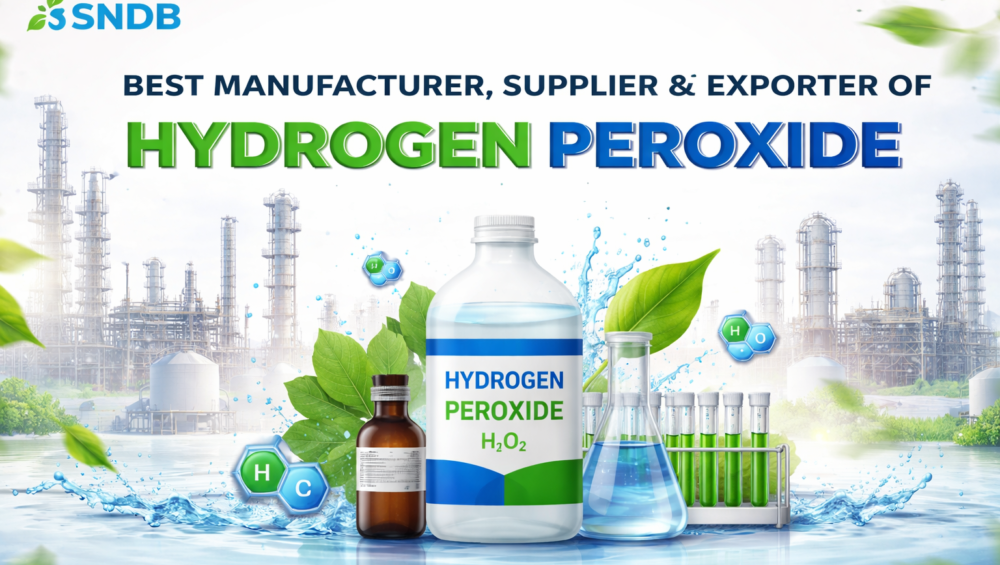
Hydrogen Peroxide (H₂O₂) is a widely used chemical known for its powerful oxidizing properties. It plays an important role in both environmental protection and industrial processes. Because it breaks down into water and oxygen, it is often considered an environmentally friendly alternative to more harmful chemicals.

Environmental Applications

One of the most important environmental uses of hydrogen peroxide is in water and wastewater treatment. It helps remove pollutants, eliminate unpleasant odors, and reduce the presence of harmful organic compounds. Because it decomposes into harmless by-products, it supports cleaner and safer water treatment processes.

Hydrogen peroxide is also used in soil remediation. Contaminated soil can be treated with controlled doses of hydrogen peroxide to break down pollutants such as petroleum hydrocarbons. This helps restore soil quality without introducing toxic residues.

In addition, hydrogen peroxide plays a role in air pollution control. Industries use it to help neutralize harmful gases and odors, contributing to cleaner air emissions.

Industrial Applications

In industrial settings, hydrogen peroxide is used in a wide range of processes:

Pulp and Paper Industry: It is commonly used as a bleaching agent in paper production, helping to whiten paper without relying on chlorine-based chemicals. This reduces harmful environmental impacts.

Textile Industry: Hydrogen peroxide is used to bleach fabrics, especially cotton, to achieve brighter and cleaner textiles in an eco-friendly way.

Chemical Manufacturing: It serves as a key ingredient in producing other chemicals, such as peroxides and oxidizing agents. It also plays a role in various synthesis reactions.

Electronics Industry: Hydrogen peroxide is used for cleaning and etching electronic components, including semiconductors and circuit boards, due to its strong oxidizing properties.

Food Industry: It is sometimes used for sterilization of packaging materials and surfaces in food processing environments to maintain hygiene standards.

Advantages of Using Hydrogen Peroxide

Hydrogen peroxide is valued for its environmentally friendly profile. Unlike many traditional chemicals, it decomposes into water and oxygen, reducing the risk of harmful residues. Its effectiveness at low concentrations makes it both economical and environmentally responsible.

Safety Considerations

Although hydrogen peroxide is considered safer than many industrial chemicals, it must still be handled carefully. Concentrated solutions can cause skin and eye irritation, and improper storage may lead to decomposition or pressure buildup. Proper handling procedures are necessary in both industrial and household use.

Hydrogen peroxide is an important chemical with a wide range of environmental and industrial applications. Its strong oxidizing properties, combined with its environmentally friendly decomposition, make it a valuable tool in water treatment, pollution control, manufacturing, and many other fields. When used responsibly, hydrogen peroxide supports cleaner production processes and environmental protection.

SNDB has emerged as one of the best manufacturers, suppliers, and exporters of hydrogen peroxide due to its commitment to quality, innovation, and sustainability. With a wide product range, global presence, and customer-focused services, the company continues to play a significant role in the chemical industry.

As demand for eco-friendly and efficient chemicals grows, SNDB remains a reliable partner for industries seeking high-quality hydrogen peroxide solutions.
sndb best manufacturerCategoriesAcid

Future Trends in the Global Industrial Acids Market

The global industrial acids market plays a vital role in supporting numerous industries, including chemicals, fertilizers, pharmaceuticals, textiles, water treatment, food processing, and metal manufacturing. Industrial acids such as sulfuric acid, hydrochloric acid, nitric acid, phosphoric acid, and acetic acid are essential raw materials used in a wide range of manufacturing processes.

As industries continue to evolve, the industrial acids market is witnessing significant transformation driven by technological advancements, sustainability initiatives, and increasing industrialization across emerging economies. Understanding future market trends is essential for manufacturers, suppliers, and industrial buyers looking to remain competitive in a rapidly changing business environment.

Overview of the Global Industrial Acids Market

Industrial acids are among the most widely consumed chemicals worldwide. The market continues to grow due to rising demand from sectors such as agriculture, chemical processing, mining, electronics, and water treatment. Increasing industrial production and infrastructure development, particularly in developing economies, are further boosting market expansion. The global market for various industrial acids is expected to witness steady growth over the next decade due to expanding industrial applications and increasing investments in manufacturing industries.

Key Future Trends Shaping the Industrial Acids Market

1. Growing Demand for Sustainable and Green Chemicals

Sustainability has become one of the most significant drivers in the chemical industry. Manufacturers are increasingly adopting environmentally friendly production processes to reduce carbon emissions and minimize environmental impact.

The shift toward green chemistry is encouraging the development of cleaner production technologies, energy-efficient manufacturing systems, and waste reduction strategies. Bio-based acid production is also gaining attention as industries seek sustainable alternatives to conventional chemical processes.

2. Rising Adoption of Bio-Based Acids

Bio-based acids are emerging as a promising segment within the industrial acids market. Produced through renewable resources and fermentation technologies, these acids offer reduced environmental impact while meeting growing regulatory requirements.

Industries such as food processing, pharmaceuticals, biodegradable plastics, and personal care are increasingly adopting bio-based acids due to their sustainability benefits. Continuous advancements in fermentation technology are expected to accelerate market growth in this segment.

3. Expansion of the Fertilizer Industry

Agriculture remains one of the largest consumers of industrial acids, particularly sulfuric acid, nitric acid, and phosphoric acid. Rising global food demand and the need for enhanced agricultural productivity are driving increased fertilizer production worldwide.

Developing nations are investing heavily in modern agricultural practices, which is expected to create sustained demand for industrial acids used in fertilizer manufacturing. Nitric acid demand, for example, continues to be closely linked to the growth of nitrogen-based fertilizers.

4. Increasing Use in Battery and Electric Vehicle Manufacturing

The rapid growth of electric vehicles (EVs), energy storage systems, and battery manufacturing is creating new opportunities for industrial acid producers.

Sulfuric acid and other specialty acids are extensively used in battery manufacturing, metal extraction, and mineral processing. The global transition toward clean energy technologies is expected to significantly boost acid consumption in the coming years. Recent market developments indicate that sulfuric acid demand is increasingly influenced by battery materials and energy-transition industries.

5. Digitalization and Smart Manufacturing

The industrial acids sector is embracing Industry 4.0 technologies to improve operational efficiency and product quality.

Modern manufacturing facilities are increasingly utilizing:

  • Artificial Intelligence (AI)
  • Internet of Things (IoT)
  • Predictive maintenance systems
  • Automated process control
  • Real-time quality monitoring

These technologies help manufacturers optimize production, reduce downtime, improve safety, and lower operational costs.

6. Stringent Environmental Regulations

Governments worldwide are implementing stricter environmental regulations concerning chemical manufacturing, emissions, and waste disposal.

As a result, manufacturers are investing in:

  • Cleaner production technologies
  • Advanced emission control systems
  • Waste recycling solutions
  • Sustainable supply chain practices

Compliance with international environmental standards will remain a major factor influencing future industry growth.

7. Asia-Pacific Emerging as a Dominant Market

The Asia-Pacific region continues to dominate the global industrial acids market due to rapid industrialization, expanding manufacturing sectors, and growing domestic consumption.

Countries such as India, China, and Southeast Asian nations are witnessing substantial investments in chemicals, agriculture, pharmaceuticals, and infrastructure development. Asia-Pacific currently represents the largest share of several acid markets and is expected to maintain its leadership position throughout the forecast period.

Challenges Facing the Industrial Acids Industry

Despite strong growth prospects, the market faces several challenges:

  • Volatility in raw material prices
  • High energy costs
  • Supply chain disruptions
  • Increasing regulatory compliance costs
  • Geopolitical uncertainties affecting global trade

Recent disruptions in sulfur supply chains have highlighted the importance of resilient sourcing strategies and diversified supply networks within the industry.

Opportunities for Manufacturers and Exporters

Industrial acid manufacturers and exporters can capitalize on emerging opportunities by:

  • Expanding production capacities
  • Investing in sustainable manufacturing
  • Developing high-purity and specialty acid products
  • Strengthening global distribution networks
  • Adopting advanced manufacturing technologies
  • Enhancing product quality and regulatory compliance

Companies that prioritize innovation, sustainability, and customer-centric solutions are likely to gain a competitive advantage in the global market.

Conclusion

The future of the global industrial acids market appears highly promising, driven by industrial expansion, technological innovation, sustainability initiatives, and emerging applications in clean energy and advanced manufacturing.

As demand continues to rise across sectors such as fertilizers, chemicals, water treatment, batteries, and pharmaceuticals, manufacturers must adapt to evolving market dynamics. Organizations that embrace green technologies, digital transformation, and international quality standards will be well-positioned for long-term success in the global industrial acids industry.

Formic Acid in Industry: SNDB Manufacturing Uses and Market DemandCategoriesFormic Acid

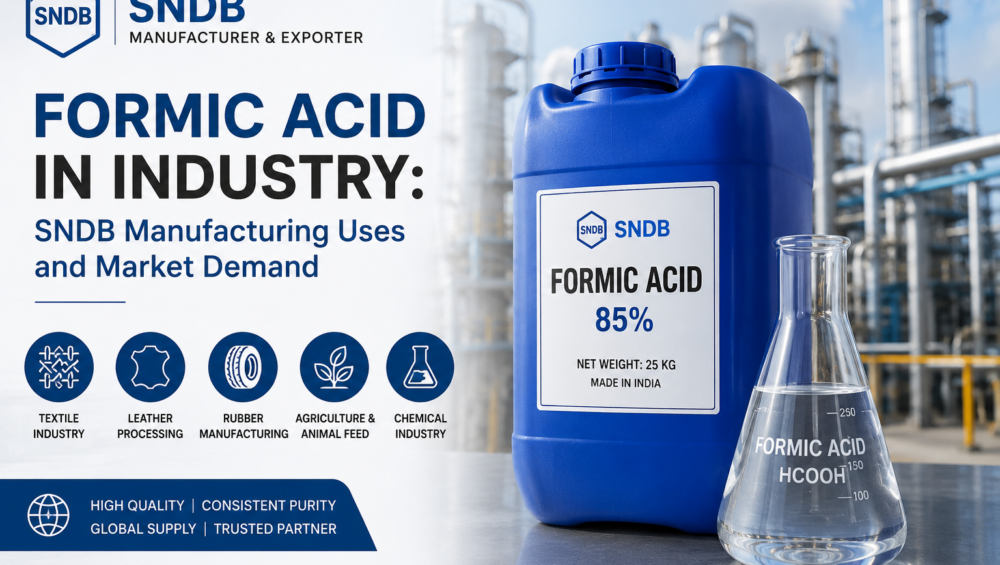
Formic Acid in Industry: SNDB Manufacturing Uses and Market Demand

Formic acid is one of the most important organic acids used across multiple industries due to its versatility, efficiency, and wide range of applications. With increasing industrial growth and global demand for specialty chemicals, formic acid has become an essential component in sectors such as textiles, leather processing, agriculture, rubber manufacturing, pharmaceuticals, and chemical production.

As a trusted manufacturer and exporter, SNDB focuses on delivering high-quality formic acid solutions that meet industrial standards and support businesses worldwide.

What is Formic Acid?

Formic acid (HCOOH) is the simplest carboxylic acid and is a colorless liquid with a strong odor. It is naturally found in certain insects and plants, but industrial production methods make it available for large-scale commercial use.

Due to its acidic properties, antibacterial characteristics, and effective processing capabilities, formic acid is widely used in manufacturing and industrial operations.

Industrial Uses of Formic Acid

1. Textile Industry Applications

The textile sector uses formic acid during dyeing, finishing, and fabric treatment processes. It helps maintain pH balance and improves dye absorption, resulting in better color consistency and fabric quality.

Manufacturers prefer formic acid because it supports efficient processing while maintaining production standards.

2. Leather Processing Industry

Formic acid plays a significant role in leather tanning and finishing. It assists in pH regulation during tanning operations and improves leather texture, flexibility, and durability.

Leather manufacturers use formic acid to enhance processing performance and achieve high-quality finished products.

3. Rubber Manufacturing

In the rubber industry, formic acid is used as a coagulating agent in natural rubber processing. It helps separate rubber particles effectively and contributes to improved production efficiency.

This application makes formic acid an important chemical for rubber processing facilities worldwide.

4. Agriculture and Animal Feed

Formic acid is widely used in agricultural applications and animal feed preservation. It helps reduce bacterial growth, supports feed quality, and extends storage life.

Its use in silage preservation and feed treatment has increased due to growing demand for efficient agricultural solutions.

5. Chemical Manufacturing

Formic acid serves as an intermediate chemical in the production of various compounds, including cleaning agents, pharmaceuticals, and industrial chemicals.

Its adaptability makes it a valuable material for chemical processing plants and industrial manufacturers.

SNDB Manufacturing Standards for Formic Acid

SNDB emphasizes quality manufacturing processes to produce formic acid suitable for industrial applications. Production systems are designed to maintain product consistency, purity levels, and performance standards.

Key manufacturing advantages include:

  • High-quality raw material selection
  • Consistent product specifications
  • Industrial-grade purity standards
  • Reliable export supply chain management
  • Quality-focused production processes

These factors help meet the needs of domestic and international customers.

Growing Market Demand for Formic Acid

Global demand for formic acid continues to increase because of expanding industrial sectors and rising chemical consumption.

Several factors are driving market growth:

Expansion of Textile Manufacturing

The growing textile industry increases demand for chemicals used in dyeing and finishing processes.

Growth in Leather Production

Leather processing facilities require efficient chemical solutions, boosting formic acid consumption.

Agricultural Development

Modern farming and feed preservation techniques support higher usage of formic acid products.

Rising Chemical Industry Applications

Industrial production and specialty chemical manufacturing create continuous demand in global markets.

As industries expand, the need for reliable manufacturers and exporters becomes increasingly important.

Why Industries Choose SNDB

SNDB focuses on quality manufacturing, efficient production methods, and international supply capabilities. By maintaining industry standards and supporting multiple sectors, SNDB aims to provide dependable formic acid solutions for industrial customers.

The company serves applications across:

  • Textile manufacturing
  • Leather processing
  • Rubber industries
  • Agriculture sector
  • Chemical production plants
  • Export markets

Formic acid remains a key industrial chemical with applications across numerous sectors. Its role in textiles, leather, agriculture, rubber processing, and chemical manufacturing continues to strengthen global demand.

With growing market opportunities and increasing industrial requirements, SNDB contributes by providing quality manufacturing and export solutions designed for modern industries. Reliable production practices and consistent quality make formic acid an essential product for businesses seeking efficient chemical applications.